









OEM Portable Battery Generator: Key Factors for B2B Buyers
An OEM portable battery generator can help distributors, importers, rental companies, contractors, equipment dealers, and private label buyers build a professional portable power product line. The key is not only choosing a high-capacity unit, but also confirming supplier capability, technical performance, certifications, quality control, export support, and after-sales service.
For B2B procurement teams, the right portable battery generator should match real worksite requirements. This includes construction sites, maintenance operations, emergency repair teams, telecom service, utility work, rental fleets, and remote industrial applications. The focus should stay on reliable field power, compliance, repeatable supply, and long-term business value.
Why OEM Portable Battery Generators Matter for B2B Buyers
Battery-powered portable power products are becoming more relevant in professional channels because many worksites need lower-noise power, reduced maintenance, and simpler operation compared with fuel-based generators. For urban jobsites, indoor-adjacent renovation, field service, and temporary maintenance work, a portable battery generator can be a practical jobsite power solution.
For distributors and equipment dealers, the opportunity is not only product resale. OEM cooperation allows buyers to build their own product identity, packaging, documentation, accessory kits, and channel positioning. For rental companies, the value is different: durable design, clear operating instructions, easy inspection, and reliable after-sales support are often more important than consumer-style feature lists.
B2B buyers should treat an OEM portable battery generator as an industrial procurement decision. Product specifications matter, but so do factory capability, compliance support, spare parts, warranty workflow, and export experience.
What Is an OEM Portable Battery Generator?
An OEM portable battery generator is a battery-powered portable power station supplied by a manufacturer and customized for a buyer’s brand, market, specification, packaging, or channel requirements. It usually includes a lithium battery pack, battery management system, inverter, AC output, charging system, enclosure, safety protections, and compliance documentation.
Unlike consumer-focused portable power products, a B2B-focused unit should be evaluated by professional application needs. Buyers should consider whether the product can support power tools, field maintenance equipment, pumps, cutting machines, industrial vacuums, telecom service tools, and emergency repair loads.
Buyers who are still comparing product categories can also review this industrial battery generator overview to understand how battery-powered generator products fit into industrial and worksite power planning.
OEM vs ODM Portable Battery Generator: What Is the Difference?
OEM and ODM cooperation are both common in portable battery generator sourcing, but they are not the same. Understanding the difference helps buyers choose the right cooperation model before discussing MOQ, lead time, tooling, certification, and branding.
| Factor | OEM Portable Battery Generator | ODM Portable Battery Generator | Best Fit for B2B Buyers |
|---|---|---|---|
| Product Control | More buyer-driven specification, branding, packaging, and market requirements. | Based on the supplier’s existing product platform with selected modifications. | OEM suits private label buyers that need stronger differentiation. |
| Launch Speed | May require more development, testing, and approval time. | Usually faster because the base design already exists. | ODM suits distributors that want a faster market launch. |
| MOQ | Often higher when color, housing, packaging, or electrical changes are required. | May allow lower MOQ for standard models with basic branding. | Buyers should confirm MOQ by customization level. |
| Certification Planning | Changes may require additional testing or documentation review. | Existing certificates may apply only if the model remains unchanged. | Importers should verify whether certificates match the final product. |
| Long-Term Roadmap | Better for building a dedicated private label product series. | Better for testing market demand before deeper product investment. | A hybrid approach can work for buyers starting with a proven platform. |
Key Technical Specifications B2B Buyers Should Check
Before choosing a portable battery generator manufacturer, B2B buyers should compare technical specifications against real market applications. The goal is to understand whether the unit can perform reliably in contractor, rental, maintenance, utility, and industrial distribution channels.
Rated Power and Continuous Output
Rated power shows the continuous output the unit is designed to support. This is important for professional loads such as drills, cutting saws, pumps, industrial vacuums, lighting, and maintenance tools.
Buyers should ask suppliers whether continuous output remains stable under repeated use, mixed loads, and higher ambient temperatures. A product that performs well in a short demonstration may not always meet the needs of rental fleets or contractors working through a full shift.
Peak Power for High-Inrush Tools
Peak power matters when tools require a short surge during startup. Pumps, compressors, welding machines, drilling tools, cutting equipment, and motor-driven devices may have high inrush current.
B2B buyers should not rely only on headline peak power. Ask how long the peak output can be sustained, which tools have been tested, and whether the supplier can provide application data for common worksite equipment.
Battery Capacity and Runtime
Battery capacity is usually measured in watt-hours. Higher capacity can support longer runtime, but runtime depends heavily on the load, inverter efficiency, discharge strategy, and battery condition.
For contractors and rental companies, the practical question is not only “How many hours does it run?” It is also “How much work can it complete per charge?” Tested data for drilling, cutting, pumping, welding, or vacuum applications is more useful than general runtime claims.
AC Output and Charging Options
AC output should match the buyer’s target market and tool requirements. Buyers should confirm output voltage, output frequency, socket type, plug compatibility, user manual language, labeling, and charger configuration.
Charging options also affect fleet planning. Importers and rental companies should review AC charging time, charger certification, spare charger availability, charging protections, and whether the supplier can support market-specific charging accessories.
IP Protection Rating
IP protection rating helps buyers understand resistance to dust and water exposure. For jobsites and field service, enclosure strength, port covers, handle design, and protection around connection points are important.
Contractors and equipment dealers should verify whether the product is suitable for dusty, damp, and rough handling conditions. IP rating should be considered together with actual enclosure design and field durability.
Safety Features and Battery Management System
The battery management system is one of the most important safety components in a portable battery generator. It helps monitor and manage battery operation during charging, discharging, storage, and load changes.
Important safety features may include overload protection, overvoltage protection, overcurrent protection, short-circuit protection, temperature monitoring, cell balancing, and charging or discharging protection. Private label buyers should verify these protections before approving packaging, manuals, and market launch.
| Technical Factor | What B2B Buyers Should Check | Why It Matters |
|---|---|---|
| Rated Power | Continuous output under realistic tool loads. | Confirms whether the unit can support professional work without overload. |
| Peak Power | Startup support for high-inrush tools and duration of peak output. | Important for pumps, cutting tools, welding machines, and motor-driven equipment. |
| Battery Capacity | Rated capacity, usable capacity, runtime, and tested application data. | Helps buyers estimate work completed per charge. |
| AC Output | Voltage, frequency, plug type, socket type, and output stability. | Ensures compatibility with target market tools and professional equipment. |
| Charging Options | Charging time, charger specification, spare charger supply, and safety protection. | Affects fleet charging, rental turnover, and field operation planning. |
| IP Rating | Dust and water protection, port covers, enclosure quality, and handle strength. | Supports use in demanding worksite and field service environments. |
| BMS Protections | Overload, overcurrent, short-circuit, temperature, and cell balancing protections. | Reduces product risk and supports safer lithium battery operation. |
Certifications and Compliance Requirements for Portable Battery Generators
Compliance is a major procurement factor for importers, distributors, equipment dealers, and private label buyers. A portable battery generator may need different documentation depending on the sales market, electrical design, lithium battery configuration, and buyer channel requirements.
Buyers planning U.S. distribution should review certification requirements for industrial power stations before confirming orders, packaging, manuals, or shipment schedules.
CE
CE may be required for relevant European market access depending on the product configuration and applicable directives. Buyers should confirm that certificates, test reports, product labels, and manuals match the exact model being purchased.
UN38.3
UN38.3 is important for lithium battery transport. Importers and distributors should request valid lithium battery transport documentation and confirm that the battery product can meet shipping requirements before booking freight.
For contractor-focused products, a UN38.3 certified portable power station for contractors can provide a useful reference point when evaluating professional jobsite power and transport documentation.
FCC
FCC equipment authorization may matter for the U.S. market when electronic equipment is subject to FCC rules. Buyers should confirm whether FCC requirements apply to the specific model and whether reports, labels, and user documentation are available.
UL
UL-related testing or certification may be requested by U.S. distributors, rental channels, equipment dealers, insurers, or professional buyers. Buyers should ask which standard, test scope, or listing status applies instead of accepting vague wording such as “UL compliant” without supporting documentation.
Lithium Battery Shipping Documents
Lithium battery products may require transport documents such as battery test summaries, SDS or MSDS documents, dangerous goods declarations, battery labels, and packaging documentation. The exact requirements depend on product configuration, shipping method, destination, and carrier rules.
U.S. Market Compliance
U.S. market compliance may involve product safety expectations, electronic equipment authorization, lithium battery transport documentation, labeling, user manuals, and channel-specific requirements. Importers should confirm these points before approving final packaging or container shipment.
| Certification or Requirement | What It Covers | Why It Matters for B2B Buyers |
|---|---|---|
| CE | Relevant European market compliance depending on applicable directives. | Important for importers and distributors selling into European channels. |
| UN38.3 | Lithium battery transport testing requirements. | Supports shipping acceptance and lithium battery logistics planning. |
| FCC | Electronic equipment authorization for applicable U.S. products. | Helps buyers manage U.S. import and sales compliance risk. |
| UL-Related Testing | Safety testing or certification requested by certain channels or buyers. | Can affect access to professional distribution, rental, or institutional channels. |
| Lithium Battery Shipping Documents | Battery transport paperwork, SDS/MSDS, labels, and dangerous goods documents. | Reduces shipment delays and documentation problems. |
| User Manual and Labeling | Product information, warnings, specifications, and operating instructions. | Supports safer use, channel approval, and private label readiness. |
For additional official references, buyers can review FCC equipment authorization requirements, UL portable power pack testing and certification, and the UN Manual of Tests and Criteria for lithium battery transport context.
Quality Control and Battery Safety
Quality control is especially important for lithium battery products because product failure can create warranty cost, shipment problems, safety risk, and channel reputation damage. B2B buyers should evaluate both the product design and the factory’s control process.
Useful QC points to request include incoming battery cell inspection, battery pack assembly checks, BMS protection testing, inverter load testing, charging and discharging tests, aging tests, ATE testing where available, final inspection, and packaging checks before shipment.
Buyers should also request documentation. This may include test reports, batch inspection records, QC process summaries, warranty procedures, spare parts lists, and troubleshooting guidance. For rental fleets and equipment dealers, service documentation can be as important as the initial product specification.
Common Industrial Applications for Portable Battery Generators
Industrial buyers should match the portable battery generator to real operating environments. The best product for a rental fleet may not be the same as the best unit for a telecom service team or a contractor using high-inrush tools.
Construction Sites
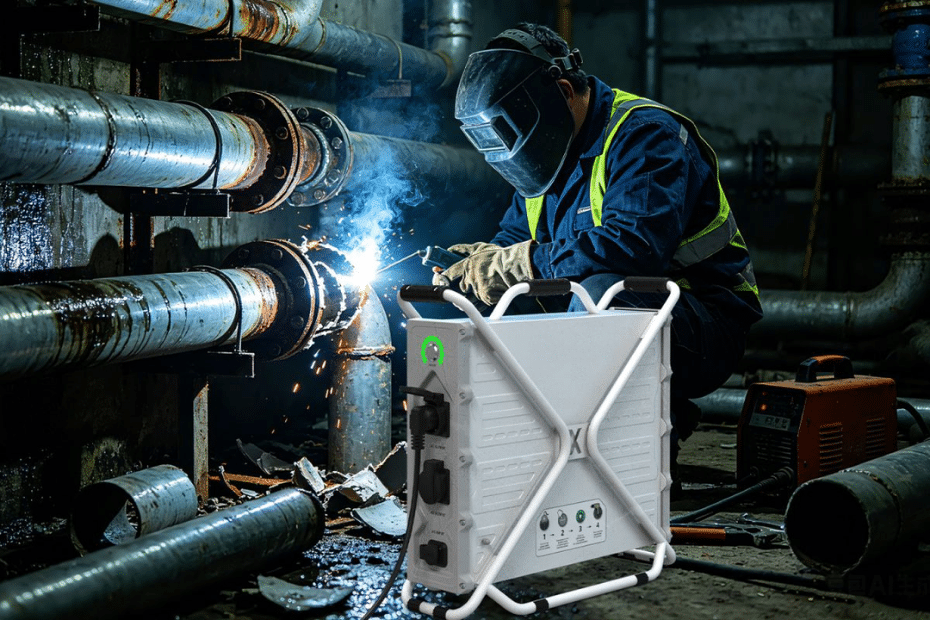
Construction buyers may use portable battery generators for temporary tool power, indoor renovation, cutting, drilling, pumping, lighting, and site preparation. When planning construction power, buyers can also review this construction site power supply guide for broader jobsite planning considerations.
Maintenance Operations
Maintenance teams often need portable power for field service, facility repair, equipment inspection, and mobile work. Important buying factors include stable output, easy transport, low-noise operation, simple charging, and clear operating instructions.
Rental Fleets
Rental companies should focus on durability, misuse protection, easy inspection after return, replaceable accessories, service procedures, and warranty support. A rental-ready product should be easy for operators to understand and easy for fleet managers to check.
Emergency Repair Teams
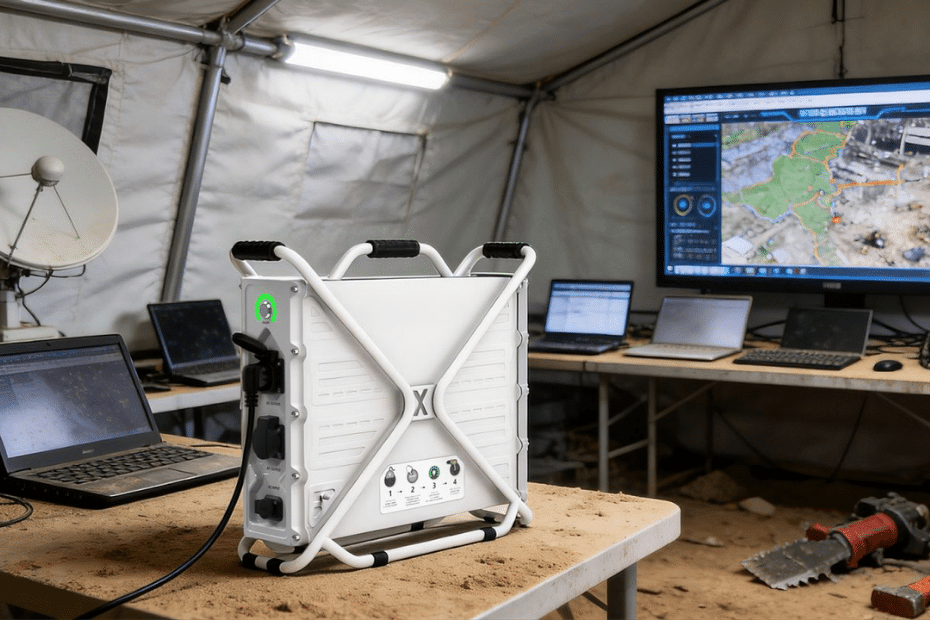
Emergency repair teams may need temporary power for tools, pumps, lights, communication devices, and field equipment. Buyers should confirm startup load capacity, charge status visibility, transport handling, and compatibility with priority tools.
Telecom and Utility Services
Telecom and utility service teams often work in distributed locations where fuel logistics and noise restrictions can create operational challenges. Buyers should evaluate runtime planning, transport compliance, stable output, battery safety, and technical support documentation.
Remote Worksites
Remote worksites require careful planning around runtime, charging access, spare chargers, parallel operation, and field reliability. Buyers should ask suppliers for application data and charging strategy recommendations before committing to a fleet order.
| Application | Typical Equipment | Key Power Requirement | Buyer Evaluation Point |
|---|---|---|---|
| Construction Sites | Drills, cutting saws, pumps, lighting, demolition tools. | Rated output and peak power for high-inrush tools. | Check tool startup loads and jobsite durability. |
| Maintenance Operations | Repair tools, inspection equipment, portable lighting. | Stable AC output and predictable runtime. | Confirm easy transport and simple charging. |
| Rental Fleets | Mixed professional tools used by different operators. | Durability, misuse protection, and serviceability. | Review inspection workflow and spare parts support. |
| Emergency Repair | Pumps, lights, tools, and field support equipment. | Fast deployment and reliable output. | Confirm tool compatibility and charge status visibility. |
| Telecom and Utility Services | Service tools, test equipment, temporary field power. | Runtime planning and transport compliance. | Check documentation and export/shipping support. |
| Remote Worksites | Mobile repair tools and off-grid work equipment. | Capacity, charging access, and field reliability. | Ask for application data and charging strategy support. |
How to Evaluate an OEM Portable Battery Generator Supplier
A strong OEM portable battery generator supplier should offer more than a product quotation. Buyers should evaluate technical support, customization scope, production capacity, quality control, export handling, warranty process, and communication speed.
OEM and ODM Capabilities
Ask whether the supplier can support logo customization, color options, packaging design, manuals, accessories, plug types, voltage options, and documentation. Private label buyers should confirm which changes can be made without affecting certification, lead time, or MOQ.
Production Capacity
Stable production matters for distributors and equipment dealers that need repeat supply. Buyers should ask about monthly output, production lines, peak-season capacity, key component supply, and production scheduling.
Factory Audit and Quality Control
A factory audit should review battery handling areas, assembly process, testing equipment, QC records, packaging procedures, warehouse conditions, and export documentation workflow. For large orders, third-party inspection may reduce procurement risk.
Export Experience
Lithium battery products require careful shipping documentation. Importers should ask whether the supplier has exported similar products to the target market, prepared dangerous goods documents, coordinated battery shipments, and handled certificates or test reports for professional buyers.
MOQ and Lead Time
MOQ can vary by standard model, logo printing, branded packaging, color customization, plug type, documentation language, and certification requirements. Buyers should separate sample order terms, pilot order terms, mass production MOQ, sample lead time, and bulk order lead time.
Warranty and After-Sales Support
Warranty handling should be clear before placing a bulk order. Ask about warranty term, claim process, technical support, troubleshooting documents, spare parts, replacement policy, and service manuals. Rental companies and equipment dealers should confirm how after-sales cases will be handled in their local market.
| Evaluation Factor | What to Ask the Supplier | Why It Matters for B2B Buyers |
|---|---|---|
| OEM/ODM Support | Can the supplier support logo, packaging, manuals, accessories, plug types, and market-specific options? | Helps distributors and private label buyers build a differentiated product line. |
| Engineering Support | Can the supplier explain power output, BMS protections, charging design, and application testing? | Improves product selection and reduces mismatch with real worksite needs. |
| Production Capacity | What is the monthly output, lead time, and peak-season production capacity? | Supports repeat orders and channel growth. |
| Quality Control | What tests are completed before shipment, and are QC records available? | Reduces warranty risk and product failure rates. |
| Certification Support | Can the supplier provide certificates, test reports, labels, manuals, and battery shipping documents? | Supports import approval, channel review, and shipment planning. |
| Export Experience | Has the supplier exported lithium battery products to the target market before? | Reduces logistics and documentation risk. |
| Warranty Process | How are defective units, spare parts, technical support, and claims handled? | Important for rental companies, equipment dealers, and long-term distributors. |
Portable Battery Generator vs Diesel Generator for B2B Use
Portable battery generators and diesel generators serve different needs. Diesel generators can still be suitable for long continuous runtime and high fuel-based output. Battery generators are often more suitable when buyers need lower noise, zero direct emissions during use, simpler maintenance, and easier deployment in urban or indoor-adjacent work areas.
| Factor | Portable Battery Generator | Diesel Generator | B2B Buying Note |
|---|---|---|---|
| Noise | Generally lower during operation. | Usually louder and may require noise controls. | Battery units can be useful for urban jobsites and maintenance work. |
| Direct Emissions During Use | No direct exhaust emissions during operation. | Produces exhaust and requires fuel handling. | Important for indoor-adjacent and low-emission work environments. |
| Maintenance | Lower routine maintenance compared with fuel engines. | Requires engine maintenance, fuel checks, and more moving parts. | Can affect rental fleet operating cost. |
| Runtime Planning | Depends on battery capacity, load, and charging access. | Depends on fuel supply and tank capacity. | Buyers should match the solution to job duration and charging logistics. |
| High-Load Applications | Works when rated power and peak power match the load. | Often used for very long or heavy continuous loads. | Do not replace diesel in every use case; compare application requirements. |
Cost, MOQ, and Long-Term Value
Unit price is only one part of the purchasing decision. B2B buyers should review total cost of ownership, including product quality, battery cell selection, inverter capacity, certification support, packaging, warranty handling, spare parts, and after-sales workload.
A lower initial price may not create better value if the product has weak documentation, poor QC, unstable output, limited spare parts, or unclear warranty terms. For distributors and rental companies, product reliability affects customer trust and repeat business.
MOQ should also be reviewed carefully. A standard model may have one MOQ, while custom logo, color, packaging, plug type, documentation, or certification requirements may have different minimum order quantities and lead times.
FULLAS FPG3600 as a Professional Worksite Power Solution
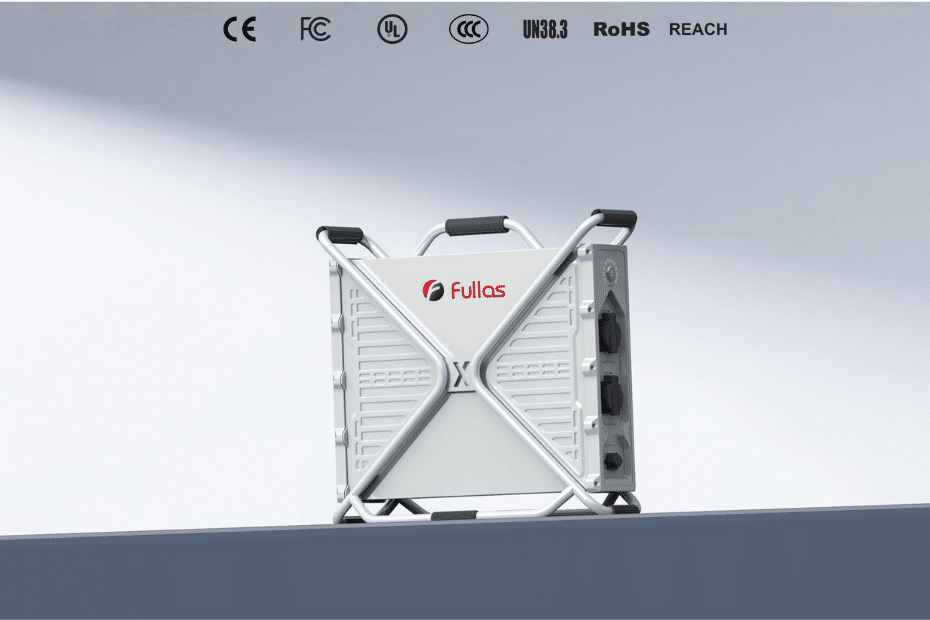
For B2B buyers comparing industrial portable power products, the FULLAS FPG3600 is a relevant example of a professional worksite power solution. It offers 3600W rated power, 20000W peak power, 2304Wh battery capacity, 230V AC output, IP54 protection, 24kg weight, and CE and UN38.3 certifications.
The FPG3600 is designed for applications such as drilling machines, welding equipment, water pumps, cutting tools, maintenance work, emergency repair, telecom service, utility service, and remote worksites. It also supports parallel connection up to 3 units, with maximum parallel capacity of 6.9kWh.
For distributors, importers, equipment dealers, and rental companies evaluating industrial portable power products, FULLAS can support B2B supply and OEM/ODM cooperation. The product should still be evaluated according to target market requirements, tool loads, compliance needs, MOQ, and after-sales expectations.
| Specification | FULLAS FPG3600 | Why It Matters for B2B Buyers |
|---|---|---|
| Rated Power | 3600W | Supports many professional tools and worksite applications. |
| Peak Power | 20000W | Helps support high-inrush equipment when application conditions match. |
| Battery Capacity | 2304Wh | Provides capacity for professional field tasks and temporary power needs. |
| AC Output | 230V AC | Matches many professional tool requirements in relevant markets. |
| Protection Rating | IP54 | Supports demanding jobsite and field service conditions. |
| Certifications | CE, UN38.3 | Supports compliance and lithium battery transport evaluation. |
| Parallel Connection | Up to 3 units, maximum 6.9kWh | Provides flexibility for higher-capacity worksite planning. |
FAQs
What is an OEM portable battery generator?
An OEM portable battery generator is a battery-powered portable power station supplied by a manufacturer and customized for a buyer’s brand, market, packaging, documentation, or specification needs. It is commonly used by distributors, importers, equipment dealers, rental companies, and private label buyers.
What should B2B buyers check before choosing a portable battery generator supplier?
B2B buyers should check rated power, peak power, battery capacity, AC output, charging options, IP protection, BMS safety features, certifications, QC process, production capacity, MOQ, lead time, export experience, warranty, and after-sales support.
What is the difference between OEM and ODM portable battery generators?
OEM usually offers more buyer-driven customization for brand, specification, packaging, and market requirements. ODM uses an existing supplier design that can often be branded or modified for faster launch and lower development complexity.
What certifications are important for portable battery generators?
Important certifications and documents may include CE, UN38.3, FCC-related documentation for applicable U.S. products, UL-related testing where required, lithium battery shipping documents, user manuals, labels, and market-specific compliance materials.
Can portable battery generators support construction tools?
Yes, portable battery generators can support construction tools when rated power, peak power, battery capacity, AC output, and tested load performance match the tool requirements. Contractors should confirm startup load and runtime data before purchasing.
Why is UN38.3 certification important for lithium battery products?
UN38.3 is important because it supports lithium battery transport compliance. Importers, distributors, and equipment dealers should request relevant battery transport documentation before shipment to reduce logistics and customs-related risk.
What MOQ should buyers expect for OEM portable battery generators?
MOQ depends on the product model, logo customization, packaging, color, plug type, documentation language, electrical configuration, and certification scope. Buyers should discuss sample orders, pilot orders, and bulk order terms separately.
Conclusion
Choosing an OEM portable battery generator requires both technical evaluation and supplier evaluation. Buyers should compare rated power, peak power, battery capacity, AC output, charging options, IP rating, BMS safety features, certifications, quality control, production capacity, MOQ, lead time, and after-sales support.
For distributors, importers, rental companies, contractors, equipment dealers, and private label buyers, the best choice is usually the supplier that can support real worksite requirements, reliable documentation, repeatable quality, and long-term channel cooperation.
CTA
If you are evaluating industrial portable power products for distribution, rental fleets, construction sites, or OEM/ODM cooperation, FULLAS can support product specifications, customization options, B2B supply discussions, and quotation requests for professional worksite power applications.