


10kWh Portable Power Station: What Can It Power?
A 10kWh portable power station can supply electricity for construction tools, industrial equipment, lighting systems, communication devices, and emergency backup applications.
However, battery capacity alone does not determine what equipment a power station can operate. Continuous output power, startup requirements, and actual energy consumption are equally important.
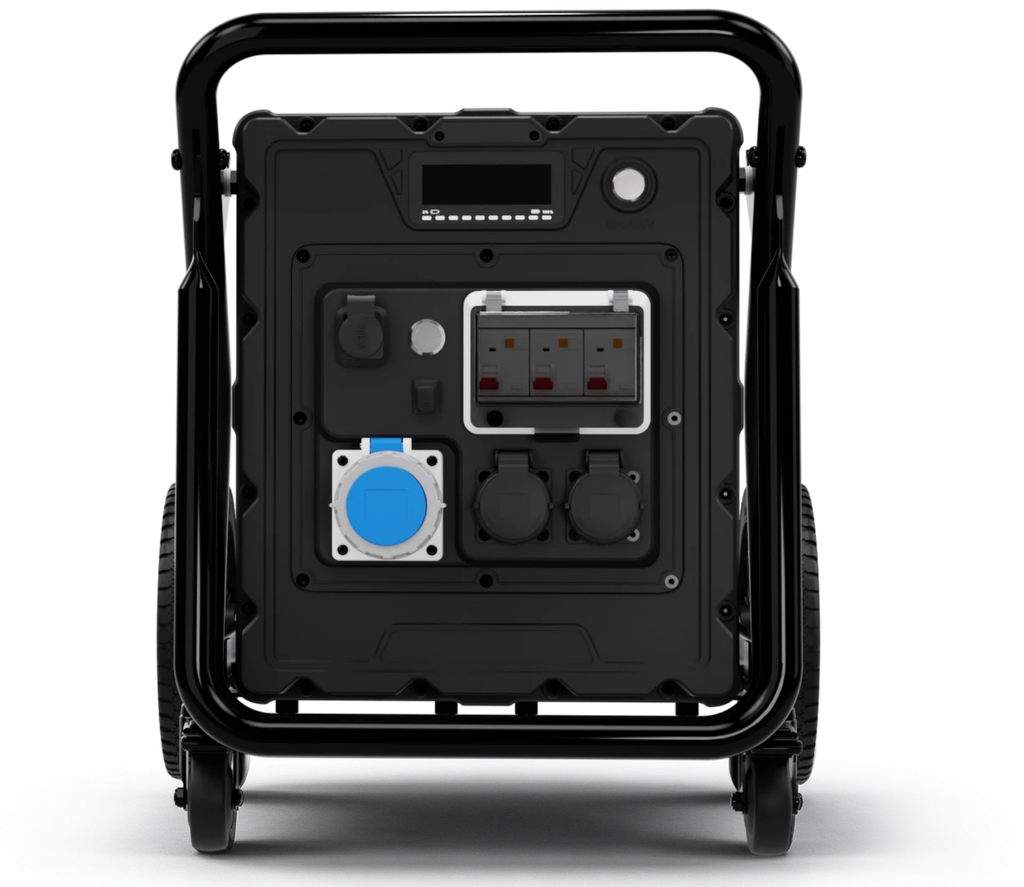
For example, the FULLAS FX100 combines a 10.24kWh LiFePO4 battery with 7,200W continuous output and 21,600W peak power, providing a mobile power solution for demanding industrial applications.

1. What Can a 10kWh Portable Power Station Run?
A 10kWh battery power station can support a wide range of electrical equipment, provided its inverter output, voltage, connectors, and surge capacity meet the equipment’s requirements.
Common industrial applications include:
| Equipment | Application |
|---|---|
| Welding Machines | Welding and metal fabrication |
| Electric Cutting Tools | Construction and renovation |
| Air Compressors | Workshop and field maintenance |
| Industrial Lighting | Construction sites and night operations |
| Communication Equipment | Telecom and security backup |
| Cameras & Production Equipment | Film and location production |
| Monitoring & Control Systems | Temporary industrial backup |
The equipment’s rated input power and starting current must be checked before connection. Not every model within these equipment categories will be compatible.

2. How Long Will a 10kWh Portable Power Station Last?
The operating time of a 10kWh portable power station depends on the total electrical load.
The basic calculation is:
Estimated Runtime (hours) = Battery Capacity (Wh) × Assumed Usable Energy Factor ÷ Average Power Consumption (W)
Using the FULLAS FX100’s 10,240Wh capacity and an illustrative 90% usable-energy factor, the following runtimes can be estimated.
| Continuous Load | Estimated Runtime |
|---|---|
| 500W | 18.4 hours |
| 1,000W | 9.2 hours |
| 2,000W | 4.6 hours |
| 3,000W | 3.1 hours |
| 5,000W | 1.8 hours |
| 7,200W | 1.3 hours |
These figures are calculations based on a constant load and an assumed 90% usable-energy factor, not measured FX100 runtimes. Actual results vary with equipment consumption, conversion losses, temperature, battery conditions, and other factors.
Industrial equipment does not always operate at full load continuously. For example, a cutting machine may run for only several minutes before stopping.
A 3,000W tool operating for 15 minutes consumes approximately 0.75kWh before conversion losses. Therefore, actual energy consumption over a working day depends on how frequently the equipment operates.
This distinction is particularly important for construction sites and mobile maintenance applications.
3. Can a 10kWh Power Station Run Heavy-Duty Tools?
Yes, provided the power station has sufficient continuous and surge output.
Industrial equipment such as welders, compressors, and cutting machines may require substantial power during normal operation and even higher power during startup.
The FULLAS FX100 provides:
- 7,200W continuous output for compatible equipment.
- 21,600W peak power for short-duration demand.
- Pure sine wave AC output for compatible electrical equipment.
- 230V AC output in the EU configuration.
For example, several devices with a combined running load of 5,000W may operate simultaneously, provided the individual outlets, starting currents, and other electrical requirements remain within the system’s limits.
However, 21,600W peak power does not mean the system can continuously operate a 21.6kW machine.
Always check the manufacturer’s overload specifications and the equipment’s startup characteristics before use.
4. Where Can a 10kWh Portable Power Station Be Used?
Construction and Maintenance Sites
A 10kWh industrial power station can supply compatible power tools and temporary equipment in areas where fixed electrical connections are unavailable.
Applications include construction projects, renovation work, equipment maintenance, and temporary workstations.
Film and Location Production
Battery-powered electricity is useful for location filming, particularly when low operating noise is important.
A 10kWh portable power station can support compatible lighting, cameras, monitors, and production equipment, depending on their combined power requirements.
Telecom and Security Backup
Communication and security equipment may need backup electricity during grid interruptions.
Industrial power stations with appropriate UPS functionality can provide temporary backup for compatible network equipment, surveillance systems, and monitoring devices.
Emergency and Field Operations
For emergency response and field maintenance, a wheeled battery power station provides mobile electricity without requiring a nearby grid connection.
The system’s actual suitability depends on equipment compatibility, transport conditions, and required operating duration.
5. FULLAS FX100: A 10.24kWh Industrial Power Solution
The FULLAS FX100 Industrial UPS Power Station is designed for industrial backup, professional tools, and mobile power applications.
Its key specifications include:
| Specification | FULLAS FX100 |
|---|---|
| Battery Capacity | 10.24kWh |
| Battery Technology | LiFePO4 |
| Continuous Output | 7,200W |
| Peak Power | 21,600W |
| AC Output (EU) | 230V / 50Hz |
| UPS Switchover | Less than 20ms |
| Protection Rating | IP65 |
| Cooling | Fanless Natural Convection |
| Mobility | Wheeled Trolley |
In addition to its battery capacity and power output, the FX100 provides UPS backup functionality for equipment compatible with its specified transfer time.
Its IP65-rated enclosure provides dust-tight protection and resistance to water jets, supporting use in demanding working environments.
The wheeled design makes it suitable for moving between work areas, although its size and weight require appropriate handling.
For guidance on choosing battery capacity and output power, read How to Choose an Industrial Battery Backup System.
6. Is a 10kWh Portable Power Station Enough for Your Business?
A 10kWh portable power station may be suitable for professional applications requiring substantial battery storage without a permanent electrical installation.
Before selecting a system, consider three questions:
1. How much continuous power does your equipment need?
Calculate the combined running wattage of the devices that may operate simultaneously.
2. How long must the equipment operate?
Estimate the energy consumed during the required working period, accounting for intermittent operation and potential power losses.
3. Does the application require UPS backup?
For equipment that must remain powered during a grid interruption, check the UPS transfer time and whether the connected equipment can tolerate it.
You can learn more about industrial UPS technology in our article: What Is an Industrial UPS Power Supply?.
Conclusion
A 10kWh portable power station can support a wide range of industrial applications, including professional tools, temporary lighting, communication equipment, and selected backup power requirements.
The key is understanding the difference between battery capacity and output power. A 10kWh battery determines the available stored energy, while the inverter’s continuous and peak output determine which equipment can operate.
With 10.24kWh of LiFePO4 storage, 7.2kW continuous output, and industrial UPS functionality, the FULLAS FX100 provides a high-capacity mobile power option for professional applications.
Explore the FULLAS FX100 for detailed specifications and B2B inquiries.