









How Much Power Do Construction Tools Need?
Choosing power for construction tools is not only about checking the wattage printed on a tool label. On real jobsites, contractors also need to consider starting surge, continuous load, voltage stability, charging speed, protection rating, and whether the power source is safe enough for outdoor or temporary work areas.
Most construction tools need between 600W and 3,200W during normal operation. Small drills, chargers, and lighting equipment may only require a few hundred watts, while core drills, cutting saws, pumps, and welders often need 2,000W to 3,200W or more.
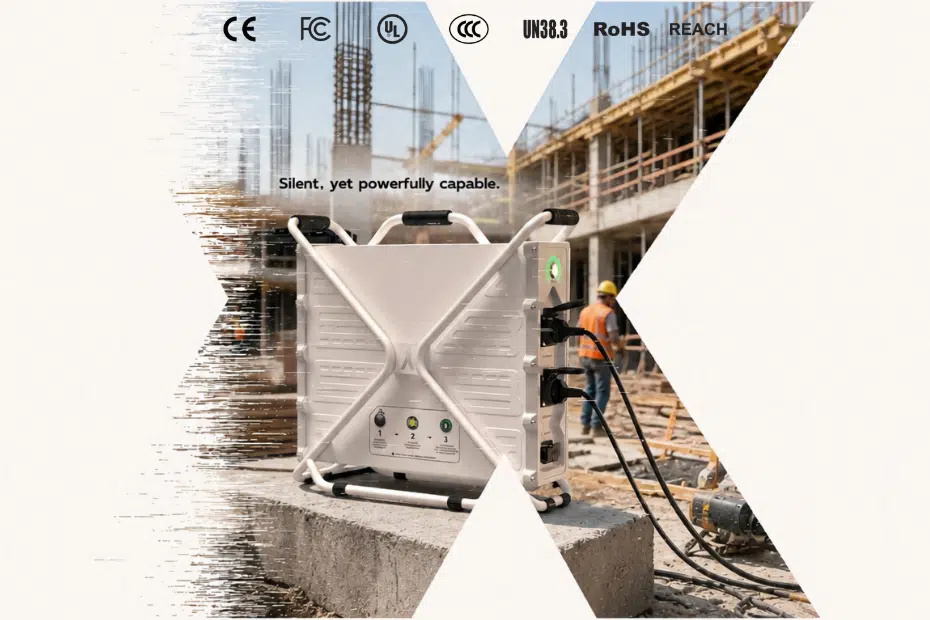
With 3,600W rated output and up to 20,000W peak power, the FPG3600 & RCD can support most high-power construction tools, including drills, cutting saws, chargers, pumps, and selected welding applications.
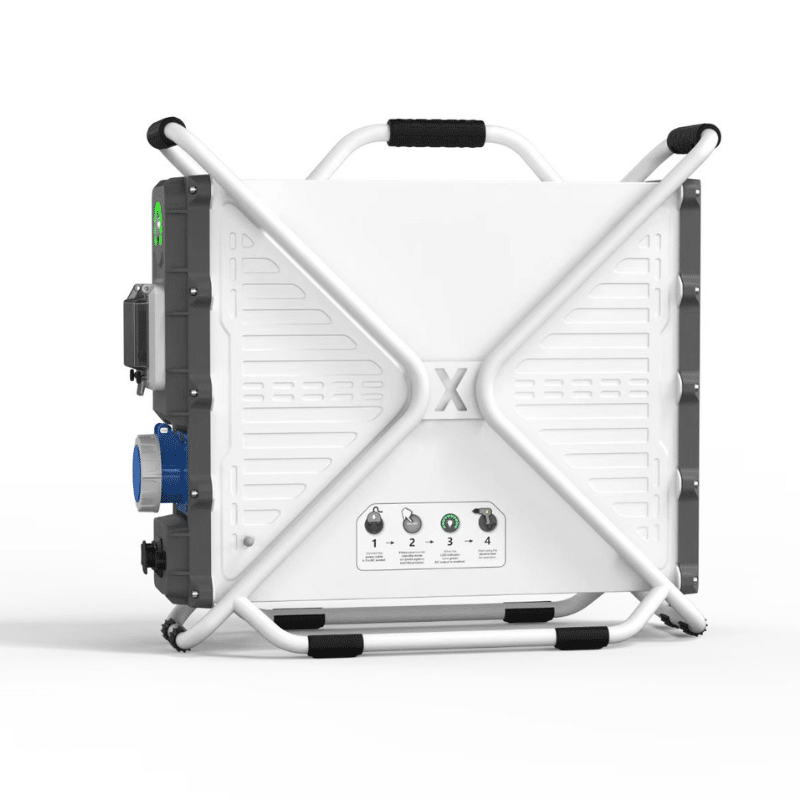
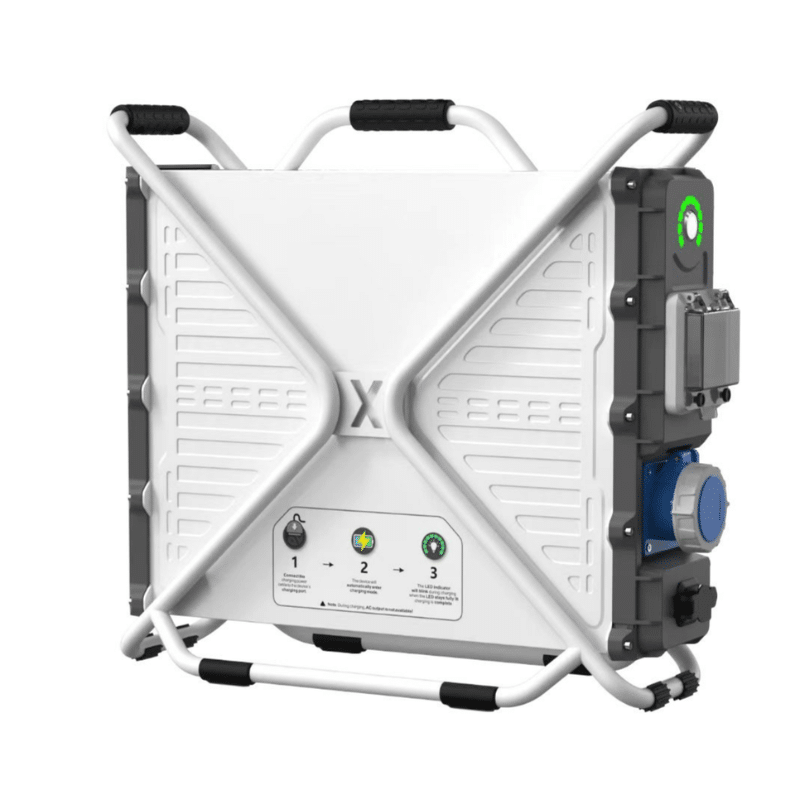
This guide explains how much power common construction tools may need and how to match them with a practical jobsite power solution. It also uses the FPG3600-RCD industrial power station as a reference because its specifications are designed for professional tool applications: 230VAC pure sine wave output, 50Hz frequency, 3,600W rated output power, 20,000W peak power, 2,304Wh capacity, IP65 protection rating, and 140A max instantaneous peak output current.
Rated Power vs Peak Power: The First Thing to Understand
When checking whether a power station can run construction tools, always separate rated power from peak power.
Rated power is the stable power a machine can provide continuously. If a tool needs 2,000W during operation, your power source should have enough rated output to support that load with some margin.
Peak power is the short burst of power needed when a tool starts or when the load suddenly increases. This matters for motor-driven tools such as cutting saws, core drills, pumps, compressors, and other equipment with high startup demand. For a deeper explanation, you can read our guide on continuous power vs peak power.
For example, the FPG3600-RCD provides 3,600W rated output and up to 20,000W peak power. This gives it a useful power structure for professional users who need both stable running power and short-term surge support.
Typical Power Needs of Common Construction Tools
The table below gives practical reference ranges. Actual power depends on the tool model, working material, load condition, and startup behavior. For procurement or project planning, always confirm the rated input power on the tool label and allow extra margin for startup surge.
| Construction Tool | Typical Running Power | Power Selection Notes |
|---|---|---|
| Corded drill | 600W–1,400W | Usually easy to support, but load rises when drilling hard material. |
| Rotary hammer / demolition hammer | 1,000W–2,000W | Needs stable output and enough headroom for impact operation. |
| Core drill | 2,000W–3,200W | High-load drilling requires strong rated output and surge tolerance. |
| Cutting saw | 1,800W–2,700W | Startup demand can be high, especially with metal or pipe cutting. |
| Arc welder | 2,500W–3,000W+ | Check welding current, electrode size, and real input power before use. |
| Water pump | 800W–2,500W+ | Motor startup surge is often the key issue, not only running wattage. |
| Battery charger station | 300W–1,500W+ | Useful for charging multiple cordless tool batteries on site. |
| Lighting and monitoring equipment | 100W–1,000W | Usually low power, but long runtime and stable output matter. |
What the FPG3600-RCD Can Support in Real Tool Testing
Power ratings are useful, but real tool testing is more convincing for contractors and distributors. According to the FPG3600-RCD product data, the unit has been tested with several professional jobsite tools:
- 3kW arc welder: 230V, Ø2.5mm electrodes, around 45–55 welds; Ø3.2mm electrodes, around 35–45 welds.
- 3.2kW core drill: up to 11 holes, Ø150mm × 150mm depth.
- 1.4kW drill: up to 243 holes, Ø35mm × 10mm depth.
- 2.7kW cutting saw: up to 41 cuts on Ø110mm cast-iron pipes.
These results show why a professional power station should not be judged by battery capacity alone. For construction users, output power, peak support, overload capability, and AC stability are equally important.
You can also read our application article about clean and quiet power for construction drilling and our guide on whether a portable power station can run a welder.
Why Overload Capability Matters on Jobsites
Construction tools rarely work under perfect laboratory conditions. A saw may meet more resistance during cutting. A drill may face reinforced concrete. A pump may start under pressure. These moments can create temporary overload.
4,000W–5,400W for more than 500 seconds
5,400W–7,200W for more than 50 seconds
7,200W–9,000W for more than 10 seconds
Above 9,000W for more than 1 second
This matters because many tool failures in field power applications happen during startup or sudden load changes. A power station with stronger peak and overload handling can reduce nuisance shutdowns and help teams keep working.
Voltage Stability: Why 230VAC Pure Sine Wave Is Important
Many construction tools can tolerate tough environments, but they still need proper AC power. A 230VAC pure sine wave output is important for tools, chargers, and sensitive electrical devices because it provides cleaner and more stable AC power than a rough waveform.
For contractors using chargers, measuring devices, control boxes, lighting systems, or electronic tool systems, pure sine wave output can help reduce compatibility issues. This is why AC output quality should be part of the power selection process, not an afterthought.
For more background, you may also visit our article on how to understand AC output in portable power stations.
Safety Considerations for Outdoor Construction Tools
Construction power is also a safety issue. Outdoor work areas may include dust, moisture, damaged cables, temporary wiring, and frequent tool movement. OSHA recommends keeping electric tools dry, removing damaged tools from use, and using protective measures such as GFCI where needed. You can read OSHA’s guidance here: OSHA construction power tools guidance.
For RCD-related safety, the UK Health and Safety Executive explains that an RCD can rapidly switch off the power when certain electrical faults are detected, helping reduce injury risk in suitable applications. You can read the HSE guidance here: HSE guidance on electrically powered equipment.
If you want a dedicated safety explanation, see our article: What is an RCD and how does it work?.
How to Choose the Right Power Size for Construction Tools
A simple rule is to calculate your real load before choosing a power station:
- List every tool or device that may run at the same time.
- Check each tool’s rated input power.
- Add the running wattage together.
- Allow extra headroom for startup surge and tough working conditions.
- Check voltage, frequency, plug type, safety protection, and protection rating.
For example, if a team runs a 1,400W drill, a 600W charger, and 300W of lighting at the same time, the running load is about 2,300W. A 3,600W rated industrial power station gives more margin than a small consumer-grade unit. If the main tool is a 3.2kW core drill or a 2.7kW cutting saw, peak power and overload capacity become even more important.
When Does an Industrial Power Station Make Sense?
An industrial power station is especially useful when the job needs clean, portable, low-noise, and fast-deployment power. It is a good fit for renovation, maintenance, public infrastructure repair, mobile teams, tool charging, indoor or semi-enclosed work, and temporary power points across a site.
For long-duration continuous heavy loads, fuel generators may still be used. But for mobile tool work, battery charging, short-to-mid duration tasks, and low-noise environments, an industrial power station can be more convenient.
You can compare more jobsite options in our article on temporary power solutions for construction sites.
Final Answer: How Much Power Do Construction Tools Need?
Most common construction tools need anywhere from 600W to 3,200W during operation, but motor-driven tools may require much higher power at startup. That is why contractors should not only check battery capacity. They should check rated output, peak power, overload capability, AC waveform, safety protection, and outdoor durability.
With 3,600W rated output, 20,000W peak power, 2,304Wh capacity, IP65 protection, 230VAC pure sine wave output, RCD protection, and strong overload capability, the FPG3600-RCD is built for demanding construction tool applications and mobile jobsite power needs.
Explore FULLAS Industrial Power Station Solutions
For distributors, contractors, rental companies, and project buyers looking for a professional portable power solution, explore the FULLAS industrial power station series.View Industrial Power Station Series
Explore FULLAS Industrial Power Station Solutions
For distributors, contractors, rental companies, and project buyers looking for a professional portable power solution, explore the FULLAS industrial power station series.
View Industrial Power Station SeriesFAQs
Can a portable power station run construction tools?
Yes, if the power station has enough rated output and peak power. For professional tools, always check the tool’s running wattage and startup demand before use.
Is 3,600W enough for construction tools?
3,600W can support many drills, cutting tools, chargers, lighting systems, and selected heavy-duty tools. For larger tools, check whether the peak and overload capability can handle startup demand.
Why does peak power matter for construction tools?
Many motor-driven tools need higher power at startup than during normal operation. Peak power helps the power station handle this short surge.
Why choose an RCD power station for construction work?
RCD protection helps reduce electrical risk by disconnecting power when certain leakage faults are detected. It is especially useful for outdoor, temporary, and higher-risk work environments.