









Portable Power Station for Construction: A Complete Buyer’s Guide (2026)
A portable power station for construction is designed to power real jobsite tools and equipment, recharge quickly between shifts, and work reliably in dusty, outdoor, and mobile environments. In 2026, contractors and distributors are looking for solutions that can replace or reduce reliance on fuel generators, especially for construction vans, trucks, and temporary site setups where lighting and tool power must be stable, portable, and easy to deploy.
What a “Power Station for Construction” should do
A construction-grade portable power station should meet these requirements:
- Provide stable high continuous output for jobsite tools and equipment
- Handle high startup surge for motor-driven tools
- Support fast recharging to reduce downtime
- Offer protection for dust and splashes for jobsite use
- Be portable enough for daily loading and unloading from vans or trucks
- Support scalable capacity if the team needs longer runtime
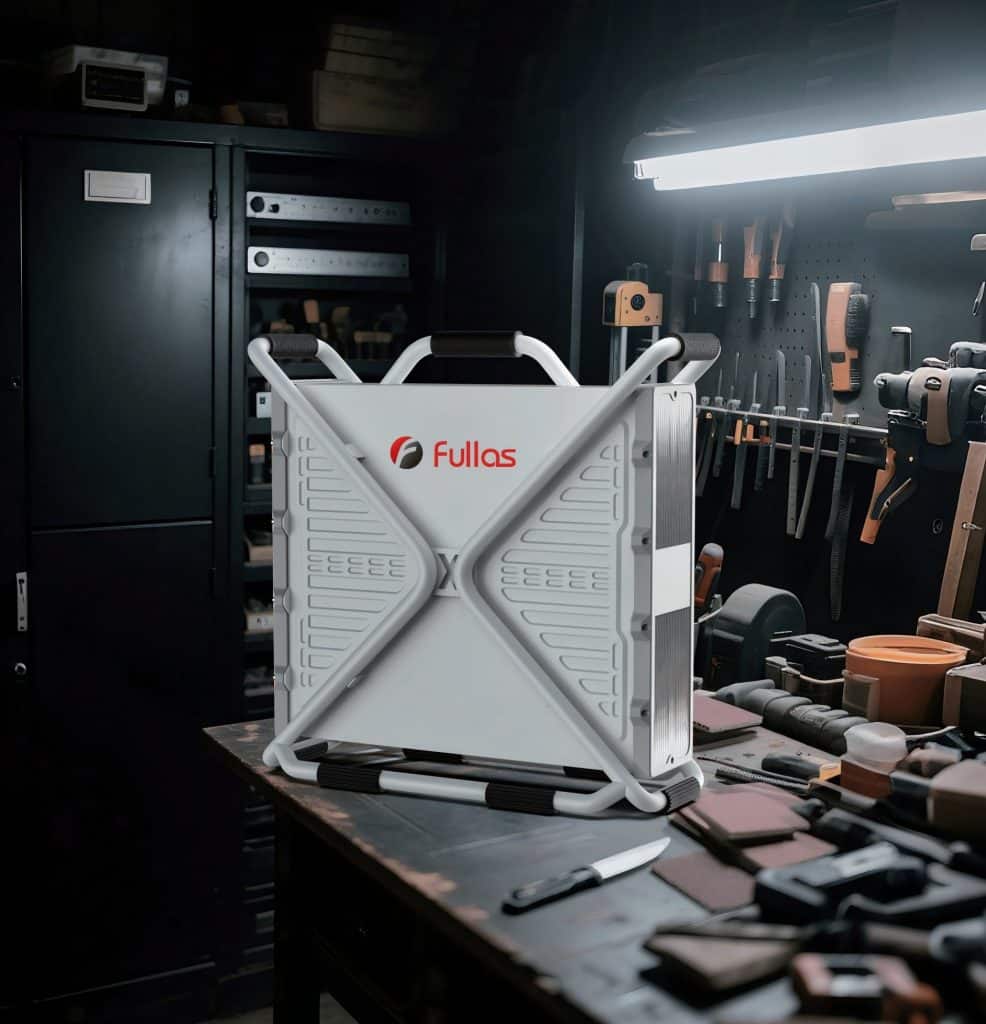
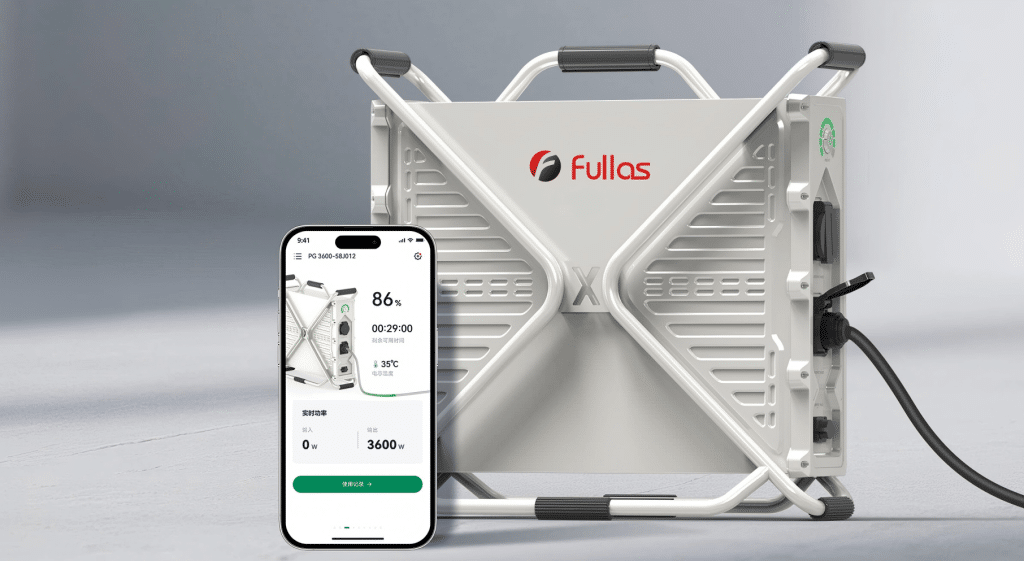
The Fullas FPG3600 portable power station is designed to meet these construction-grade requirements, delivering reliable power for jobsite tools, mobile lighting, and van-based work setups.
The 6 specifications that matter most
1) Rated continuous power (W)
Rated output is the most important number for construction buyers because it determines what tools and devices you can run continuously. Typical construction loads include work lights, chargers, portable fans, small site electronics, and many mid-load power tools. A practical benchmark for jobsite-focused portable power is 3600W continuous output, which fits many construction van and mobile jobsite scenarios.
For example, Fullas FPG3600 is rated at 3600W continuous output, positioned for jobsite tools and mobile work applications.
https://fullasmachine.com/portable-power-station-fpg3600/
2) Peak / surge power (W)
Many construction tools have a high startup surge. If the power station cannot handle surge, the tool may fail to start or the system may shut down. For jobsite use, peak power capacity is especially relevant for equipment with motors and high inrush current.
FPG3600 lists up to 20,000W peak power, which is designed to support heavy startups and demanding jobsite loads.
https://fullasmachine.com/portable-power-station-fpg3600/
3) Battery capacity (kWh) and scalable runtime
Battery capacity determines how long you can work. Construction buyers should evaluate capacity in kWh, not phone-style metrics. For mobile construction work, a clear starting point is a unit that provides enough energy for lighting and tool usage during the working window, and the ability to scale up for longer shifts or multiple crews.
FPG3600 capacity is 2.3kWh per unit and supports up to 3 units in parallel for a maximum of 6.9kWh total capacity, which helps expand runtime when the job requires longer continuous work.
https://fullasmachine.com/portable-power-station-fpg3600/
4) Charging time (hours)
Charging time directly impacts operating cost and productivity. If charging takes too long, teams must either stop work or buy extra units to rotate. Fast charging is a major advantage for construction applications where daily use is expected.
FPG3600 lists fast charging in about 2.5 hours, which supports higher utilization for construction vans and mobile crews.
https://fullasmachine.com/portable-power-station-fpg3600/
5) Dust and splash protection (IP rating)
Construction sites expose equipment to dust, debris, and water splashes. A clear IP rating is important because it reduces the risk of field failures.
FPG3600 lists an IP54 rating, which indicates protection against dust ingress (limited) and water splashes, suitable for many jobsite environments.
https://fullasmachine.com/portable-power-station-fpg3600/
6) Portability for vans and trucks (weight and handling)
If a unit is difficult to move, it becomes inconvenient for daily jobsite workflows. For construction vans, technicians and contractors need a portable solution that can be loaded, unloaded, and placed close to the work area.
FPG3600 is designed as an industrial portable unit for mobile scenarios and is promoted for jobsite equipment and construction applications.
https://fullasmachine.com/portable-power-station-fpg3600/
Why construction vans and trucks are a high-value application
Construction crews often need a lightweight and portable power solution that fits inside a van or truck and can be deployed quickly at different job sites. The most common use cases include:
- Power for work lights and temporary lighting
- Power for tool charging stations and batteries
- Power for jobsite electronics and small equipment
- Power for mobile workstations for technicians and contractors
- Quiet power for indoor renovation and night work where generator noise is not acceptable
A portable power station for construction works well in these scenarios because it provides stable electricity without fuel logistics, exhaust, or the operational friction of traditional generators. For many distributors and contractors, this category is also used as a competitive solution for customers who previously relied on premium lightweight jobsite systems.
A practical construction reference: Fullas FPG3600 as a power station for construction
When selecting a product to position as a power station for construction, the specification set should map directly to jobsite needs: continuous power, high peak power, reliable runtime, fast charging, and protection for field conditions.
Fullas FPG3600 is presented as a portable power station for construction and mobile jobsite use, and it can be used for construction van lighting power and jobsite mobile power needs. Key listed specifications include:
- 3600W rated continuous output
- Up to 20,000W peak power
- 2.3kWh capacity per unit
- Up to 3 units parallel for 6.9kWh maximum capacity
- IP54 protection rating
- Fast charging about 2.5 hours
How to size a power station for construction tools
Use a simple sizing method:
- List the tools and devices you need to run at the same time
- Add up their rated wattage to estimate continuous power demand
- For motor-driven tools, consider startup surge and ensure peak power headroom
- Choose battery capacity (kWh) based on how many hours you need to work without recharging
- If you need longer runtime, prioritize solutions that support scalable capacity through parallel expansion
- For construction vans and trucks, confirm portability and jobsite protection rating (IP)
This approach helps contractors select a power station that matches real jobsite work rather than a consumer-style battery unit.
If you want to explore more about industrial portable power solutions, you may also find these articles helpful:
👉 If you want to understand the real differences between a 3600W industrial power station and Instagrid in construction and jobsite applications, read here:
3600W Power Station vs Instagrid: Industrial Comparison Guide
👉 If you are researching global brands and looking for reliable suppliers, check this overview of leading manufacturers in the industry:
Top 10 Portable Power Station Suppliers in 2026