









Charging Tool Batteries on a Jobsite Without Mains Power
Choose a portable power station for charging tool batteries by answering two questions: how much charging energy does the crew need, and can the chargers return full packs before workers need them? A station can have energy left while a crew waits for a slow charger.
The problem comes up in real work. In a Reddit discussion about charging tool batteries on site, a tradesperson wanted to stop running a generator just to recharge packs. The missing information was the number of charges needed through the day.
For contractors and rental companies, that is where the buying decision should start. Count the refills, check the charging schedule, and arrange how the power station itself will recharge. The method below does not depend on a particular tool brand.


Count the refills your crew actually needs
A crew owning ten battery packs does not necessarily need ten site recharges. Some packs may last the shift; others may need refilling more than once. Start with fully charged packs and record a normal day’s use before choosing the supply.
Write down the pack model, capacity, tool, operator and approximate time it becomes empty. Add when that pack must be ready again. Keep different pack sizes separate, and distinguish an almost empty refill from a quick lunchtime top-up.
This gives you two useful numbers: the total charging work and the busiest period. A low daily total can still cause delays if several workers need charged packs at the same time. Spare packs can cover a short queue, but the charging schedule must eventually catch up.
Measure energy at the charger’s AC input
Pack capacity is a starting point for estimating energy. For a hypothetical pack rated at a nominal 18V and 5Ah, the arithmetic is 18 × 5 = 90Wh. That describes nominal pack energy; it does not tell you what the charger draws from the power station during a refill.
Ask the supplier or a technician to measure a complete charge with a suitably rated AC energy meter, used within its instructions. Record:
- The exact charger and pack models.
- The pack’s starting charge indication and condition.
- AC energy consumed from connection to charge completion.
- Elapsed time, including any delay before charging starts.
- Charger input power or current while charging, recorded separately from energy.
Repeat with representative packs and starting conditions. Use the results to build a realistic planning allowance, keeping occasional top-ups separate from near-empty refills. Do not treat the charger’s output charging amperage as its AC input requirement.
Measure the charger only for this step. Its AC reading includes the energy consumed by the charging process. Power station conversion and idle losses must be accounted for separately when establishing how much usable AC energy the station can supply.
Build a shift budget before calculating charge counts
The following is an illustrative calculation. Every input is assumed. It is not an FPG3600 test, a customer result or a promised number of charges.
| Planned demand | Assumed input | AC energy allowance |
|---|---|---|
| Tool battery refills | 12 refills × 115Wh per refill | 1,380Wh |
| Task lighting | 40W × 4 hours | 160Wh |
| Unallocated reserve | Chosen planning allowance | 200Wh |
| Total | Refills + lighting + reserve | 1,740Wh |
Replace the assumed refill figure with a measured allowance for your own packs and chargers. Add other loads that will actually share the supply. Choose the reserve around the consequences of running short and the variation in your work; the example is not a universal reserve rule.
Compare that budget with usable AC energy for the intended station, load pattern and conditions. Nominal battery capacity alone cannot establish that the shift will finish. Ask for a relevant discharge report or arrange a representative trial before committing a crew to the setup.
Keep the accounting consistent: count charger consumption on the load side, then allow for station losses when assessing available AC energy. Avoid deducting the same loss twice. For broader runtime planning, see FULLAS’s construction-site power station runtime guide.
Check whether the chargers can keep up
Read the charger manual before counting bays as charging capacity. Milwaukee, for example, describes its 48-59-1806 as a six-pack sequential charger. It charges packs in sequence. Six positions do not mean six packs charging together. This illustrates charger operation, rather than a recommended accessory for the FPG3600.
Find out how many packs your charger charges simultaneously and how long the actual pack models take to finish. Compare that output with the rate at which workers return depleted packs. If packs become empty faster than they return charged, you need more compatible charging capacity, a different pack rotation or another charging opportunity.
A larger power station does not change a charger’s charging mode or rated charging speed. Additional chargers may improve turnaround, provided the complete electrical setup supports them. Check their combined AC input requirements against the station, individual outlets and connecting equipment. Use the chargers’ input labels and manuals, not the cordless tools’ motor ratings.
Temperature can also interrupt the schedule. Milwaukee’s charger instructions describe charging delays for hot or cold packs. Include observed delays in the plan and follow the instructions for ventilation and pack condition. Do not bypass a charging delay to keep work moving.
Where the FULLAS FPG3600 fits
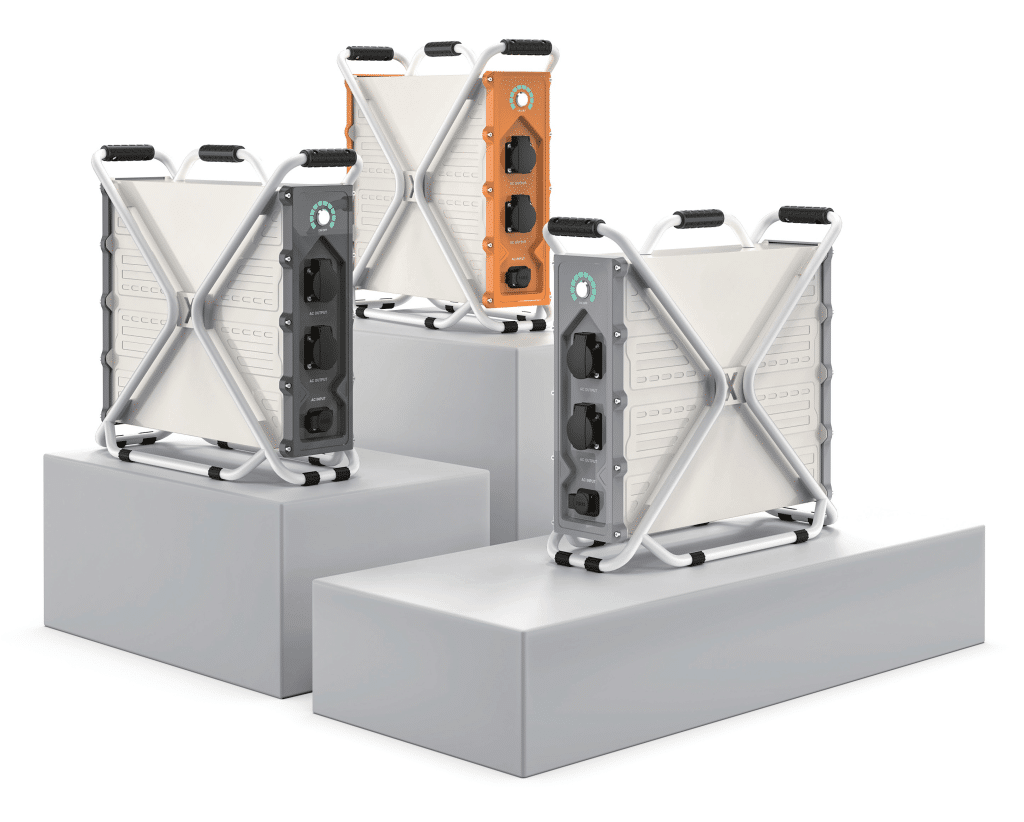
The FULLAS FPG3600 product specifications provide a starting point for a contractor or rental-fleet charging setup. These are manufacturer ratings, not measured tool-battery charging results.
| Published specification | Value | What to check for this application |
|---|---|---|
| Rated output | 3,600W | Combined charger demand and individual outlet limits |
| Nominal battery capacity | 2,304Wh | Usable AC energy under the planned charging pattern |
| FPG3600-EU output | 230Vac, 50Hz | Each charger’s accepted input voltage and frequency |
Match the ordered version to the destination market. A regional charger cannot be assumed compatible with another market’s supply because the plug can be adapted. Obtain the exact electrical specification and approved connection arrangement before ordering.
The capacity rating does not establish how many packs the FPG3600 will refill. That requires charger consumption and usable AC energy data. Keep any lighting or other equipment in the same budget. If the unit will also run corded tools, use the separate industrial power station tool compatibility checklist for those loads.
Arrange the next recharge and check a real shift
Identify where the station will recharge, the available supply and the time between jobs. Plan separate periods for station charging and supplying the tool chargers unless the exact unit’s current manual explicitly supports simultaneous operation. Do not build the workday around an unconfirmed pass-through feature.
Before fleet deployment, run the proposed setup through a representative shift. Start from a recorded station charge state. Log completed pack refills, missed charging deadlines, other loads, delays, warnings and the station’s ending charge indication. Check that the station can recharge during the available break or overnight window.
This trial answers the procurement question: can the complete arrangement keep the crew working and be ready for the next job? Keep the record with the approved charger list so rental staff and supervisors can repeat the setup. The calculation above is a planning aid; it does not replace this check.
FAQ
How many tool batteries can a power station charge?
Use its usable AC energy and the measured energy per refill for your pack and charger. Allow for other loads and a reserve. Pack size, starting charge, condition and operating pattern affect the result, so a fixed count based only on nominal station capacity is unreliable.
Will a bigger power station charge packs faster?
Not by itself. Charger design, compatible pack limits and temperature conditions govern charging behavior. More stored energy helps cover more charging work; charger capacity determines how quickly packs return to use.
Can different tool brands share the same station?
Each pack needs its manufacturer-approved compatible charger. The station must support every charger’s AC input requirements and the combined setup’s limits. Assess the chargers as separate loads; do not assume matching plugs establish compatibility.
Specify a charging setup for your crew
For an FPG3600 wholesale, distribution or rental-fleet inquiry, send FULLAS your charger models, pack models, expected refills, required turnaround times, other loads, destination country and order quantity. Ask for the matching market version and a documented check of the proposed charging setup through the FPG3600 inquiry page.