









Portable Power Station vs Gas Generator: Which Is Better for Professional Use?
For contractors, equipment rental companies, field service teams and other professional users, choosing between a portable power station vs gas generator is no longer only about wattage.
The real decision involves startup power, noise, emissions, runtime, maintenance and where the equipment will actually be used.
The short answer is simple:
A portable power station is usually better for mobile, low-noise and short-to-medium-duration professional work. A gas generator still has an advantage when continuous runtime and fast refueling are the main priorities.
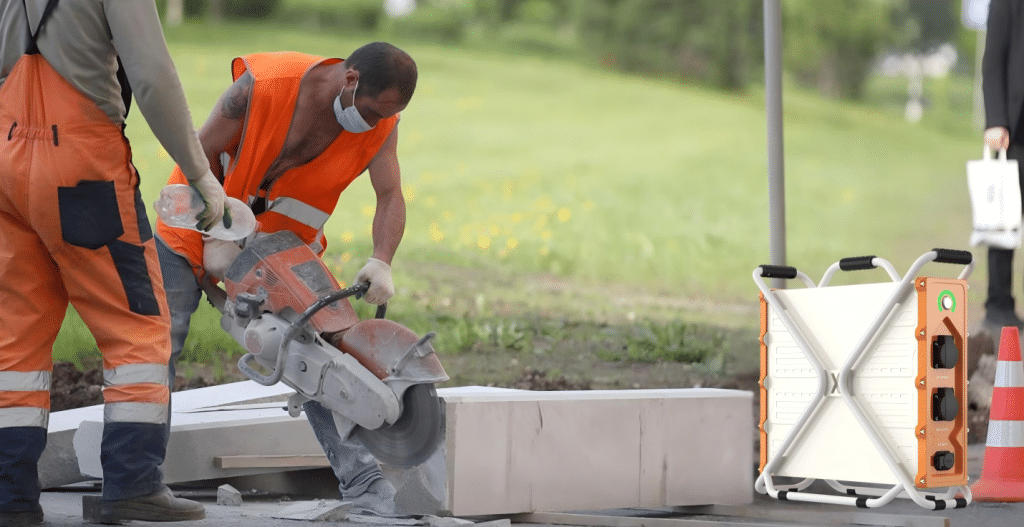
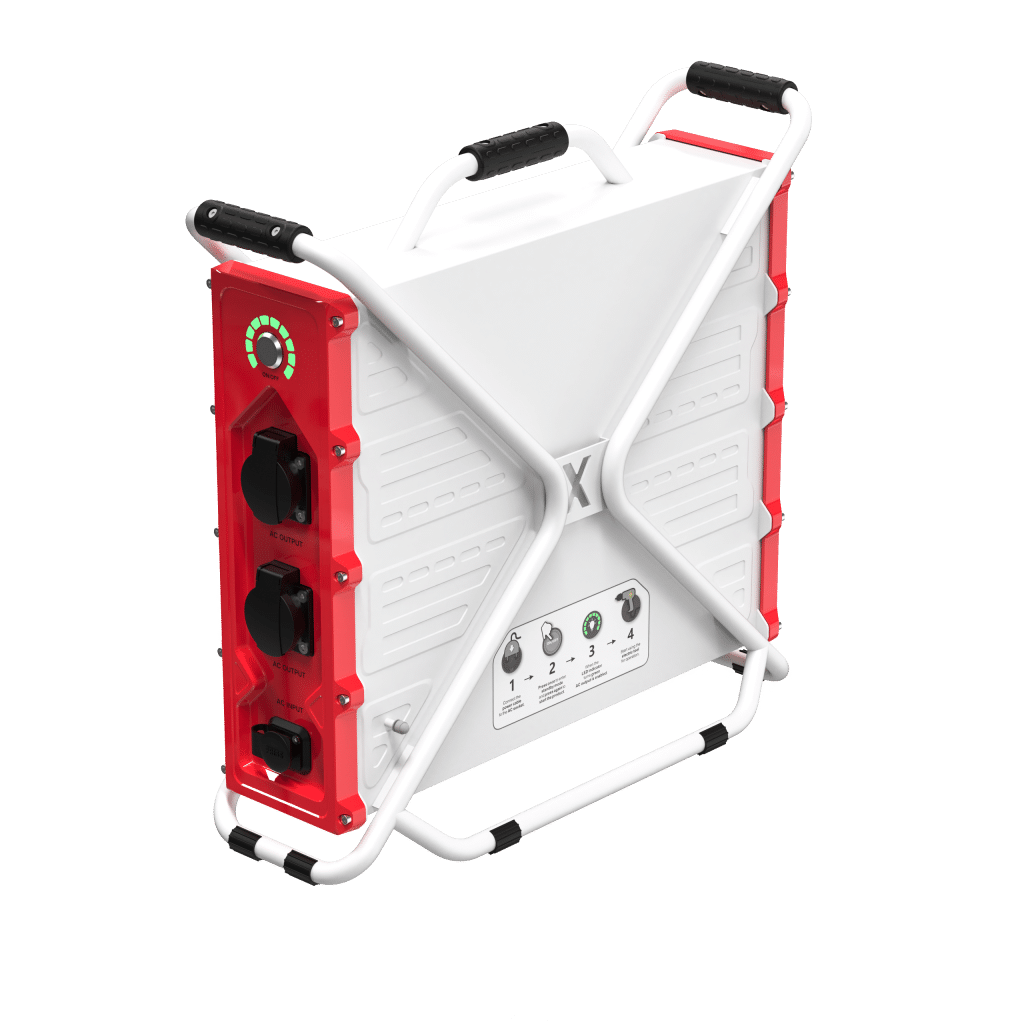
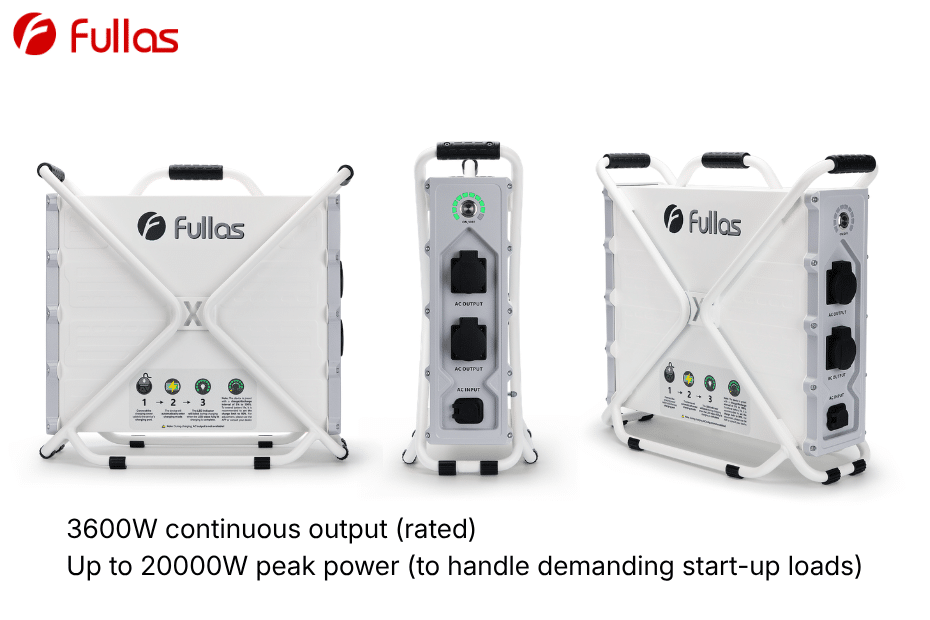
Here is a practical comparison.
Portable Power Station vs Gas Generator: Quick Comparison
| Factor | Industrial Portable Power Station | Gas Generator |
|---|---|---|
| Power Source | Stored battery energy | Gasoline |
| Startup | Instant electric output | Engine start required |
| Exhaust | No exhaust during operation | Produces combustion exhaust |
| Noise | Very low depending on model | Engine and exhaust noise |
| Indoor / Near-indoor Work | More suitable where electrical equipment is permitted | Requires outdoor placement and ventilation |
| Refueling | Recharge required | Add fuel |
| Routine Maintenance | No engine oil, spark plug or carburetor maintenance | Engine and fuel-system maintenance required |
| Long Continuous Runtime | Limited by battery capacity | Can continue with additional fuel |
| High Startup Loads | Depends heavily on peak and overload capability | Depends on generator size and engine |
| Best Applications | Construction, maintenance, film production, rental and mobile work | Remote, long-duration and continuous outdoor work |
The biggest difference is therefore not simply battery vs gasoline. It is how each system behaves during real professional work.
1. Power Output: Do Not Compare Rated Watts Alone
One of the biggest mistakes when comparing a portable power station with a gas generator is looking only at rated output.
Professional tools such as saws, pumps, compressors and welders can require much more power for a short period during startup.
For example, the FULLAS FPG3600 industrial portable power station provides:
- 3600W rated output
- Up to 20000W peak power
- 2304Wh battery capacity
- 230V / 50Hz output for the EU version
- IP54 protection
- 24kg net weight
- Approximately 2.5-hour charging time
The 3600W rated output determines the continuous load the unit can support, while the 20000W peak capability provides additional headroom when high-demand equipment starts.
This distinction is especially important on construction sites.
If you are unsure how much power common professional tools require, see our guide: How Much Power Do Construction Tools Need?
2. Noise: A Major Difference on Professional Jobsites
Noise is one of the clearest differences between the two technologies.
A gas generator relies on an internal combustion engine, which creates engine, exhaust, cooling and vibration noise.
Battery power stations do not need an engine to produce AC output.
The FPG3600, for example, operates at below 30dB under specified operating conditions, making it particularly useful for jobs where the power source is located close to workers or customers.
This matters for:
- Indoor renovation
- Film and lighting production
- Residential construction
- Night work
- Mobile maintenance
- Events
- Equipment rental
OSHA also recommends reducing workplace noise by choosing quieter equipment or increasing the distance between workers and noisy machinery.
For jobs where generator noise itself has become a problem, see: Why Is My Generator So Loud?
3. Exhaust and Working Environment
A gasoline generator produces combustion exhaust, while a battery power station produces no exhaust gases during operation.
This can completely change where the equipment can be deployed.
The U.S. Consumer Product Safety Commission warns that portable fuel generators should never be operated indoors or in enclosed spaces because of carbon monoxide hazards.
For professional teams working close to buildings, film sets, workshops or populated areas, this is a major operational consideration.
A battery power station eliminates the generator exhaust source, although normal electrical safety, ventilation and equipment-specific requirements still need to be followed.
4. Runtime: This Is Where Gas Generators Still Win
Gas generators have one important advantage:
You can keep adding fuel.
If a remote job requires many hours of continuous high-load operation and fuel is readily available, a gasoline generator can be more practical.
A portable power station has a fixed amount of stored energy.
For example, the FPG3600 stores 2304Wh. Actual runtime depends on:
- Connected load
- Startup demand
- Duty cycle
- Ambient conditions
- Conversion losses
This makes battery power particularly suitable for intermittent professional workloads, where tools do not operate continuously at maximum power.
Typical examples include drilling, cutting, maintenance, inspection, lighting and mobile repair.
For continuous heavy loads throughout an entire shift, a fuel generator may still be the more practical choice.
5. Maintenance: Battery Power Is Much Simpler
Maintenance is another major difference.
A gas generator has an engine and therefore requires attention to components such as:
- Engine oil
- Spark plugs
- Air filters
- Fuel system
- Carburetor
- Exhaust system
A battery power station removes most of these engine-related service requirements.
Routine management is mainly focused on charging, storage conditions, ports, battery status and electrical inspection.
For contractors or rental companies managing multiple units, this can mean less routine service work and fewer fuel-related operating tasks.
We have covered this topic separately in Fuel Generators vs Battery Power: Which Is Easier to Maintain?
6. What About High-Power Professional Tools?
This is where industrial power stations need to be separated from consumer camping products.
A 500W or 1000W camping power station is not a realistic replacement for a professional generator running high-demand tools.
Professional applications require stronger:
- Rated output
- Peak output
- Overload capability
- AC stability
- Protection
- Thermal management
The FPG3600 is designed around this type of application with 3600W continuous output and up to 20000W peak power.
Welding is a good example.
A welder can create demanding and rapidly changing loads, so simply having enough battery capacity is not sufficient. Peak power and overload performance become critical.
For a dedicated explanation, see: Can a Portable Power Station Run a Welder?
So, Which Is Better for Professional Use?
There is no universal winner.
Choose a portable power station when you need:
- Low-noise operation
- No fuel handling
- No exhaust during operation
- Fast deployment
- Low routine maintenance
- Mobile power near workers
- Power for intermittent professional tools
- Construction, film, rental or field-service applications
Choose a gas generator when you need:
- Very long continuous runtime
- Easy refueling in remote locations
- Continuous heavy loads for many hours
- Power where charging infrastructure is unavailable
For many modern professional applications, however, the question is no longer whether battery power can replace every generator.
A better question is:
Which generator jobs actually still need an engine?
For mobile construction, maintenance, equipment rental, film production and other noise-sensitive applications, industrial battery power can eliminate many of the disadvantages associated with traditional fuel generators while still delivering serious tool-starting capability.
The FULLAS FPG3600 Industrial Portable Power Station is designed specifically for these professional applications, combining 3600W rated output, up to 20000W peak power, 2304Wh capacity, IP54 protection and <30dB operation in a 24kg portable system.
FAQ
Is a portable power station better than a gas generator?
For low-noise, mobile and short-to-medium-duration professional work, a portable power station is often more convenient. Gas generators remain useful for long continuous operation where fast refueling is required.
Can a portable power station replace a generator on a construction site?
For many drilling, cutting, charging, lighting and maintenance tasks, yes—provided the power station has sufficient rated output, peak power and overload capability.
Can a 3600W portable power station run power tools?
Yes, but tool compatibility should be checked using both running wattage and startup demand. Motor-driven tools may require significantly higher peak power when starting.
What is the main disadvantage of a portable power station?
Stored energy is limited by battery capacity. For continuous heavy loads over many hours, recharging becomes necessary, while a gas generator can continue operating by adding fuel.