









How to Choose the Right Power Portable Station for Construction Sites
Construction sites are tough on equipment. Dust gets everywhere, power demand spikes when tools start up, and the “nearest outlet” is often too far away (or doesn’t exist yet). A power portable station can solve those headaches—but only if you pick the right one. This guide keeps it practical: what to check, what to avoid, and how to match a unit to real jobsite tools.
What a construction site really needs from a power portable station
A jobsite power station is not the same as a camping power box. On construction sites, you typically need:
- High continuous AC output (for grinders, drills, cut-off saws, mixers)
- Very high surge/peak output (for startup loads of motors and compressors)
- Durability (dust + splashes + vibration)
- Fast recharge (so it keeps working across shifts)
- Stable pure sine wave AC (for sensitive devices, chargers, and electronics)
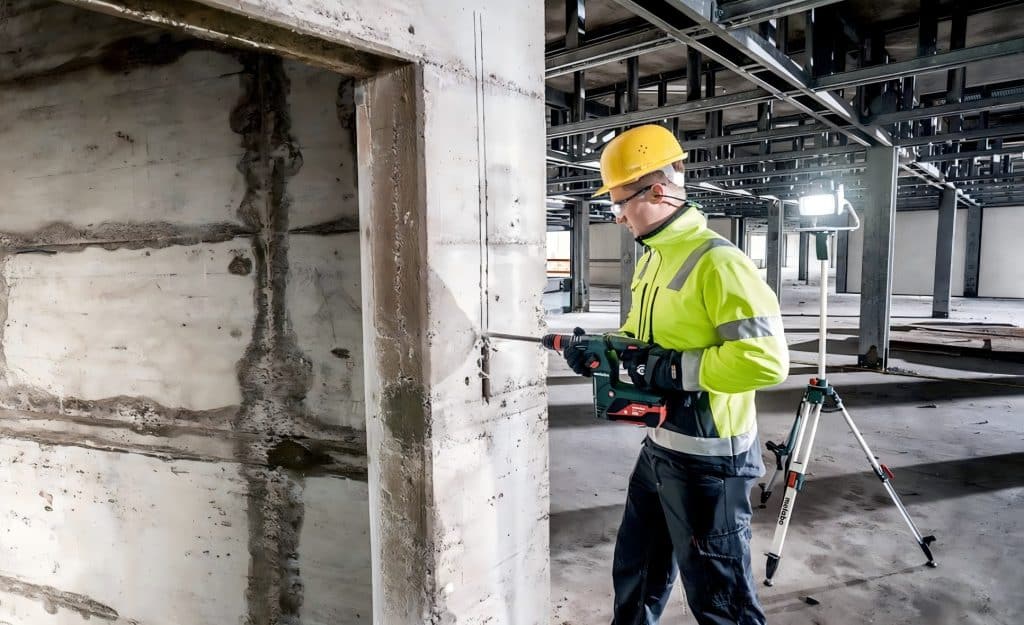
If you only focus on “big battery capacity,” you can still end up with a unit that trips overload every time a tool starts.
Step 1: List your tools and their real power needs
Make a quick list of the tools you want to run and note two numbers:
- Running watts (continuous): what it uses while operating
- Starting watts (surge): the brief spike when it starts (mostly motor-driven tools)
Examples (typical ranges):
- Angle grinder: 800–2000W (surge can be higher)
- Rotary hammer: 800–1500W
- Cut-off saw: 1500–2500W
- Small air compressor: 1000–2000W running, 2–3× surge
- Welding machines: often need higher continuous power and stable output (check exact spec)
Rule of thumb: if your site uses motor tools a lot, peak/surge power matters as much as rated power.
Step 2: Size the continuous output (don’t under-buy)
Your continuous rated power should cover:
- The largest tool you’ll run, plus
- A buffer for chargers, lights, and “someone plugs in another thing”
A practical target for many small-to-mid construction crews is 3000W–4000W continuous, because it covers a wide range of jobsite tools without living on the edge of overload.
If you routinely run multiple heavy tools at once, you may need more (or multiple units).
Step 3: Check peak power for startup loads (the #1 jobsite failure point)
If your power station’s peak output is too low, you’ll see:
- Tool won’t start
- Station beeps and shuts down
- Random trips when a motor kicks on
Look for a unit designed for industrial loads with a clearly stated peak power. For example, Fullas lists the FPG3600 at 3600W continuous output and up to 20000W peak power, built specifically for industrial worksites.
Step 4: Estimate runtime the simple way (capacity that actually matches a shift)
Battery capacity is usually in Wh (watt-hours). Runtime is roughly:
Runtime (hours) ≈ Battery Wh × Efficiency ÷ Load W
Efficiency varies, but 90% is a reasonable working assumption for many quality systems (and some manufacturers state it). Fullas lists efficiency up to 97% for the FPG3600.
Example with a 2304Wh station:
- Running a 1000W tool (average load):
2304Wh × 0.9 ÷ 1000W ≈ 2.07 hours - Running a 2000W tool continuously:
2304Wh × 0.9 ÷ 2000W ≈ 1.03 hours
Real sites are usually stop-and-go, so you often get longer practical use than “continuous runtime,” but it’s still the right way to compare models.
Fullas lists FPG3600 rated capacity 2304Wh (2.3kWh).
Step 5: Choose a protection level that matches dust, splashes, and messy work
Construction sites are dusty, and water happens—wet cutting, rain, washdown, spills.
Look for at least IP54 if the unit will be used outdoors or around dust and splashes. Fullas specifies IP54 protection rating for FPG3600.
IP ratings describe how well a device is protected against solids and liquids. According to the IP Code on Wikipedia, IP54 means limited dust ingress protection and protection against splashing water from any direction (source: Wikipedia).
(If you must work in heavy rain exposure or direct water jets, you’ll need higher protection and stricter placement—IP ratings don’t make something “waterproof in any condition.”)
Step 6: Recharge speed matters more than people expect
A station that takes forever to recharge becomes a “backup-only” device. On worksites, faster charging means:
- Less downtime
- More usable power in a day
- Easier rotation between teams
Fullas highlights 2.5h charging time for FPG3600.
That’s the kind of spec that supports real jobsite cycles.
Step 7: Ports and power quality (avoid weird tool behavior)
For construction use, check:
- Pure sine wave AC output (important for chargers, control boards, sensitive electronics)
- Correct AC voltage for your market (220V / 230V, frequency 50Hz in many regions)
- Enough outlets for your workflow (don’t force unsafe daisy chains)
Fullas lists 220Vac/230Vac pure sine wave with stable frequency specs for different versions.
Step 8: Mobility: weight, handle design, and how crews actually carry it
If it’s too heavy or awkward, crews avoid using it.
Fullas lists 24kg net weight and positions it as single-person carry, plus a jobsite-friendly form factor.
That’s a realistic “portable industrial” weight class.
Step 9: Monitoring and fault alerts save time on sites
When something goes wrong on site, you don’t want guesswork.
App monitoring can be genuinely useful if it provides:
- Real-time input/output power
- Battery level and temperature
- Fault alerts with guidance
Fullas includes an intelligent monitoring App with real-time status, history records, and fault alerts.
A quick checklist before you buy
If a “power portable station” is for construction sites, it should tick most of these boxes:
- ✅ 3000W+ continuous AC output (for serious tools)
- ✅ Very strong peak/surge output (for motor startups)
- ✅ IP54 (or better) protection for dust/splash environments
- ✅ Fast charging (so it’s usable daily, not occasionally)
- ✅ Pure sine wave AC
- ✅ Clear overload behavior and safety protections
- ✅ Practical portability (weight + carry design)
- ✅ Monitoring / fault alerts (optional but valuable)
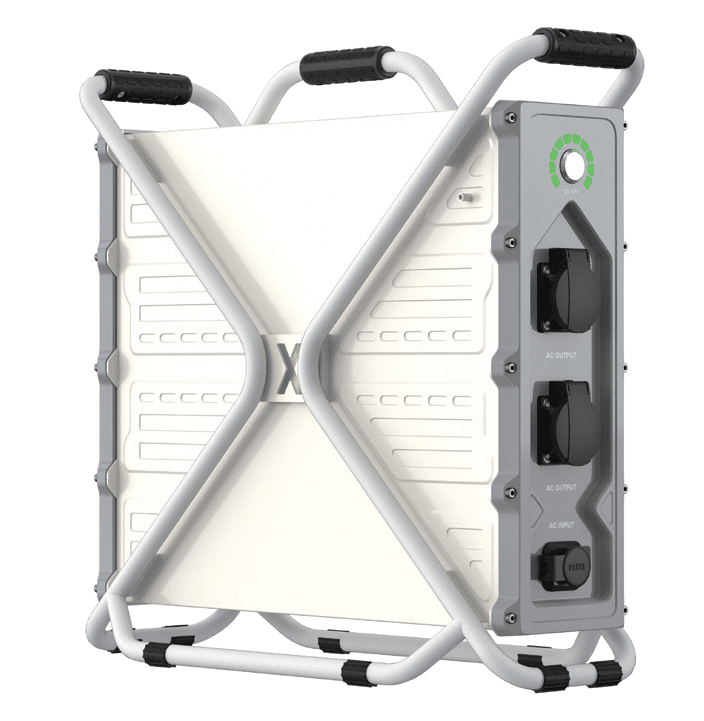

Recommended for construction sites: Fullas FPG3600 Industrial Power Station
If you want a model built around jobsite realities (surge loads, dust, portability, and professional monitoring), the Fullas FPG3600 is designed exactly for that use case: 3600W continuous output, up to 20000W peak power, 2304Wh capacity, IP54 protection, ~2.5h charging time, App monitoring, and industrial-oriented safety features.