









How to Adjust the Unloader Valve on a Pressure Washer Safely
If your pressure washer suddenly feels weak, surges while spraying, or seems too aggressive for the surface you are cleaning, the unloader valve may need attention. This small component plays a big role in how your machine controls pressure. When the trigger is released, the unloader redirects water into bypass instead of allowing pressure to keep building in the system. That helps protect the pump and keeps the washer operating safely.
The good news is that adjusting an unloader valve is not complicated on machines that are designed with an adjustable valve. The key is to make small changes, watch the pressure carefully, and avoid forcing the valve beyond the safe operating range of the machine. Manufacturers such as Graco note that turning the adjustment knob counterclockwise reduces pressure, while returning it clockwise brings it back toward maximum, and they specifically warn against overtightening because it can cause breakage and loss of pressure.
In this guide, I will walk you through what the unloader valve does, when it should be adjusted, how to do it safely, and what to check if pressure still is not right afterward. I will also show where a reliable machine setup matters, especially for outdoor and professional cleaning jobs.
What does the unloader valve actually do?
Many users assume the pump creates the final cleaning pressure by itself, but in a pressure washer system, pressure is closely tied to water flow moving through a nozzle opening. General Pump explains that the nozzle creates restriction, and the unloader regulates pressure by directing water either to the nozzle or into bypass depending on the system setting. That is why pressure problems are not always caused by the unloader alone. A worn nozzle, a leak, or a restriction elsewhere can also change the result you see at the spray gun.
In simple terms, the unloader valve works like a traffic controller. When you are spraying, it allows water to move toward the nozzle. When you release the trigger, it diverts the flow away from the nozzle and back into bypass. Landa describes the unloader as a device that diverts flow from the outlet side back toward the inlet side of the pump under virtually no pressure, helping prevent dangerous pressure buildup.

Signs your unloader valve may need adjustment
A pressure washer does not always say directly that the unloader valve is the problem, but a few symptoms usually point you in that direction. If pressure is inconsistent, if the machine surges, if the spray feels weaker than normal, or if pressure spikes after trigger release, the unloader setting may be off or the valve may be wearing out. General Pump also notes that pressure cycling or “hunting” can happen when pressure bleeds off in bypass, sometimes because of leaks, injector problems, hose damage, or internal valve wear.
Another clue is when the washer seems to run normally but cleaning performance does not match what the machine should deliver. In that situation, it is smart to check the nozzle size, hose condition, and inlet water supply before blaming the valve. A larger or worn nozzle can reduce restriction and therefore reduce operating pressure, even if the unloader itself is working.
Before you adjust anything
Do not start turning the unloader knob blindly. Safety comes first. The CDC advises users to follow the owner’s manual, never point a pressure washer at people, and take pressure-washer injuries seriously because the spray can cause severe wounds. Shutdown and pressure relief matter just as much during maintenance as during washing.
Before adjustment, switch the machine off, shut off the water or power source as appropriate, and squeeze the trigger to relieve trapped pressure. Lavor’s operating manual specifically instructs users to open the gun to relieve pressure during shutdown, and Graco’s manual includes a pressure-relief procedure before service steps. This is one of the easiest ways to avoid getting surprised by residual pressure in the hose or pump.
It is also worth checking the machine over before touching the valve. Look for hose leaks, loose fittings, clogged nozzles, damaged seals, or dirty inlet strainers. If one of those is the real issue, adjusting the unloader will not truly fix the problem and may only mask it for a short time. General Pump’s guidance is clear that leaks and worn nozzles can create pressure symptoms that look like unloader trouble.
How to adjust the unloader valve on a pressure washer
Here is the practical method most users can follow.
Start by locating the unloader valve. It is usually mounted close to the pump discharge side. On many machines, it will have an adjustment knob, cap, or screw. If your machine uses a fixed or factory-set system, stop here and check the manual before changing anything. The exact design varies by model, so you should always confirm the component layout for your washer.
Now connect a pressure gauge if your setup allows one. This step is strongly recommended because you do not want to adjust based only on feel. It is very easy to go too far without realizing it, especially on commercial or gasoline-powered machines with strong output. General Pump notes that the system’s safe setting is limited by the lowest-rated component in the system, not just by the pump alone.
With the machine running and water flowing normally, make very small adjustments. On adjustable systems, turning the unloader counterclockwise lowers pressure. Turning it clockwise raises it back toward maximum. Do this gradually, spray for a moment, and re-check the reading after each change. Graco specifically warns users not to overtighten the unloader, because breakage can cause immediate pressure loss and expensive repairs.
Keep your goal practical. You are not trying to make the pressure washer produce more than its design allows. You are trying to match the pressure to the job while keeping the machine stable. If you are washing delicate painted panels, trim, or softer surfaces, back the pressure down. If you are cleaning harder surfaces such as concrete or heavily soiled equipment, bring pressure up carefully, but stay within the machine’s rated operating range and the limits of the hose, gun, nozzle, and pump.
After adjustment, test the machine under real working conditions. Spray continuously for a short period, release the trigger, then spray again. You want smooth pressure buildup, stable spray, and no obvious hunting, leaking, or abrupt spikes. If the machine still surges or pressure is still low, the root cause may be elsewhere.
A common mistake: letting the machine sit in bypass too long
This is one of the most overlooked issues with pressure washer operation. When the trigger is closed, the washer can enter bypass mode. If it stays there too long, heat builds up inside the pump. Graco’s manual says not to allow the unit to operate in bypass mode for more than three minutes, and Lavor gives the same warning, noting that excessive water temperature can damage the pump and may void warranty coverage.
That matters when testing your unloader valve. Do not let the machine idle for long stretches with the trigger closed while you think about the next adjustment. Make a small change, test it briefly, and keep moving. Long bypass time is bad for pump seals and overall pump life.
What if pressure is still wrong after adjustment?
If the adjustment does not solve the issue, work through the rest of the system instead of continuing to crank on the valve. Start with the nozzle. Because pressure is created by forcing water through the nozzle orifice, a nozzle that is worn or oversized can cause weak output even when the pump and unloader are fine.
Then inspect for leaks between the pump, injector, hose, gun, and fittings. General Pump notes that if trapped pressure bleeds off, the unloader can begin to cycle or hunt. Even a small leak can create strange performance symptoms. After that, make sure the water supply is adequate and the inlet line is not kinked or restricted.
If the valve leaks externally, sticks, or cannot hold a stable setting, replacement may be a better answer than more adjustment. At some point, a worn unloader stops being a tuning issue and becomes a parts issue. When that happens, replacing it with the correct specification part is the safer option.
Where machine quality makes a real difference
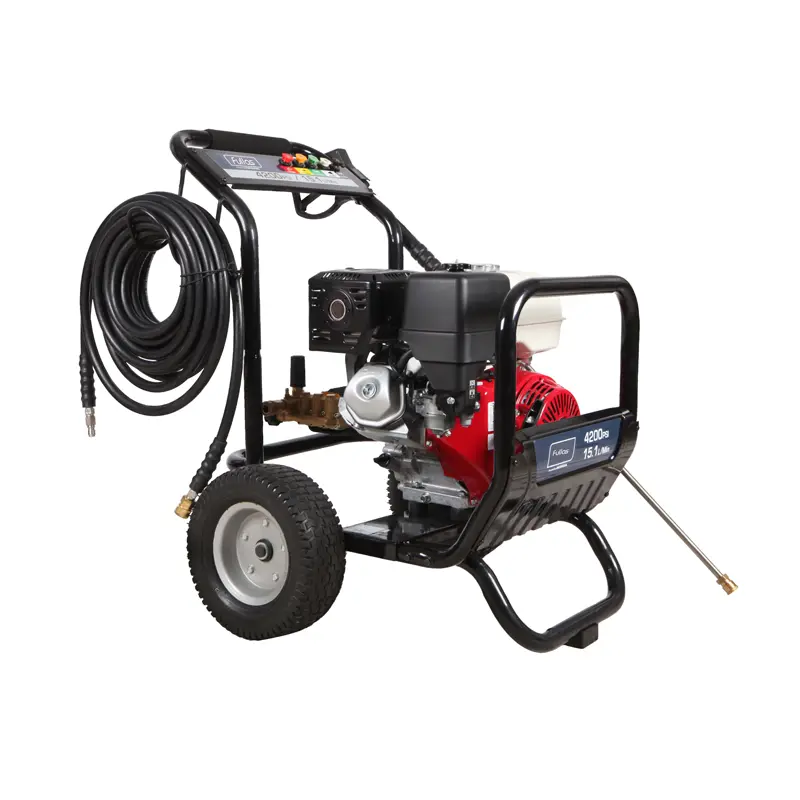
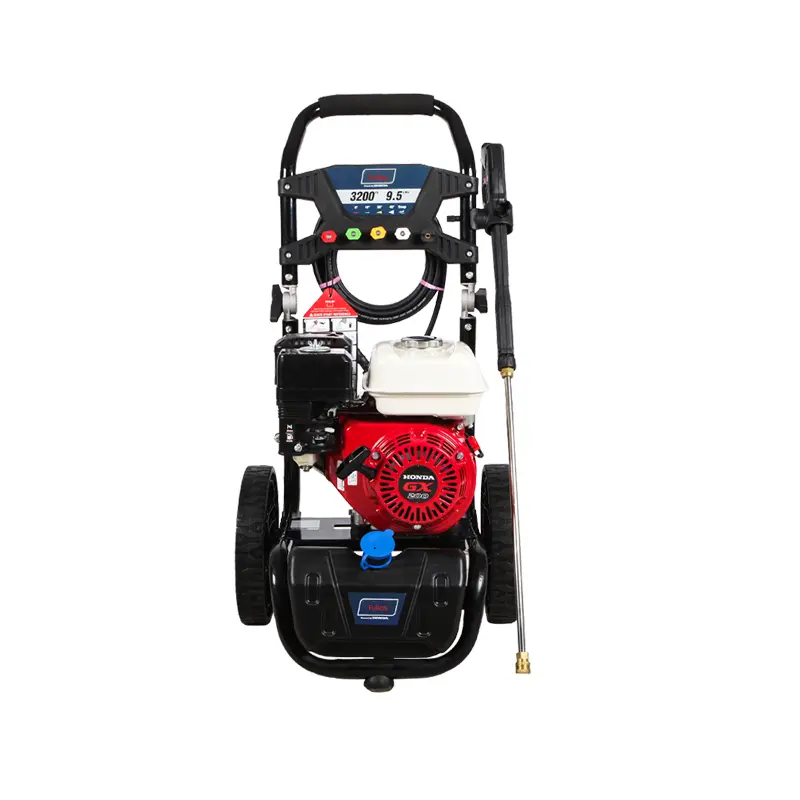
A good unloader adjustment can improve performance, but it cannot turn a weak or mismatched machine into a professional one. For distributors and buyers looking for gasoline-powered outdoor cleaning equipment, machine design matters just as much as valve setting. According to your product page, Fullas high pressure washers are built for construction sites, agriculture, workshops, and industrial cleaning, with gasoline-powered operation for locations where electricity is limited or unavailable. Fullas range covers models from 1800 to 4200 PSI and up to 15.1 L/min flow, which gives buyers options from portable daily cleaning to heavier-duty field work.

That product range also makes it easier to match the machine to the job instead of relying on valve adjustment to do all the work. For example, the FPW-2500H delivers 2500 PSI and 8.7 L/min for farms, workshops, and light commercial use. The FPW-3200H steps up to 3200 PSI and 9.5 L/min for more demanding cleaning. The FPW-4200H is the heavy-duty option, delivering 4200 PSI and 15.1 L/min with a triplex pump and 15 m hose for industrial facilities, fleet maintenance, and high-load cleaning operations.
A sentence you can naturally place here as an internal sales bridge is this:
If you need a reliable machine before fine-tuning pressure settings, explore Fullas high pressure washers for outdoor, agricultural, workshop, and industrial cleaning applications. Your own site highlights open-frame gasoline designs, stable high-pressure output, and OEM/ODM support for global distributors, which fits well in a B2B-focused article like this one.
Final thoughts
Adjusting the unloader valve on a pressure washer is really about control, not guesswork. When done correctly, it helps you fine-tune cleaning performance, reduce unstable spray behavior, and protect the pump from unnecessary strain. The safest approach is simple: relieve pressure first, make small changes, test under load, and never exceed the safe limits of the system. That is consistent with manufacturer guidance across pressure washer manuals and pump resources.
If your washer still shows low pressure, surging, leaks, or overheating after adjustment, stop turning the valve and inspect the rest of the system. In many cases, the real issue is a worn nozzle, a leak, or a component mismatch rather than the unloader setting itself. And if you are sourcing machines for professional use, starting with a properly matched gasoline pressure washer will save far more time than repeated adjustments later.
FAQs
1. What does the unloader valve do on a pressure washer?
The unloader valve controls how water flows through the pressure washer system. When you pull the trigger, water is directed to the spray nozzle. When you release the trigger, the valve redirects the flow into bypass mode to prevent dangerous pressure buildup inside the pump.
2. How do I know if my unloader valve needs adjustment?
Common signs include unstable pressure, pulsing spray, low cleaning power, sudden pressure spikes, or the machine feeling too weak or too aggressive for normal use. Before adjusting the valve, it is also important to check the nozzle, hose, water supply, and fittings, because these parts can cause similar problems.
3. Can adjusting the unloader valve increase PSI?
It can help you fine-tune pressure within the machine’s designed operating range, but it will not turn a low-powered washer into a high-powered one. If you need significantly higher performance, the better solution is choosing a machine with the right PSI and flow rate for the job.
4. Which way do you turn an unloader valve to reduce pressure?
On many adjustable pressure washers, turning the unloader valve counterclockwise reduces pressure, while turning it clockwise increases it. However, designs can vary by model, so it is always best to confirm with the machine manual before making adjustments.
5. Is it safe to adjust the unloader valve by myself?
Yes, but only if you follow proper safety steps. Always shut off the machine, relieve trapped pressure, and make small adjustments while testing carefully. Never force the adjustment too far, and do not exceed the safe pressure rating of the pump, hose, gun, or nozzle.
6. What happens if the unloader valve is set too high?
If the setting is too high, the pressure washer may run above its safe operating limit. This can cause excessive wear on the pump, overheating, leaks, hose damage, or even failure of internal components. Over-adjustment can also make the machine harder to control during cleaning.
7. Why does my pressure washer still surge after adjusting the unloader valve?
If surging continues, the problem may not be the valve itself. A worn nozzle, air in the system, poor water supply, clogged inlet filter, leaking hose, or damaged seals can all cause pressure fluctuations. In many cases, these issues should be checked before replacing the unloader valve.
8. Can a bad nozzle affect pressure washer pressure?
Yes. The nozzle has a major effect on pressure because it creates the restriction that produces spray force. If the nozzle is worn, oversized, blocked, or damaged, the machine may lose pressure or behave inconsistently even if the unloader valve is working normally.
9. How long can a pressure washer stay in bypass mode?
A pressure washer should not stay in bypass mode for too long. When the trigger is released and water keeps circulating inside the pump, heat can build up quickly. To protect the pump, it is best not to leave the machine idling in bypass for more than a few minutes.
10. Should I repair the unloader valve or replace it?
If the valve is only slightly out of adjustment, careful tuning may solve the problem. But if it leaks, sticks, cannot hold stable pressure, or shows obvious wear, replacement is usually the better long-term solution. A worn valve often causes repeat performance issues even after adjustment.