









Horsepower vs CC: Which Matters More for Small Engines?
Small engines are widely used in generators, water pumps, pressure washers, and other power equipment. When selecting an engine, CC and horsepower are often the first specifications buyers notice, but they represent different aspects of engine performance.
👉 When comparing horsepower vs cc small engine specifications, many buyers assume higher CC always means more power.
This assumption, however, can lead to incorrect engine selection and performance expectations.


What CC really tells you
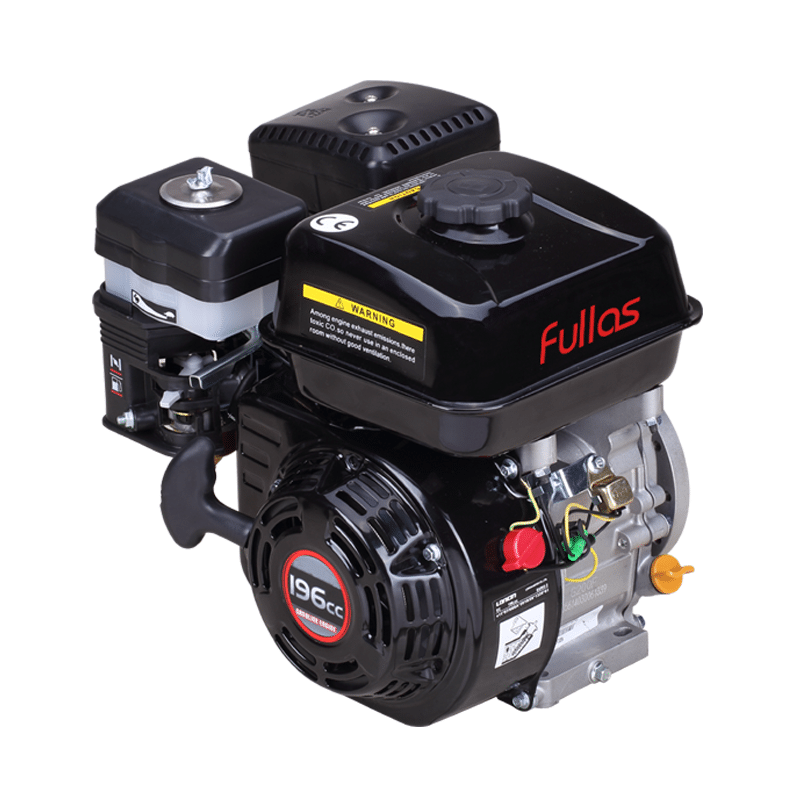
CC (cubic centimeters) is engine displacement: the total volume the pistons “sweep” inside the cylinder(s). In simple terms, it’s the engine’s physical size on the inside—how much air-fuel mixture it can potentially move per cycle. Displacement is typically calculated from bore, stroke, and cylinder count.
What CC is good for:
- A quick “category” clue: a 79cc mini engine and a 420cc class engine aren’t meant for the same workload.
- A rough hint about potential torque and durability when other design factors are comparable.
- Comparing similar engine families (same platform, same tech level).
What CC does not guarantee:
- That the engine will make more usable power.
- That it will be more fuel-efficient.
- That it will feel “stronger” in your real application.
What horsepower really tells you
Horsepower (HP) is a power output rate—how fast the engine can do work. The term traces back to James Watt and is commonly expressed as 550 ft-lb per second (in the imperial definition), with modern equivalences in watts/kilowatts.
A practical way to think about HP for small engines:
- Higher HP can mean the machine can maintain performance under load (e.g., generator output stability, faster cleaning on a pressure washer, quicker recovery after a sudden load).
But horsepower is tied to torque and engine speed. In imperial units, a common relationship is:
HP = (Torque × RPM) / 5252
That matters because two engines with the same CC can make different HP if they produce different torque, rev differently, or convert combustion into motion more efficiently.
The relationship: CC is “capacity,” horsepower is “result”
Here’s a clean mental model (similar in spirit to the common industry explanation, but with a different analogy):
- CC is like the size of a kitchen (how much space you have to work with).
- Horsepower is how many meals you can actually serve per hour (what you produce in real output).
A bigger kitchen can help you serve more meals—but only if the workflow, tools, and staff are efficient. Likewise, a higher-displacement engine can make more power, but the final horsepower depends on design and efficiency. This “capacity vs. result” framing is widely used in small-engine buying guides because it stops people from treating CC-to-HP as a fixed conversion.
Why the same CC can produce different horsepower
This is where most buyers get surprised. Two engines with identical displacement may show different HP ratings because of factors like:
- Fuel system: carburetor tuning vs. EFI, atomization quality, and load response. (EFI often improves throttle response and consistency across conditions; the final power outcome depends on calibration and design.)
- Compression ratio and combustion efficiency.
- Valve timing / breathing: intake/exhaust flow, port design, muffler restrictions.
- Governed RPM and how the engine is set to hold speed under load.
- Cooling and durability targets: some engines are tuned conservatively for longer life in harsh duty cycles.
- Measurement method: “peak” vs. “rated” vs. “net”/“gross” style reporting can change the published number.
So if you’re comparing engines from different brands or platforms, HP is the better “what you’ll feel” metric, while CC is the better “engine class” metric.
Can you convert CC to horsepower?
People try to do this all the time, but it’s only a rule of thumb, not a reliable conversion.
Some guides suggest something like “around 30–35cc per 1 HP” for certain small 4-stroke engines, but even those same guides warn it’s not very accurate because design/efficiency changes the result.
A safer way to use CC is:
- Use CC to narrow down the engine class (light / medium / heavy duty),
- Then use rated power, torque curve, and governed speed to confirm performance.
So… which matters more?
It depends on what you’re trying to solve:
Choose horsepower (and torque) when you care about performance under load
Examples:
- A generator that must hold output when loads cycle on/off
- A pressure washer that should maintain strong cleaning force without bogging
- Equipment that needs fast recovery and stable speed
Because horsepower is closer to “real output,” it often predicts your experience better than CC.
Use CC when you’re filtering by engine class, durability expectations, and compatibility
Examples:
- Matching an engine to a frame, mounting, shaft type (horizontal/vertical), and equipment category
- Comparing engines inside the same product family
- Estimating whether you’re looking at a light-duty vs. heavy-duty build
CC helps you avoid mismatching a tiny displacement engine to a workload that will shorten its life.
Quick selection checklist for small engines
If you want a “no-regret” selection process, check these in order:
- Application requirement (generator wattage target, pump flow/head, washer PSI/GPM, etc.)
- Rated power / governed speed (not just peak HP)
- Torque behavior (does it hold speed when load hits?)
- Fuel system + environment (temperature, altitude, duty cycle)
- Fitment (shaft type, mounting pattern, dimensions)
- Support + parts availability (especially for OEM/ODM projects)
FAQs
Is higher CC always better?
Not always. Higher CC can handle more load potential, but if the engine is inefficient or tuned conservatively, it may not deliver the horsepower you expect.
If two engines have the same HP, does CC matter?
Yes—especially for durability and how hard the engine must work to maintain that output. Two engines can share the same HP rating, but one may achieve it with less stress (depending on design, tuning, and duty targets).
Why do horsepower numbers look “too high” sometimes?
Some marketing specs emphasize peak output rather than rated/continuous output, and different standards can produce different published numbers.
As we discussed how engine displacement and power affect performance, also check out our 10 Practical Tips to Extend Engine Service Life to optimize your engine’s long-term reliability.
Fullas focuses on building a practical engine-and-power-equipment ecosystem (engines, generators, and supporting categories) so buyers can match specs to real applications—whether you need consistent output for generator duty, stable governed speed, or an engine platform that’s easy to integrate and support at scale.
If you’re selecting a small engine for generators, pumps, or other power equipment, understanding the balance between CC and horsepower is key to long-term performance and reliability. Choosing the right engine is not just about numbers—it’s about matching specifications to real working conditions.
If you need help selecting the right engine or power solution for your application, you’re welcome to contact us or click to fill out the inquiry form to receive a customized quotation. Our team will help you match the right specifications to your actual needs.