









10 Practical Tips to Extend Engine Service Life
To extend engine service life, proper maintenance and correct operating habits are critical for generators used in backup power, construction sites, farms, and industrial operations. In real working conditions, engine lifespan is measured by operating hours, start cycles, and load stability rather than calendar years. Industry data shows that with good maintenance, diesel generators can reach around 30,000 operating hours, while poor upkeep can reduce service life to less than 10,000 hours. This huge gap is usually caused by small but repeated issues such as improper loading, delayed oil and filter replacement, poor cooling efficiency, and degraded fuel quality.
Below is a specific, quantified checklist you can implement immediately. (Always follow your engine manual when it specifies stricter intervals.)
Tip 1) Track operating hours like a KPI (and service by hours, not calendar)
Create a simple “hours-based” maintenance log (spreadsheet or sticker on the frame). The goal is to service before wear becomes damage.
- Pre-start + every 8 hours of operation: check oil & coolant level, look for fuel/coolant/oil leaks, and inspect battery connections.
- Plan a professional inspection 1–2 times per year for condition checks and testing.
Why this matters: missed basics (low oil, loose hose clamps, slow leaks) are the fastest way to turn a routine service into an overhaul.
Tip 2) Keep load in the “healthy band” (avoid both overload and chronic light-load)
Load discipline is one of the biggest predictors of longevity.
- Avoid running near maximum capacity constantly—one guide highlights heat buildup as a major accelerator of wear.
- For diesel gensets, chronic light-load is also harmful: wet stacking risk increases when running <30% of rated load for extended periods.
- Many diesel engines operate most efficiently around 70–80% of rated kW output (good combustion temperature, cleaner exhaust).
- If you’re using 3-phase power: keep phase-to-phase load difference ≤25%, because large imbalance can damage alternator windings.
Action rule: aim for 30–80% in normal operation, and design your generator sizing so you don’t live at either extreme.

Tip 3) Exercise the generator on a schedule (and include load, not just no-load)
Engines that “sit” develop problems: weak batteries, moisture, varnish, and sticky components.
- Standard practice is to run standby generators about 30 minutes per exercise cycle—often weekly, but no less frequently than monthly.
- To prevent no-load wet stacking, apply ≥40% load at least quarterly (as often as monthly).
- NFPA-related guidance discussed in industry literature also points to monthly 30 minutes under load, and not less than 30% of nameplate kW under one method.
Practical setup: if your facility load isn’t stable enough for testing, use a load bank for scheduled runs.
Tip 4) Oil is the engine’s “life insurance” (check before start; change by hours)
Oil neglect is silent damage: it increases friction, heat, and wear.
- Check oil level before starting (simple and fast, prevents catastrophic low-oil operation).
- A commonly cited interval for generator engines is oil + filter every 150–200 operating hours (adjust for dust/heat and OEM specs).
Make it concrete: set a service reminder at 150 hours so you’re never late.
Tip 5) Follow filter intervals (fuel filters protect injection; air filters protect rings)
Filters are cheap; engines are not.
- Timely fuel filter replacement prevents blockages and unstable fuel delivery that can degrade performance and damage components.
- A practical planning range many service providers use: fuel filters every ~100–200 hours and air filters every ~200–300 hours (or annually), depending on fuel quality and environment.
High-dust sites: shorten air filter intervals aggressively—dust ingestion accelerates ring/cylinder wear.
Tip 6) Control temperature (cooling system neglect shortens life fast)
Overheating is a longevity killer. Keep the cooling system clean and serviced.
- Maintain coolant level and keep radiators/hoses free of leaks and debris; overheating “severely shortens” generator life.
- A common major-service milestone is ~2000 hours or 2 years for coolant-related service tasks in many maintenance references.
Operational habit: whenever you stop after heavy load, allow a brief cooldown (per OEM practice) instead of immediate shutdown under high temperature.
Tip 7) Battery care is non-negotiable (replace on a schedule, not on failure)
A generator that won’t start has “zero reliability,” even if the engine is perfect.
- Inspect terminals for corrosion, keep batteries charged, and replace every 2–3 years (24–36 months) as a rule of thumb.
Field check: slow cranking + corrosion = replace early, don’t gamble.
Tip 8) Treat fuel as perishable inventory (storage limits are real)
Old fuel causes starting issues, deposits, smoke, and injector/carb problems.
- One manufacturer-facing guide recommends gasoline storage ≤2 months, and diesel storage up to ~6 months before oxidation issues become more likely.
- Other generator fuel references commonly cite diesel 6–12 months on average (conditions matter), and recommend additives and cool storage for longer life.
Action rule: rotate fuel on a calendar, label cans/tanks with fill date, and use stabilizers/biocides when storage will be long.
Tip 9) Install correctly: level base + protection from dust/water
Bad placement creates vibration stress, corrosion, and electrical problems.
- Keep the unit out of dusty/damp environments, clean it regularly, and store it covered; also install on a level surface to reduce vibration and mechanical stress.
- A practical service provider also highlights generator coverings and regular cleaning as lifespan-extenders, especially where dust/rain exposure is common.
Quick win: add a cover/enclosure and maintain clearance for airflow—blocked intake = heat = shorter life.
Tip 10) Fix small issues immediately (don’t “run it until it breaks”)
Delays turn cheap fixes into expensive failures.
- Preventive programs often include inspections, performance testing, and fluid analysis, with professional checks at least once or twice a year to catch worn parts early.
What to log during exercise runs: stable voltage/frequency, normal temperature, normal oil pressure, no leaks, no excessive smoke.
A practical “hours-based” mini schedule (example you can copy)
- Every start / daily (or every 8 hours): oil & coolant level, leaks, battery connections
- Every 150–200 hours: oil + filter
- Monthly (minimum): 30-minute exercise run (prefer under load)
- Quarterly: apply ≥40% load test (or load bank)
- Every 2–3 years: battery replacement
- ~2000 hours or 2 years: coolant system major service milestone (follow OEM)
Where Fullas engines fit (OEM & distributor projects)
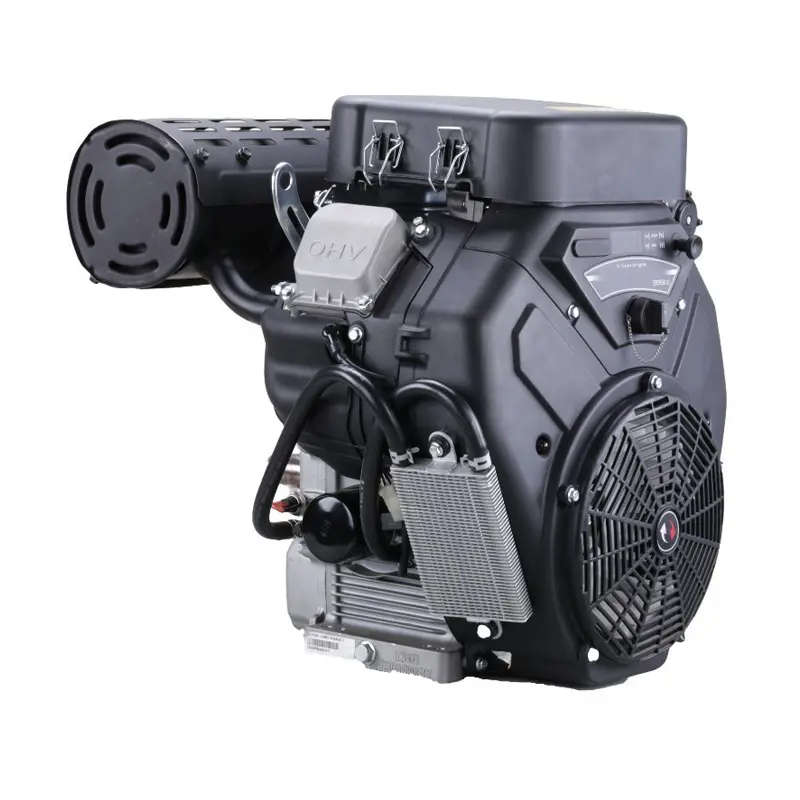
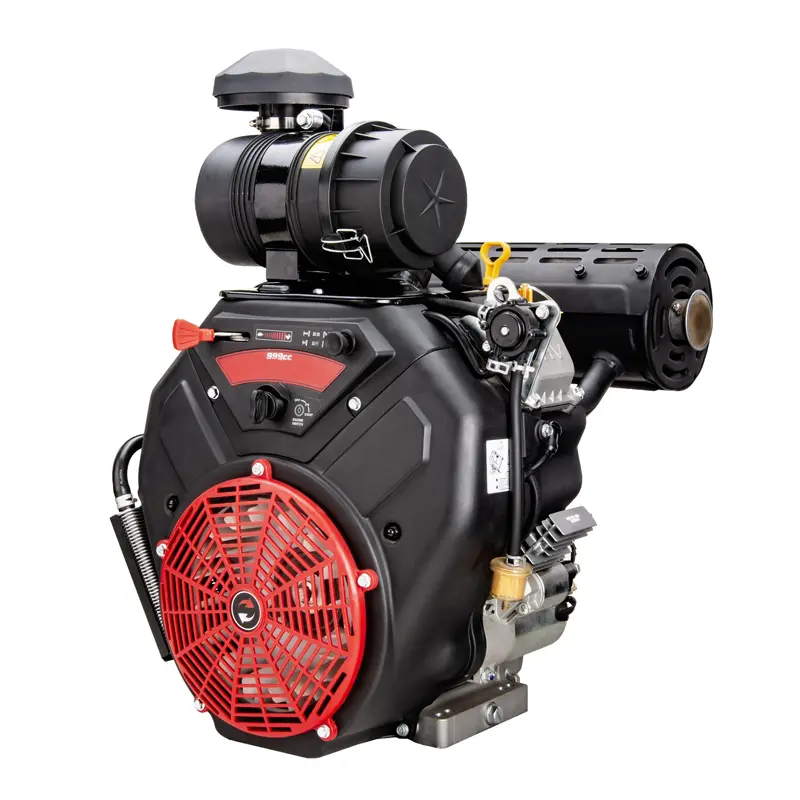
If you’re planning an OEM generator build or upgrading engines for equipment platforms, Fullas provides both gasoline and diesel engine options designed for industrial and agricultural applications. For example, the Fullas gasoline engine page lists a V-twin 999 cc model (H1000i) with 2.3 L oil capacity and EFI-related fuel system specs, suitable for higher power-demand equipment. China Engine Factory & OEM Supplier For diesel, the Fullas diesel engine lineup includes compact engines such as 247 cc class models with 0.8 L oil capacity and 2.5 L fuel tank, aimed at stable output in demanding environments.
Follow us on Facebook, LinkedIn, and YouTube to get the latest product updates, application cases, and factory news from Fullas.
