









O que é um gerador inversor de combustível duplo? Um guia completo para o comprador
Um gerador inversor de combustível duplo é um gerador portátil que pode funcionar tanto a gasolina como a GPL, utilizando tecnologia de inversor para fornecer energia elétrica limpa e estável.
O termo “dupla alimentação” não significa, normalmente, que o gerador queime dois combustíveis ao mesmo tempo. Significa que o operador pode selecionar uma das duas fontes de combustível disponíveis, normalmente gasolina ou propano líquido, de acordo com a disponibilidade de combustível e a aplicação pretendida. As especificações oficiais dos geradores de dupla alimentação da Generac também descrevem este tipo de equipamento como funcionando a gasolina ou a propano líquido.
Para os compradores, a principal vantagem é simples: um gerador inversor de dupla alimentação combina a flexibilidade de combustível de um motor de dupla alimentação com o baixo nível de ruído, a potência estável e o funcionamento eficiente associados à tecnologia de inversor.

Como funciona um gerador inversor de combustível duplo?
Um gerador inversor de combustível duplo inclui dois sistemas principais:
- Um sistema de alimentação que permite que o motor funcione a gasolina ou a GPL.
- Um sistema de inversor que controla a eletricidade fornecida às tomadas.
O motor aciona, em primeiro lugar, um alternador para gerar corrente alternada. Essa corrente é convertida em corrente contínua e, posteriormente, reconvertida em corrente alternada regulada pelo módulo inversor.
Este processo contribui para a produção de uma onda senoidal mais consistente e permite que a rotação do motor responda à carga ligada. A Honda explica que os geradores com inversor convertem a corrente alternada (CA) em corrente contínua (CC) e, em seguida, voltam a convertê-la em CA, contribuindo para uma saída elétrica mais limpa e consistente do que a de um gerador tradicional.
Pode ler mais sobre a tecnologia básica em Guia dos geradores com inversor da Honda.
Qual é a diferença entre a tecnologia de combustível duplo e a tecnologia de inversor?
Estes termos descrevem duas partes diferentes do gerador.
Dupla alimentação descreve as opções de combustível do motor.
Inversor descreve a forma como o gerador processa e controla a produção de energia elétrica.
Um gerador pode ser:
- Apenas a gasolina e convencionais
- Apenas a gasolina e com inversor
- Bicombustível e convencional
- Dupla alimentação e inversor
- Triplano e inversor
Um gerador inversor de dupla alimentação proporciona, portanto, tanto flexibilidade no que diz respeito ao combustível como uma potência de saída regulada eletronicamente.
Gasolina ou GPL: que combustível deve utilizar?
Não existe um único combustível que seja o melhor para todas as situações. A escolha certa depende da aplicação, do combustível disponível e da potência necessária.
| Fator | Gasolina | GLP |
|---|---|---|
| Abastecimento de combustível | Enchido no depósito integrado do gerador | Alimentado por uma botija externa de GPL |
| Utilização típica | Trabalho móvel, atividades ao ar livre e funcionamento normal | Utilização de reserva e locais onde existem botijas de GPL facilmente disponíveis |
| Reabastecimento | O combustível é vertido diretamente no depósito | É necessária a ligação do cilindro ao regulador |
| Potência do gerador | Frequentemente utilizado como referência principal para a potência nominal e máxima | A potência pode variar consoante o modelo |
| Configuração do armazenamento | O combustível permanece no depósito do veículo | O cilindro pode ser desligado do gerador |
| Mais adequado para | Utilizadores que necessitem de uma utilização móvel prática | Utilizadores que pretendam uma opção adicional de combustível |
Os compradores não devem partir do princípio de que a potência e o tempo de funcionamento são idênticos com ambos os combustíveis. Devem sempre verificar separadamente os dados relativos à potência nominal, à potência máxima e ao tempo de funcionamento para a gasolina e o GPL.
Deve também consultar-se o manual do produto antes de mudar de combustível. A posição do seletor de combustível, a ligação da mangueira, os requisitos do regulador e os procedimentos de arranque podem variar consoante os modelos.
Quais são as principais vantagens?
1. Maior flexibilidade em termos de combustível
Durante um corte de energia, um projeto ao ar livre ou um trabalho remoto, pode ser mais fácil obter um tipo de combustível do que outro. Um gerador inversor bicombustível permite ao operador escolher entre gasolina ou GPL, em vez de depender apenas de uma única fonte de combustível.
Esta flexibilidade é particularmente útil para os distribuidores que abastecem mercados com hábitos e disponibilidade de combustível diferentes.
2. Saída de energia limpa e estável
A tecnologia do inversor controla a tensão e a frequência antes de a eletricidade chegar às tomadas. Isto torna o gerador adequado para muitos aparelhos e dispositivos eletrónicos que requerem uma alimentação estável.
Entre os exemplos podem incluir-se:
- Portáteis e carregadores para telemóveis
- Televisores e equipamentos de comunicação
- Frigoríficos
- Sistemas de iluminação
- Ferramentas eletrónicas
- Eletrodomésticos para autocaravanas
- Equipamento de áudio e para eventos
O gerador deve, ainda assim, ter a tensão, a frequência, a potência nominal e a capacidade de arranque adequadas para o equipamento ligado.
3. Menor ruído em carga parcial
Muitos geradores com inversor conseguem reduzir a rotação do motor quando a procura de energia elétrica é baixa. As caixas fechadas e as estruturas de amortecimento de ruído podem reduzir ainda mais o ruído de funcionamento.
Ao comparar níveis de ruído, verifique sempre as condições de medição. Um valor medido com uma carga de 25% e a uma distância de sete metros não deve ser comparado diretamente com um valor medido em carga máxima ou a uma distância menor.
4. Melhoria na gestão do combustível
Uma vez que o motor nem sempre precisa de funcionar à velocidade máxima, um gerador com inversor pode utilizar o combustível de forma mais eficiente quando a carga ligada é baixa. O consumo real depende, no entanto, da cilindrada do motor, da percentagem de carga, do tipo de combustível e das condições de funcionamento.
5. Mais opções de candidatura
Os geradores inversores de dupla alimentação podem ser utilizados para:
- Sistema de alimentação de emergência doméstico
- Aplicações para campismo e autocaravanas
- Eventos ao ar livre
- Trabalhos de assistência técnica móvel
- Construção e manutenção
- Mercados de retalho e de arrendamento
- Preparação para a alimentação de emergência
Os modelos de maior potência também podem alimentar aparelhos de maior dimensão e equipamento profissional, desde que os seus requisitos de potência de arranque e de funcionamento contínuo se mantenham dentro da capacidade do gerador.
Quais são os modelos Fullas que oferecem funcionamento com dois tipos de combustível?
De acordo com a ficha técnica da Fullas, dois modelos da Série iS funcionam a gasolina e a GPL.
Geradores Fullas com inversor e dupla alimentação
| Modelo | Tipo de combustível | Potência nominal | Potência máxima | Motor | Autonomia com gasolina a meia carga | Nível de ruído |
|---|---|---|---|---|---|---|
| FP3500iS(E) | Gasolina/GPL | 3200 W | 3400 W | 150 cc | 4,5 horas | 62 dB(A) |
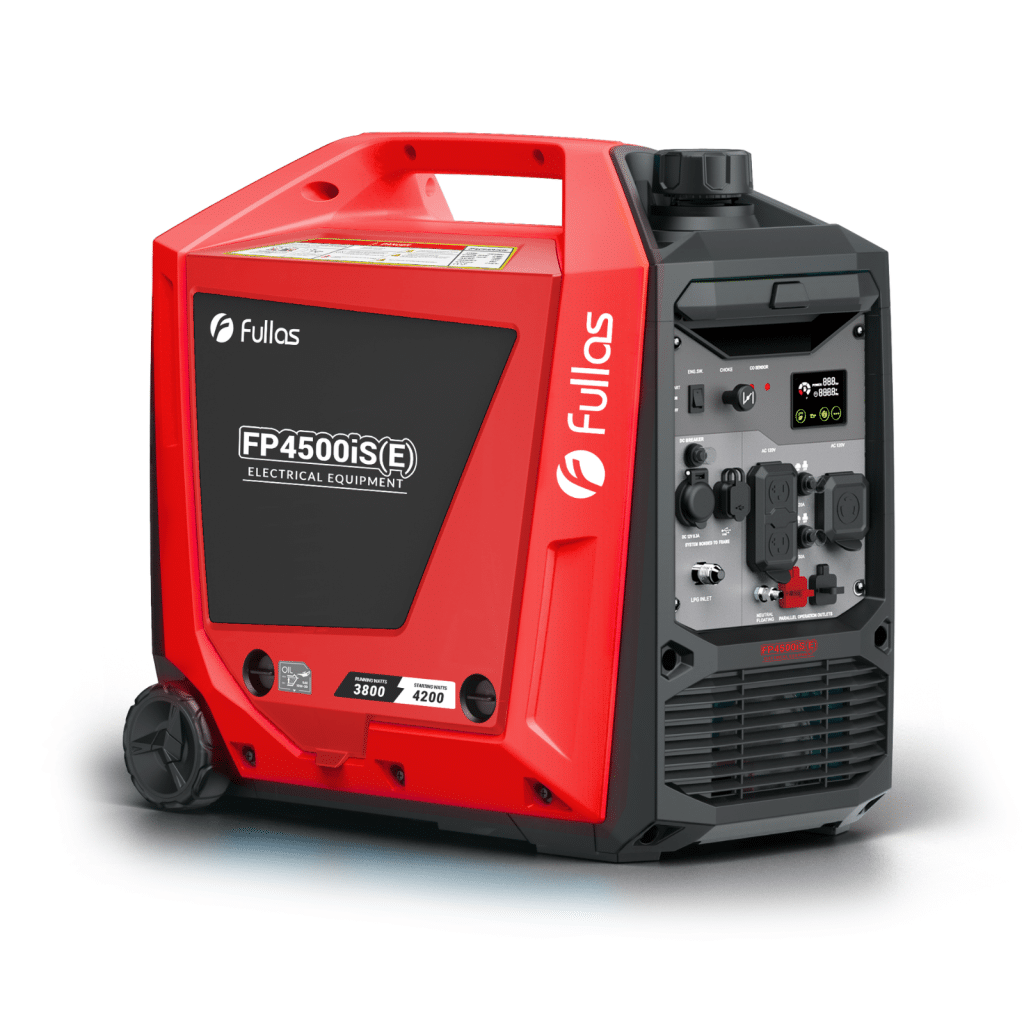
| FP4500iS(E) | Gasolina/GPL | 3800W | 4200 W | 174 cc | 7,5 horas | 63 dB(A) |
Ambos os modelos suportam as opções de arranque por recuo, elétrico e remoto. O FP4500iS(E) inclui ainda pegas e rodas, tornando-o mais prático para aplicações que exigem transporte frequente.
Explore estes modelos no Página do produto «Gerador com inversor Fullas».
Quais são os modelos Fullas que oferecem três opções de combustível?
A Fullas também disponibiliza modelos de maior potência que funcionam a gasolina, GPL e gás natural.
| Modelo | Tipo de combustível | Potência nominal | Potência máxima | Autonomia com gasolina a meia carga | Nível de ruído |
|---|---|---|---|---|---|
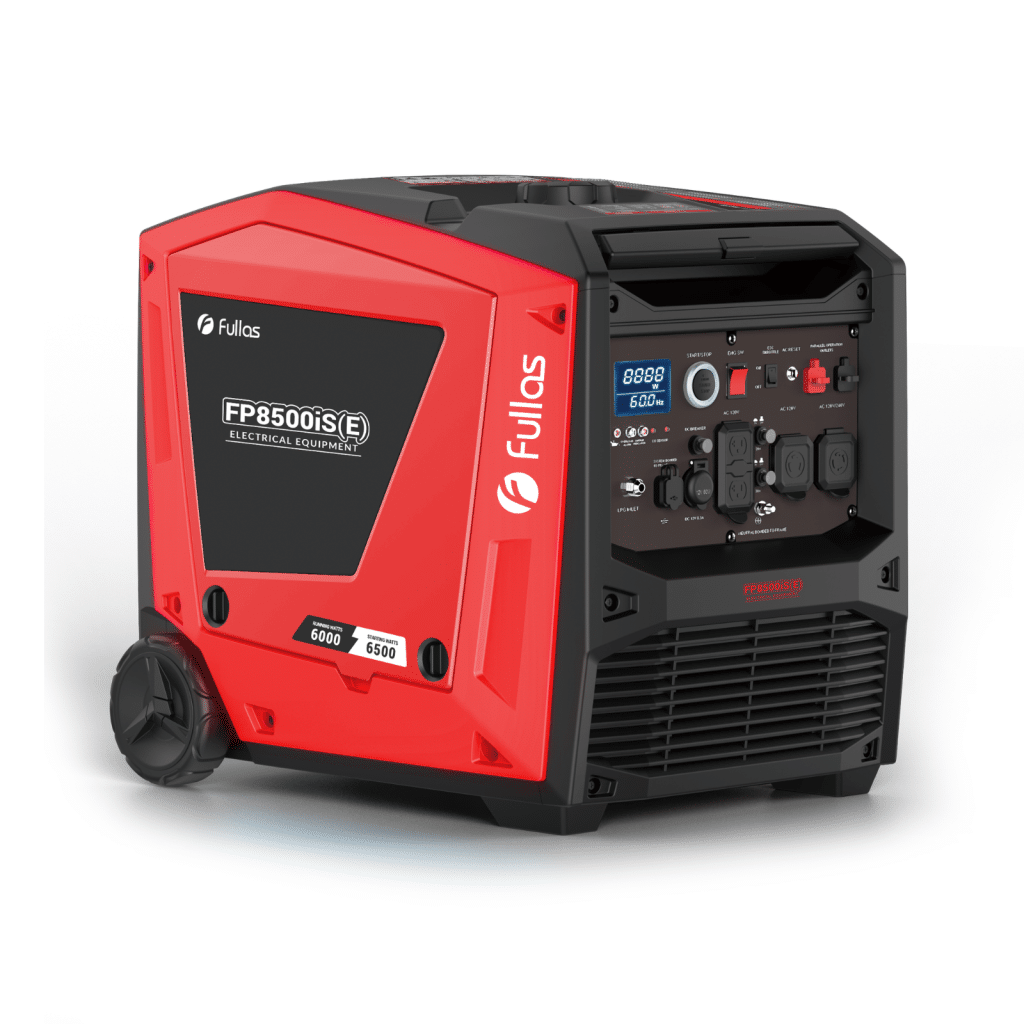
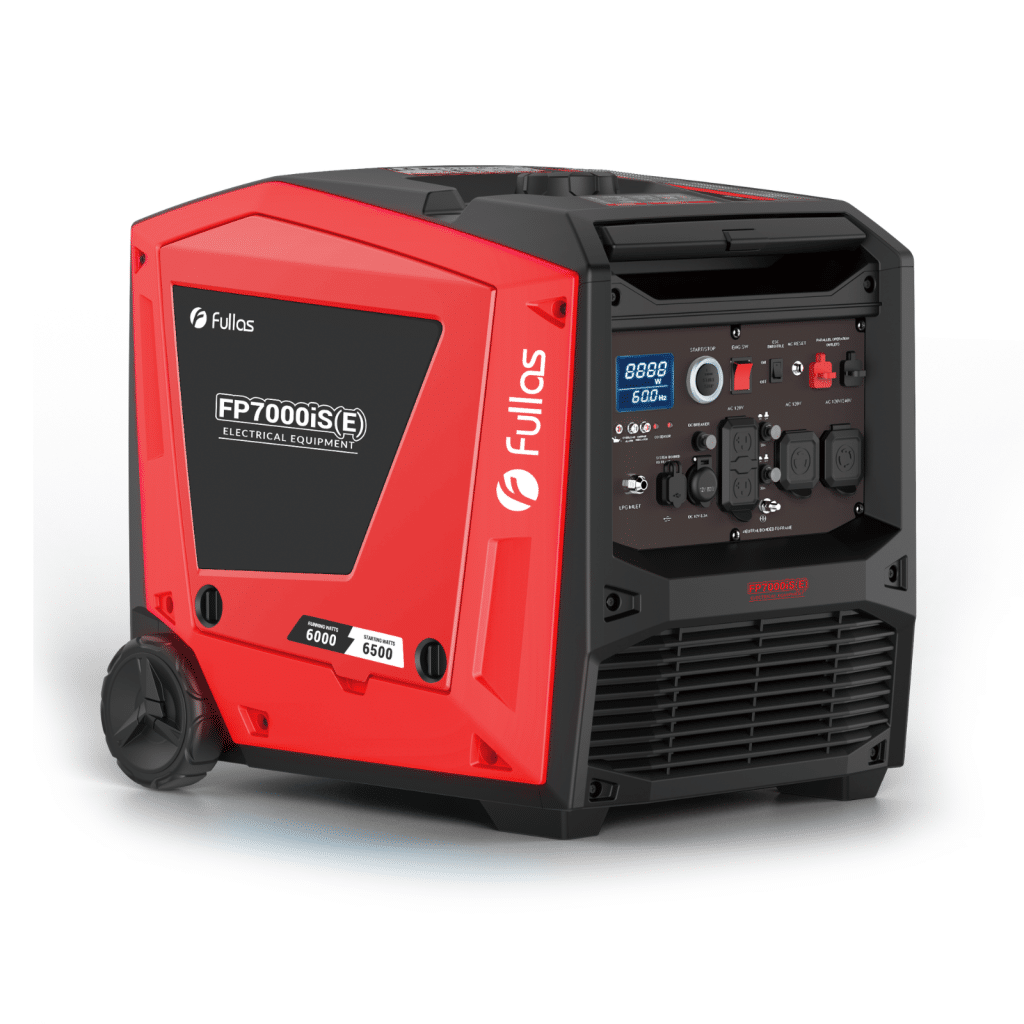
| FP7000iS(E) | Gasolina/GPL/GN | 6000W | 6500 W | 8,5 horas | 63 dB(A) |
| FP8500iS(E) | Gasolina/GPL/GN | 7200W | 7600 W | 7 horas | 63 dB(A) |
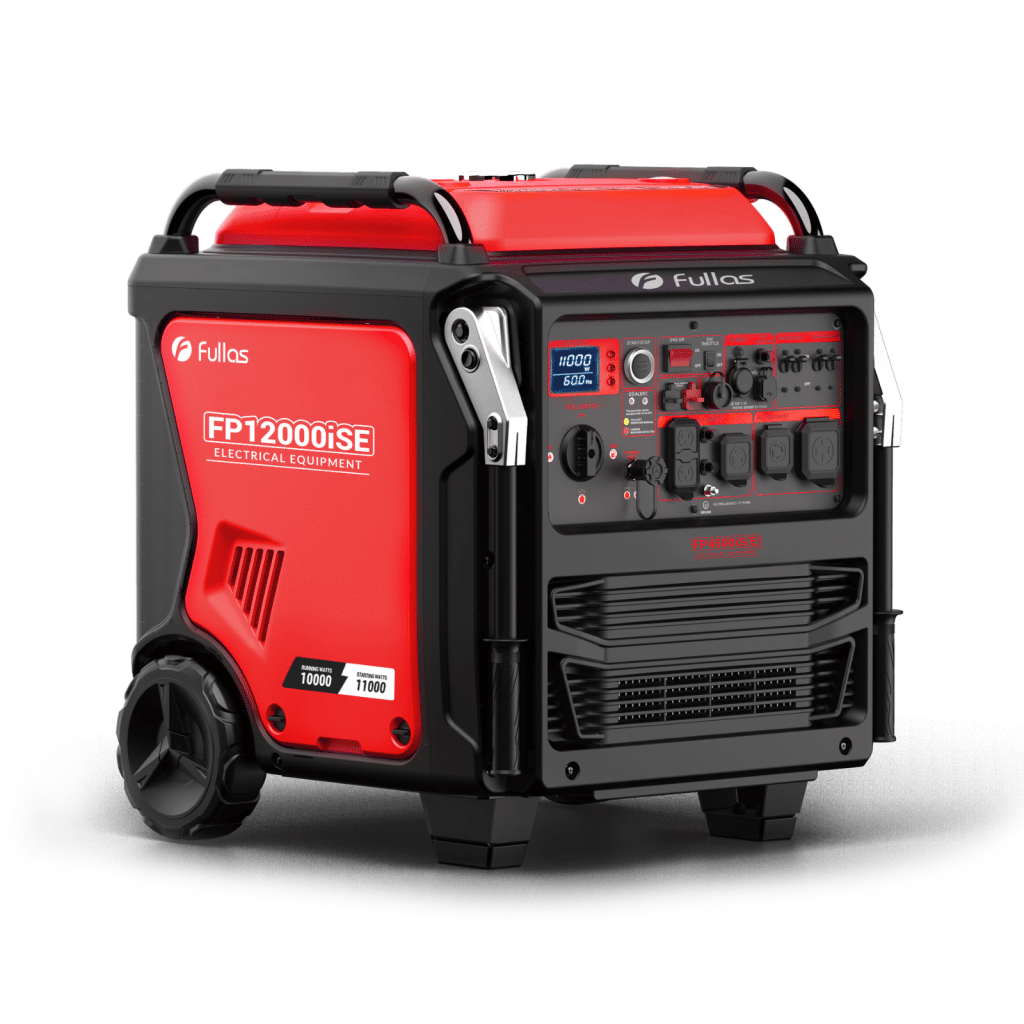
| FP12000iSE | Gasolina/GPL/GN | 10 000 W | 11 000 W | 9,5 horas | 60 dB(A) |
Estes modelos devem ser descritos como geradores inversores trifuel ou geradores com inversor multicombustível, em vez de apenas modelos de combustível duplo.
O FP12000iSE também suporta configurações monofásicas e trifásicas, tornando-o mais adequado para requisitos de potência mais elevados e para aplicações profissionais.
Como escolher o modelo certo
Escolha o FP3500iS(E) quando:
- É necessário um modelo compacto de dupla alimentação
- Uma potência nominal de aproximadamente 3,2 kW é suficiente
- É importante que o produto tenha um peso mais baixo
- O gerador será utilizado para atividades ao ar livre, como fonte de energia de reserva básica ou como fonte de energia móvel
Escolha o FP4500iS(E) quando:
- É necessária mais potência contínua e de arranque
- É importante que a gasolina dure mais tempo
- Dá-se preferência a rodas e pegas
- A aplicação inclui eletrodomésticos de maiores dimensões ou equipamento profissional
Escolha o FP7000iS(E) ou o FP8500iS(E) quando:
- O cliente pretende opções de gasolina, GPL e gás natural
- É necessária uma potência nominal superior a 6 kW
- O gerador terá capacidade para suportar cargas de reserva mais elevadas
- O arranque elétrico e o arranque à distância são importantes
Escolha o FP12000iSE quando:
- É necessária uma potência nominal até 10 kW
- São necessárias configurações monofásicas ou trifásicas
- Uma autonomia maior e um depósito de combustível mais grande são importantes
- O comprador tem como alvo aplicações de cópia de segurança profissionais ou de maior capacidade
O que devem verificar os importadores e distribuidores?
Os compradores B2B devem comparar mais do que apenas a potência máxima anunciada.
Entre as especificações importantes incluem-se:
- Potência nominal para cada tipo de combustível
- Potência máxima ou inicial
- Autonomia com gasolina e GPL
- Cilindrada do motor
- Concepção do seletor de combustível
- Arranque por recuo, elétrico ou remoto
- Tensão e frequência
- Configuração das tomadas
- Condições do ensaio de ruído
- Nível de THD
- Peso do produto
- Requisitos de certificação
- Apoio na disponibilização de peças sobressalentes
- Marca e embalagem OEM
No caso de equipamentos eletrónicos sensíveis, a especificação relativa ao THD reveste-se de especial importância. Os modelos Fullas acima referidos apresentam um THD não superior a 3%.
É possível mudar de combustível enquanto o gerador está a funcionar?
Isso depende do projeto do gerador.
Alguns geradores bicombustíveis permitem uma seleção relativamente simples do combustível, enquanto outros exigem que o motor seja desligado antes de se mudar de combustível. Não se deve partir do princípio de que todos os modelos permitem a mudança de combustível durante o funcionamento.
Siga sempre as instruções específicas do gerador, incluindo:
- Encerramento do abastecimento de combustível original
- Selecionar a posição correta do combustível
- Ligar corretamente a mangueira de GPL e o regulador
- Verificação de fugas
- Seguir o procedimento correto de reinício
Pode encontrar-se um exemplo oficial de um gerador inversor de combustível duplo (gasolina/GPL) em Página sobre os geradores inversores de combustível duplo da Generac.
Aviso importante sobre segurança
Os geradores a gasolina, GPL e gás natural produzem monóxido de carbono e não devem ser utilizados no interior de uma casa, garagem, armazém, tenda ou qualquer outro espaço fechado.
A Comissão de Segurança dos Produtos de Consumo dos EUA recomenda que os geradores portáteis sejam utilizados no exterior, a uma distância mínima de 20 pés da habitação, com os gases de escape direcionados para longe de janelas, portas e aberturas de ventilação. Deve também ser instalada, em edifícios habitados, uma detetora de monóxido de carbono em bom estado de funcionamento.
Perguntas frequentes
Um gerador inversor de combustível duplo é melhor do que um gerador que funciona apenas a gasolina?
É mais flexível porque oferece duas opções de combustível. No entanto, o facto de ser ou não a melhor opção depende do orçamento do comprador, da disponibilidade local de combustível, da potência necessária e das condições de funcionamento.
Um gerador de combustível duplo utiliza gasolina e GPL ao mesmo tempo?
Normalmente, não. Um gerador bicombustível foi concebido para funcionar tanto a gasolina como a GPL. O operador seleciona uma das fontes de combustível de acordo com as instruções do modelo.
O GPL produz a mesma potência que a gasolina?
Não necessariamente. A potência nominal e a potência máxima podem variar consoante o combustível utilizado. Os compradores devem consultar as especificações de potência específicas para cada combustível.
Um gerador inversor de combustível duplo é adequado para equipamentos eletrónicos sensíveis?
É possível, desde que o modelo forneça uma tensão estável, a frequência correta e um THD suficientemente baixo. A carga total ligada deve também permanecer dentro da potência nominal de saída.
Qual é a diferença entre «dual fuel» e «tri-fuel»?
«Dual fuel» significa normalmente duas opções de combustível, como a gasolina e o GPL. «Tri-fuel» significa três opções de combustível, como a gasolina, o GPL e o gás natural.
Considerações finais
Um gerador inversor de combustível duplo combina duas funções úteis: a capacidade de funcionar a gasolina ou GPL e um sistema inversor que fornece uma saída elétrica controlada.
Para os compradores, as vantagens mais importantes são a flexibilidade em termos de combustível, um funcionamento mais silencioso, potência estável e melhor desempenho sob cargas variáveis. No entanto, o modelo adequado deve ser selecionado de acordo com a potência nominal — e não apenas com a potência máxima —, bem como com o tempo de funcionamento, a disponibilidade de combustível, o nível de ruído e os requisitos do mercado-alvo.
A Fullas oferece o FP3500iS(E) e FP4500iS(E) como geradores inversores bicombustíveis a gasolina/GPL. Para os clientes que necessitem de uma opção adicional a gás natural, o FP7000iS(E), FP8500iS(E) e FP12000iSE oferecem configurações multicombustível com potências nominais até 10 kW.
Ver o conteúdo completo Série de geradores com inversor Fullas para comparar modelos de combustível duplo, multicombustível, portáteis e de alta potência.