


UPS Transfer Time Explained: What Industrial Equipment Needs to Know
When the main power supply fails, how quickly can a UPS switch to battery power?
For industrial equipment, even a short power interruption can cause controllers to reset, communication systems to disconnect, or production processes to stop.
Daarom UPS transfer time is an important factor when selecting an industrial backup power system.
Understanding transfer time helps businesses determine whether a UPS can provide sufficient protection for their equipment.
1. What Is UPS Transfer Time?
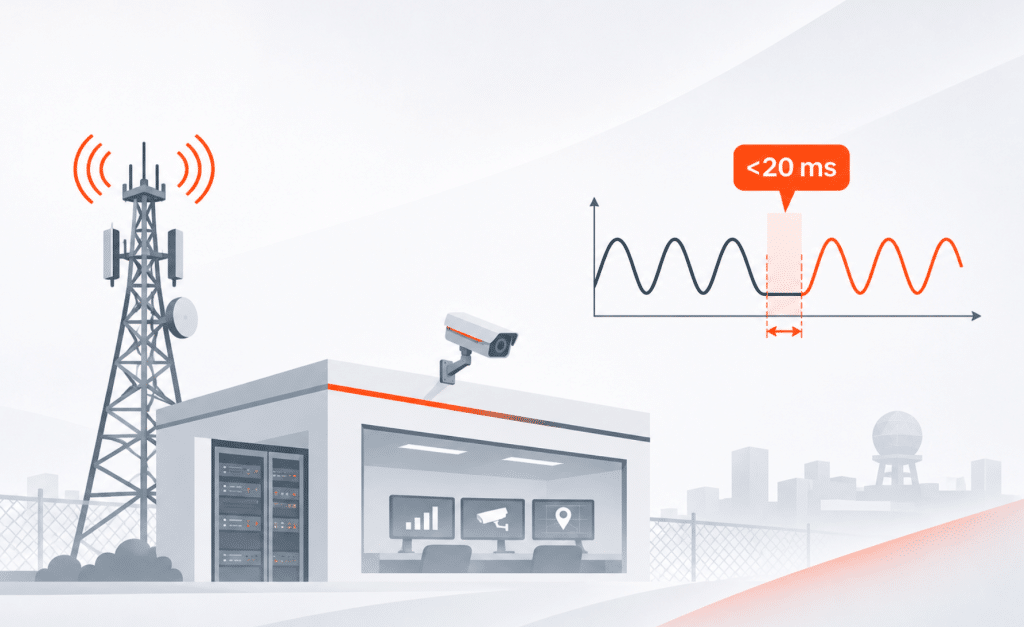
UPS transfer time is the interval between the loss of the main AC power supply and the UPS switching to battery power.
It is usually measured in milliseconds (ms).
For example, a UPS with a transfer time of less than 20ms switches its output to battery power in under 20 milliseconds after detecting a mains power interruption.
Whether the connected equipment continues operating depends on its ability to tolerate this brief interruption.
If the equipment’s internal power supply cannot maintain operation during the transfer, it may restart or temporarily lose functionality.
2. Why Does UPS Transfer Time Matter?
Different industrial devices have different power continuity requirements.
A short interruption may have little impact on some equipment, while other devices may experience unexpected shutdowns.
Common examples include:
- Industrial Control Systems: PLCs and control units may reset if their power supply cannot tolerate the interruption.
- Telecommunications Equipment: Network switches and communication devices may temporarily disconnect.
- Security Systems: Monitoring and surveillance equipment may experience interruptions.
- Data Processing Equipment: Servers and storage devices may require more stringent power continuity.
- Industrial Instruments: Measurement and monitoring equipment may need stable, uninterrupted power.
The important question is not simply how fast the UPS switches, but whether the connected equipment can tolerate that transfer time.
3. Different UPS Types Have Different Transfer Times
UPS systems use different power conversion designs, which affect how they respond to a power failure.
Standby UPS
A standby UPS normally supplies power directly from the mains and switches to its inverter when the input power fails. This process involves a transfer interval.
Line-Interactive UPS
A line-interactive UPS provides voltage regulation and battery backup. Its transfer time varies by model and operating conditions.
Online Double-Conversion UPS
An online double-conversion UPS continuously supplies the load through its inverter. Because the inverter is already supplying the equipment, switching from mains-supported operation to battery operation has zero transfer time in normal double-conversion mode.
For highly sensitive equipment that cannot tolerate a transfer interruption, an online double-conversion UPS may be the more appropriate choice.
4. Is a UPS Transfer Time of Less Than 20ms Fast Enough?
It depends on the connected equipment.
A transfer time below 20ms can be suitable for equipment whose internal power supplies can ride through the interruption.
However, it does not guarantee uninterrupted operation for every industrial device.
Before choosing a UPS, check the following:
- Power Supply Hold-Up Time: How long can the equipment maintain operation without incoming AC power?
- Transfer Time Tolerance: What is the maximum interruption the equipment can accept?
- Voltage Requirements: Does the UPS output match the equipment’s rated voltage and frequency?
- Load Requirements: Can the UPS support the equipment’s continuous power consumption and startup demand?
For example, if a device requires zero transfer time, a UPS specified at less than 20ms should not automatically be considered suitable.
Always check the equipment manufacturer’s specifications and conduct compatibility testing under actual operating conditions.
5. FULLAS FX100: Industrial UPS Backup with Less Than 20ms Transfer Time
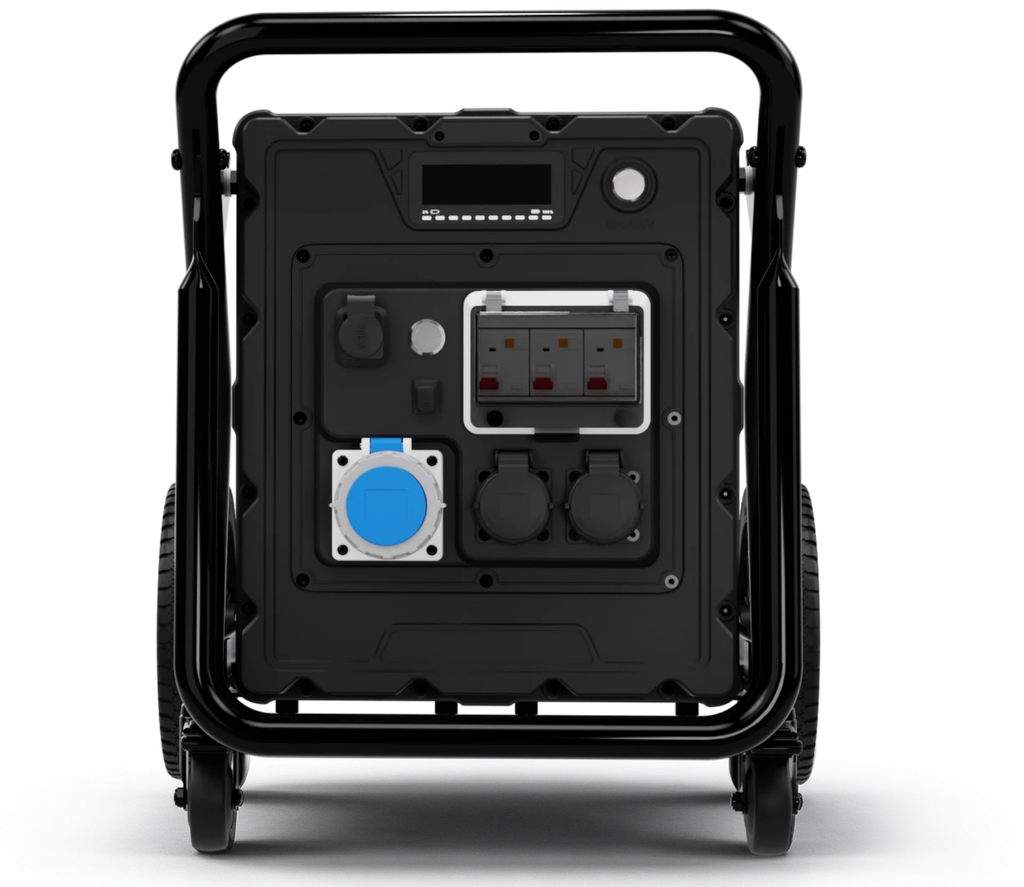
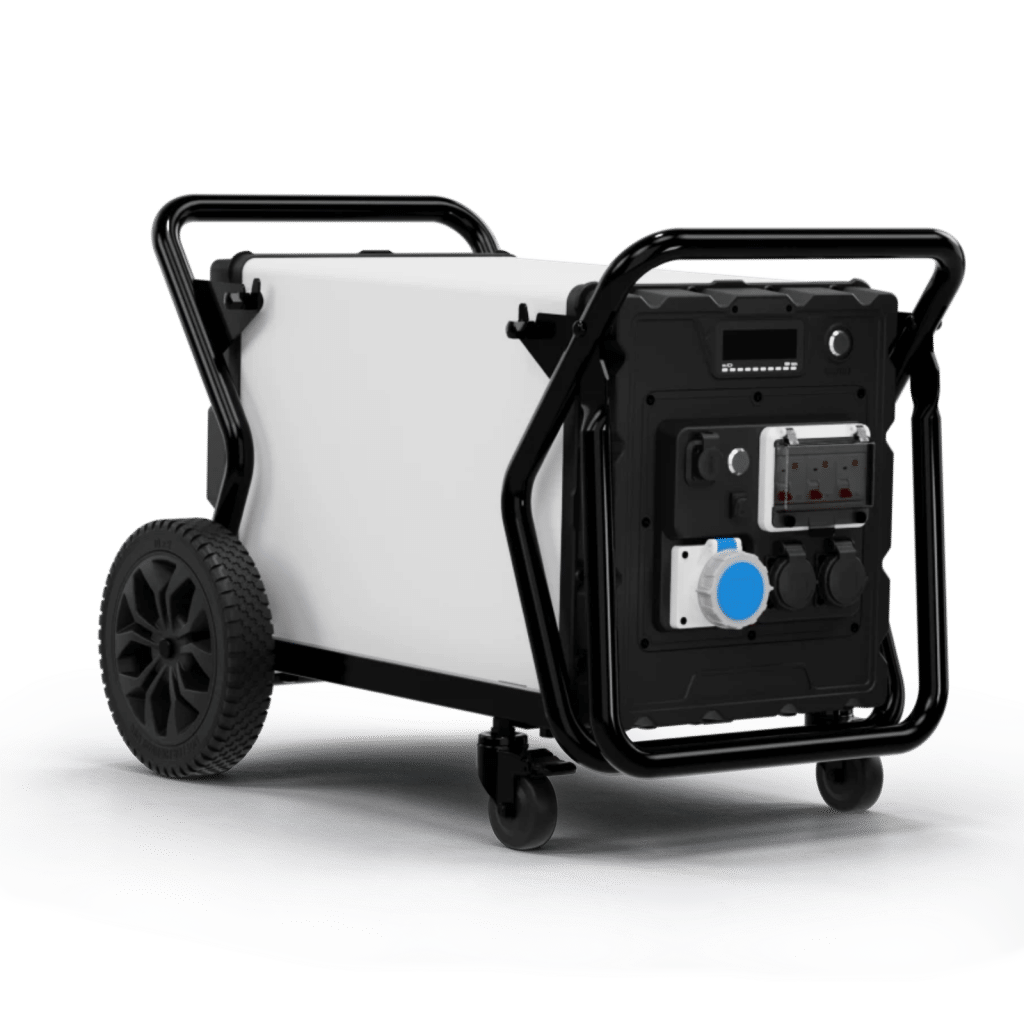
De FULLAS FX100 Industrial UPS Power Station is designed to provide mobile industrial power and battery backup for compatible equipment.
Its UPS function provides a transfer time of less than 20 milliseconds when the main power supply is interrupted.
De belangrijkste specificaties zijn:
| Specificatie | FULLAS FX100 |
|---|---|
| Verwerkingstijd bij UPS | Minder dan 20 ms |
| Nominaal vermogen | 7.200 W |
| Piekvermogen | 21.600 W |
| Batterijcapaciteit | 10,24 kWh |
| Batterijtype | LiFePO4 |
| AC-uitgang | 230V |
| Frequency (EU Version) | 50Hz |
| Golfvorm | Zuivere sinusgolf |
| Beschermingsclassificatie | IP65 |
With 7.2kW continuous output and 10.24kWh battery capacity, the FX100 combines industrial power output with portable battery backup functionality.
It can support compatible telecommunications, security, monitoring, and other industrial equipment, subject to their transfer-time and electrical requirements.
For more information about its operating principles and applications, read our guide: Wat is een industriële UPS-voeding?.
6. How to Choose the Right UPS for Your Equipment
When comparing industrial UPS systems, transfer time should never be the only consideration.
A suitable system should match the equipment’s power consumption, voltage, frequency, startup requirements, and acceptable interruption time.
For businesses operating multiple types of industrial equipment, it is also important to identify which loads require zero transfer time and which can tolerate a short switching interval.
For further guidance, see our article: Hoe kies je een industrieel noodstroomsysteem?.
Conclusie
UPS transfer time directly affects how connected equipment responds to a power interruption.
A system with a transfer time of less than 20ms can provide effective backup for compatible equipment, but applications requiring zero interruption may need an online double-conversion UPS.
The FULLAS FX100 combines less than 20ms UPS transfer time, 7,200W continuous output, and 10.24kWh LiFePO4 battery capacity for professional industrial backup applications.
Choosing the right solution starts with understanding the actual power continuity requirements of your equipment.