









Best OEM/ODM Industrial Energy Storage Suppliers for B2B Buyers
If you’re a distributor, importer, or equipment brand trying to source industrial energy storage under OEM/ODM terms, “best supplier” lists won’t protect you.
What protects you is an evaluation method that answers two questions:
- Is this supplier compliant for my target market (especially the U.S.)?
- Can this factory build the same unit—again and again—at scale, with traceable parts and auditable QC records?
This guide gives you a procurement-ready framework to shortlist suppliers globally, without relying on hype.
How we ranked suppliers (quick method):
- Compliance pack completeness (model-level): documents match the exact SKU and destination market.
- Battery transport readiness: valid UN38.3 paperwork for shipments.
- QC + traceability: prevents “good sample, bad batch.”
- Warranty + spares: real RMA path, parts availability, and clear exclusions.
- Lead time + change control: stable delivery plus pre-notification of cell/BMS/inverter/firmware changes.
For logistics risk, ATS explains why UN 38.3 transport testing for lithium batteries is treated as a baseline requirement for shipping.
What’s different in 2026:
- LiFePO4 is now the expectation, so differentiation shifts to safety documentation, BMS behavior, and serviceability. For a practical sense of how fast the category is moving, see the consumer testing trend toward LiFePO4 in Outdoor Life’s best portable power stations of 2026.
- More buyers are translating test-style criteria into acceptance checks—CNET’s methodology highlights dimensions like usable capacity, charge time, output/surge performance, ports, UPS behavior, and warranty; see CNET’s testing criteria for portable power stations.
RFQ checklist (what to request before you scale POs):
- Certificates/test reports tied to the exact SKU + market (match nameplate photos)
- UN38.3 test summary/report for the shipped battery pack
- QC flow + traceability (incoming/in-process/final test, record retention)
- Warranty policy: duration, exclusions, claim steps, typical turnaround time
- Spare parts plan: what’s stocked, lead times, recommended spares per container
- Change control commitment (written)
- Lead times + capacity: MOQ, peak season constraints, how production slots are reserved
Step 1: Define what you mean by “industrial energy storage”
In practice, buyers use this phrase to describe different product categories. Your certification path, documentation pack, and audit focus change depending on which one you’re buying.
Common categories:
- Stationary BESS (battery energy storage system) for commercial/industrial sites or utility projects (often containerized or cabinet-based)
- Commercial/industrial battery cabinets integrated with PCS/EMS
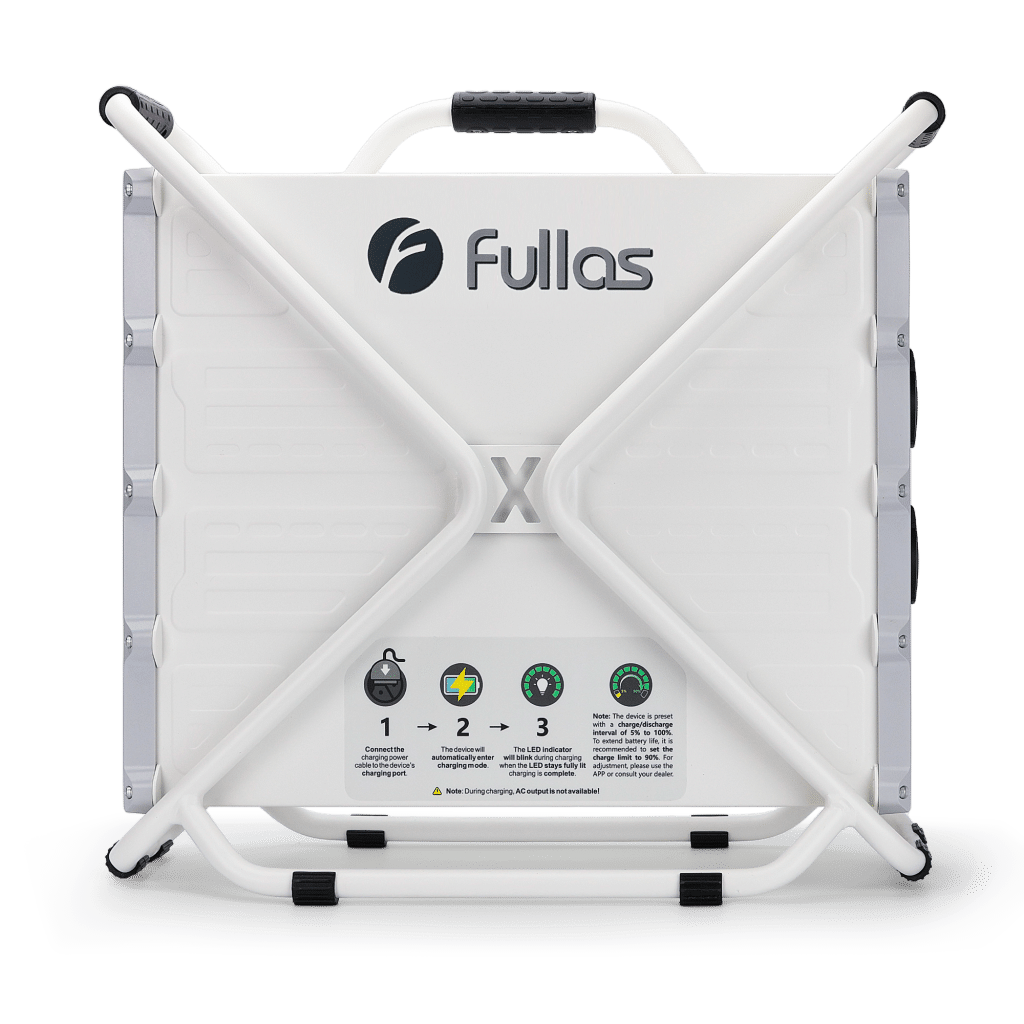
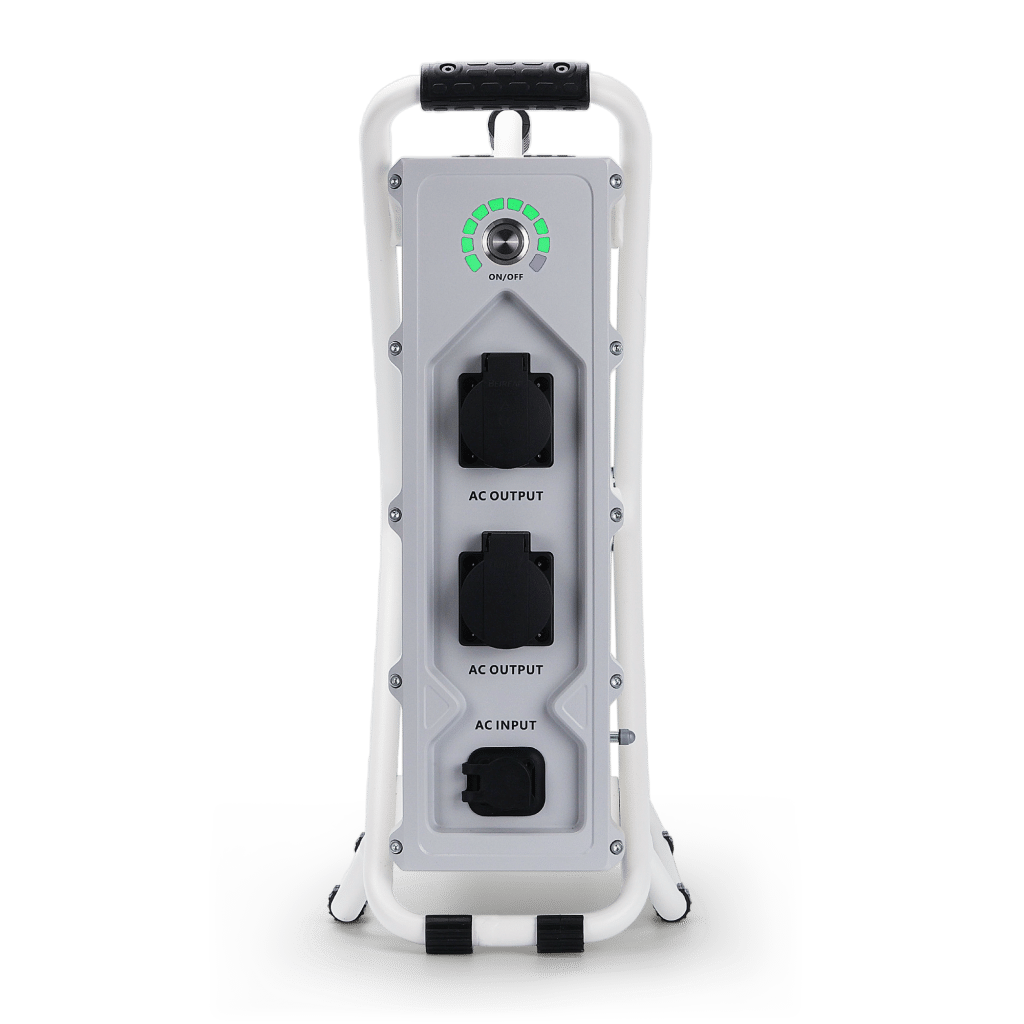
- Industrial portable power stations used for worksites, maintenance teams, mobile operations, and temporary power
Why this matters: A supplier can be excellent at building portable power stations and still be the wrong fit for stationary BESS projects that require system listings and fire-code approvals.
If you’re sourcing for the U.S. market, treat “category clarity” as your first qualification gate.
Step 2: Use compliance as a pass/fail gate (not a marketing bullet)
For U.S. buyers, the fastest way to de-risk supplier selection is to ask for the exact compliance pathway your project will require—then verify it.
The standards you’ll hear most often (and what they actually mean)
- UL 9540: A system-level safety standard for energy storage systems and equipment. UL Solutions describes its energy storage testing and certification around UL 9540 as the key system safety benchmark buyers often need for North American acceptance. See UL’s overview on Energy Storage System Testing and Certification.
- UL 9540A: A test method for evaluating thermal runaway fire propagation in battery energy storage systems (BESS). UL Solutions explains it as the UL 9540A Test Method used to assess fire propagation and hazards tied to thermal runaway.
- Transport vs installation: Requirements like UN 38.3 relate to shipping lithium batteries, but they don’t automatically mean your system is acceptable for stationary installation approvals.
What to request from suppliers
Ask for a “compliance document pack” and review it like an auditor:
- Certificate scope: exact model/configuration, not “similar series”
- Issuing body: confirm it’s real and matches the certificate
- Test report identifiers, dates, and lab details
- Any limitations: operating temperature, enclosure type, installation assumptions
Red flag: suppliers who send logos, screenshots, or a one-page “certificate” with no traceable report.
Step 3: Score suppliers on manufacturing discipline (the stuff that predicts consistency)
A good supplier isn’t defined by a brochure. It’s defined by whether they can show repeatable process control.
Here’s a scoring model that works well in OEM/ODM evaluations.
A. Quality system maturity (QMS)
What “good” looks like:
- Clear IQC/IPQC/FQC procedures
- Defect tracking by model/line
- CAPA/8D workflows with root cause + effectiveness checks
- Work instructions on the line that match the actual build process
What to ask:
- “Show me the last 3 CAPAs for this product family.”
- “Show me your incoming inspection record for cells/BMS/contactors from last week.”
B. Traceability you can actually use
In energy storage, traceability isn’t “nice to have.” It’s your insurance policy.
Minimum expectation:
- Unit serial number → build record → key component lots (cells, BMS revision, contactors/fuses)
- Test results linked to serial number
- Ability to perform a mock trace during audit in minutes
C. Incoming inspection (especially for critical components)
Incoming inspection should cover:
- Cells (lot, supplier documents, sampling/acceptance results)
- BMS boards and firmware version control
- High-current components (contactors, busbars, fuses)
- Enclosures, wiring harnesses, connectors
Red flag: “We only do spot checks” on the parts that can trigger recalls or safety incidents.
D. Process control + end-of-line testing
For industrial energy storage products, require clarity on:
- Welding/fastening controls (torque records where relevant)
- BMS programming steps and change control n- Aging/burn-in strategy (what’s tested, for how long, pass/fail thresholds)
- End-of-line test report samples (what data is captured and retained)
E. Calibration control for test equipment
If test equipment decides pass/fail, calibration discipline must be visible:
- Calibration stickers tied to asset IDs
- Certificates available on request
- Out-of-tolerance procedures and product-impact review
Step 4: Evaluate the “engineering + documentation” layer (where OEM/ODM projects win or fail)
A surprising number of OEM/ODM relationships fail because the supplier can build hardware—but can’t support integration, commissioning, or field service.
BMS and protection behavior
Ask suppliers to walk you through:
- Protection logic (over/under voltage, over-current, over-temp)
- Alarm behavior (what triggers what)
- Event logs and fault history
- Remote diagnostics support
EMS/communications readiness
If your product requires monitoring or integration, ask for:
- Supported protocols
- Comms architecture diagram
- Sample register map / data points exported
- Versioning and change control
Documentation quality check (fast test)
Ask for one complete document set for a shipped project:
- Datasheet
- Electrical schematic / SLD
- Commissioning guide
- Maintenance plan
- Packing list + serial list
If documentation is weak, commissioning and after-sales will be worse.
Step 5: Compare commercial terms like a risk manager
Price matters—but in energy storage sourcing, terms matter nearly as much.
Warranty (ask for the exact definition)
Compare:
- Calendar warranty vs cycle warranty
- Performance/retention definitions (what counts as end-of-warranty)
- Exclusions (temperature, duty cycle, misuse)
- Who pays for labor, freight, and replacements
Lead time + capacity realism
Ask what’s included in lead time:
- Engineering release
- Pilot build
- Testing/burn-in
- Packaging/export documents
Red flag: aggressive lead times that ignore testing and documentation.
MOQ, NRE, and change control
For ODM projects, define up front:
- MOQ by configuration
- NRE/tooling fees
- How engineering changes are approved and tracked
A short OEM/ODM supplier audit checklist (use this to shortlist)
Use this as a first-pass filter before you invest in travel or third-party audits:
- Can they clearly define the product category and target application?
- Can they explain the U.S. compliance pathway (not just list badges)?
- Can they provide traceable test reports and certificate scope details?
- Do they have unit-level traceability tied to build + test records?
- Can they show incoming inspection records for critical components?
- Do they have controlled end-of-line test procedures and sample reports?
- Are calibration records available for key measurement/test assets?
- Is there a real documentation pack (SLD, commissioning, maintenance)?
- Is warranty language specific and enforceable?
- Can they support after-sales with spares and response times?
Optional: one video that helps buyers think through supplier selection
Where FULLAS fits (without the “best supplier” claim)
If you’re building a shortlist and want a partner who can support OEM/ODM evaluation—not just send a quotation—FULLAS can be used as a practical benchmark for what to request from any supplier:
- OEM/ODM cooperation experience for global B2B partners (distributors/importers/equipment brands)
- Documentation-forward approach: certifications, QC expectations, and export readiness
- Product category coverage relevant to many industrial buyers (e.g., industrial power station solutions)
If your immediate need is industrial portable power (rather than stationary BESS), these references may help your internal evaluation:
- What an central eléctrica industrial is—and where it fits in industrial operations
- US-facing overview of certifications for industrial power stations
- Example model page: FPG3600 central eléctrica portátil industrial
Next steps (practical)
If you want, I can turn the framework above into two buyer-facing documents you can reuse:
- A 100-point supplier scorecard (pass/fail gates + weighted scoring)
- A factory audit checklist you can hand to a third-party inspector
And if you’re evaluating industrial portable power station OEM/ODM options now, you can also browse FULLAS products to see typical configurations and starting points for private-label projects.