









Selbstfahrender Rasenmäher vs. Handrasenmäher: Welchen sollten Sie importieren?
Die Wahl zwischen einem Handrasenmäher und einem Rasenmäher mit Eigenantrieb Es geht nicht nur darum, welche Maschine das Gras besser mäht. Für Importeure und Händler hängt die richtige Wahl von der Zielgruppe, den Rasenbedingungen, dem erwarteten Verkaufspreis, den Wartungsmöglichkeiten und den lokalen Kaufgewohnheiten ab.
Bei beiden Rasenmähertypen wird das Schneidmesser durch einen Motor angetrieben. Der Hauptunterschied besteht darin, wie sich die Maschine fortbewegt. Bei einem handgeführten Rasenmäher muss der Bediener die Maschine vollständig selbst vorwärts bewegen, während bei einem selbstfahrenden Modell die Räder über ein Getriebe angetrieben werden.
In diesem Leitfaden werden die beiden Optionen aus der Perspektive des Großhandels und des Imports verglichen.
Schnellvergleich
| Vergleich | Handrasenmäher | Selbstfahrender Rasenmäher |
|---|---|---|
| Vorwärtsbewegung | Der Bediener schiebt den Rasenmäher | Der Motor treibt die Räder an |
| Anschaffungskosten | Nach unten | Höher |
| Maschinengewicht | In der Regel leichter | In der Regel schwerer |
| Bestes Gelände | Ebene, gleichmäßige Rasenflächen | Flache, unebene oder geneigte Rasenflächen |
| Geeignete Rasenfläche | Kleine Rasenflächen | Mittlere bis große Rasenflächen |
| Aufwand für den Bediener | Höher | Nach unten |
| Wartung | Einfacher | Zusätzliche Wartungsarbeiten am Antriebssystem |
| Marktposition | Einstiegsmodell | Mittelklasse oder Profi |

Was ist ein Handrasenmäher?
Ein Handrasenmäher verfügt über einen Benzinmotor, der das Messer antreibt, jedoch nicht die Räder. Der Benutzer muss die Maschine manuell über den Rasen schieben.
Diese einfache Konstruktion weist in der Regel weniger Antriebskomponenten auf, was zur Senkung der Produktionskosten, des Maschinengewichts und des Wartungsaufwands beiträgt. Sie eignet sich für kleine, ebene Rasenflächen in Wohngebieten, auf denen der Bediener keine großen Flächen bearbeiten muss.
Für Importeure gelten Handrasenmäher in der Regel als Einstiegsprodukte. Sie sprechen preisbewusste Hausbesitzer, Baumärkte und Einzelhändler an, die einen erschwinglichen Benzinrasenmäher benötigen.
Ein Handrasenmäher ist jedoch weniger praktisch, wenn das Gras dicht ist, der Boden uneben ist oder der Rasen relativ groß ist. Ein schwereres Modell mit Stahlgehäuse kann zudem einen erheblichen körperlichen Kraftaufwand erfordern.
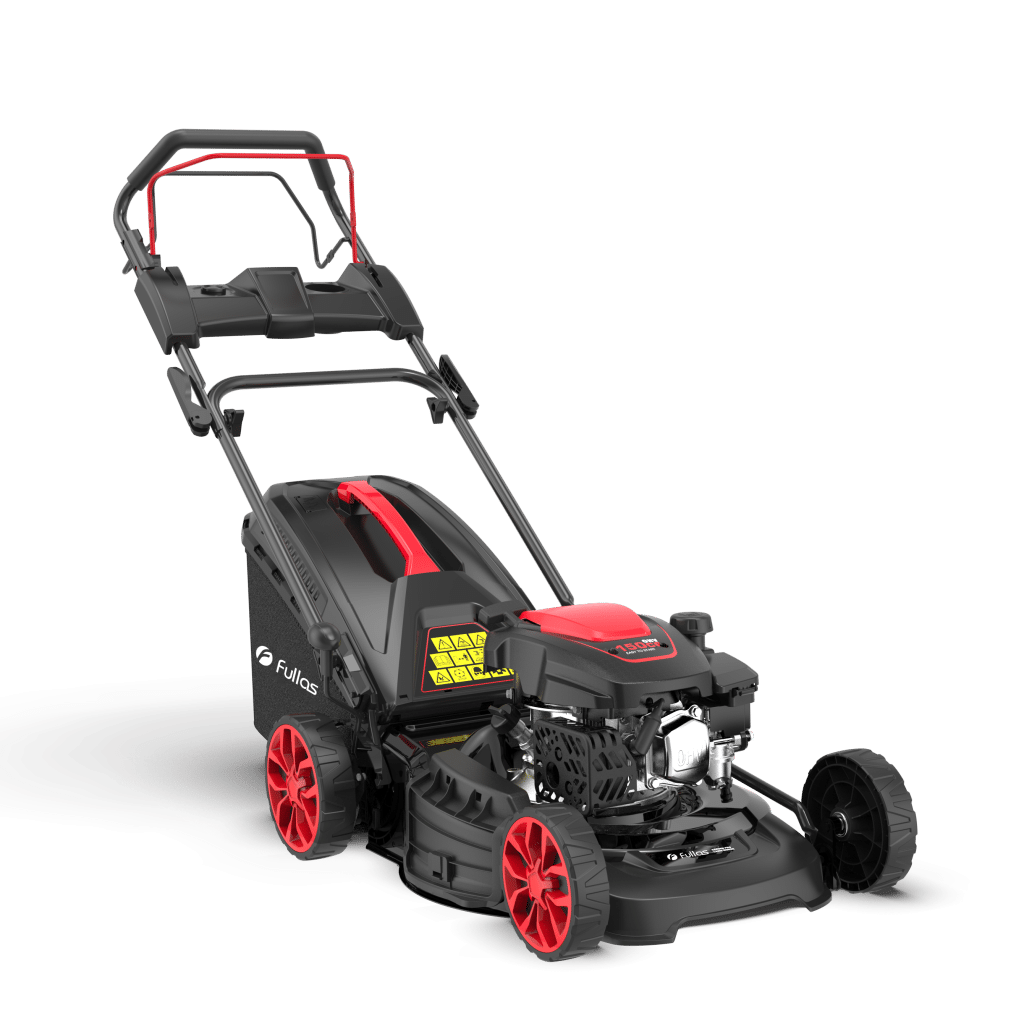
Was ist ein selbstfahrender Rasenmäher?
A Rasenmäher mit Eigenantrieb nutzt die Motorleistung, um sowohl das Messer als auch die Antriebsräder anzutreiben. Der Bediener steuert weiterhin die Fahrtrichtung, muss jedoch nicht die gesamte Kraft aufbringen, die zum Bewegen des Mähers erforderlich ist.
Dadurch wird es für folgende Personen angenehmer:
- Mittlere und große Rasenflächen bei Privathaushalten
- Unebenes oder leicht geneigtes Gelände
- Dichte Grasbedingungen
- Garten- und Grundstückspflegearbeiten
- Nutzer, die über längere Zeiträume mähen
Das Antriebssystem verursacht zwar zusätzliche Kosten und erhöht das Gewicht, schafft aber auch ein wertvolleres Produkt für die Händler. Kunden sind oft bereit, mehr zu bezahlen, wenn dadurch die Ermüdung des Bedieners verringert und die Handhabung erleichtert wird.
FULLAS bietet derzeit selbstfahrende, von Hand geführte Modelle mit Schnittbreiten ab 430 mm bis 560 mm, darunter Motorvarianten mit 149 cm³ und 171 cm³ Hubraum, Modelle mit Elektrostart sowie 4-in-1-Mähsysteme. Das Sortiment umfasst zudem ein 18-Zoll-Modell zum Schieben für Käufer, die eine einfachere Einstiegsvariante suchen.
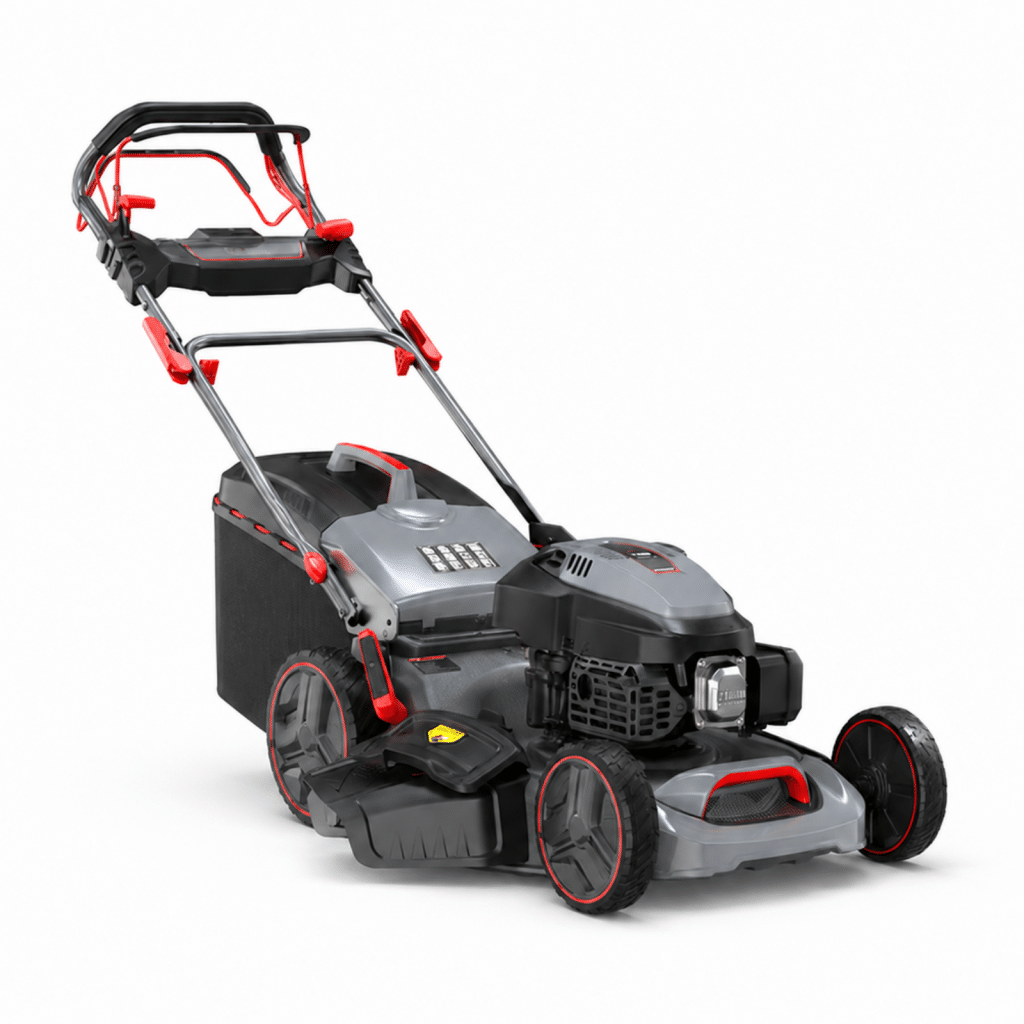
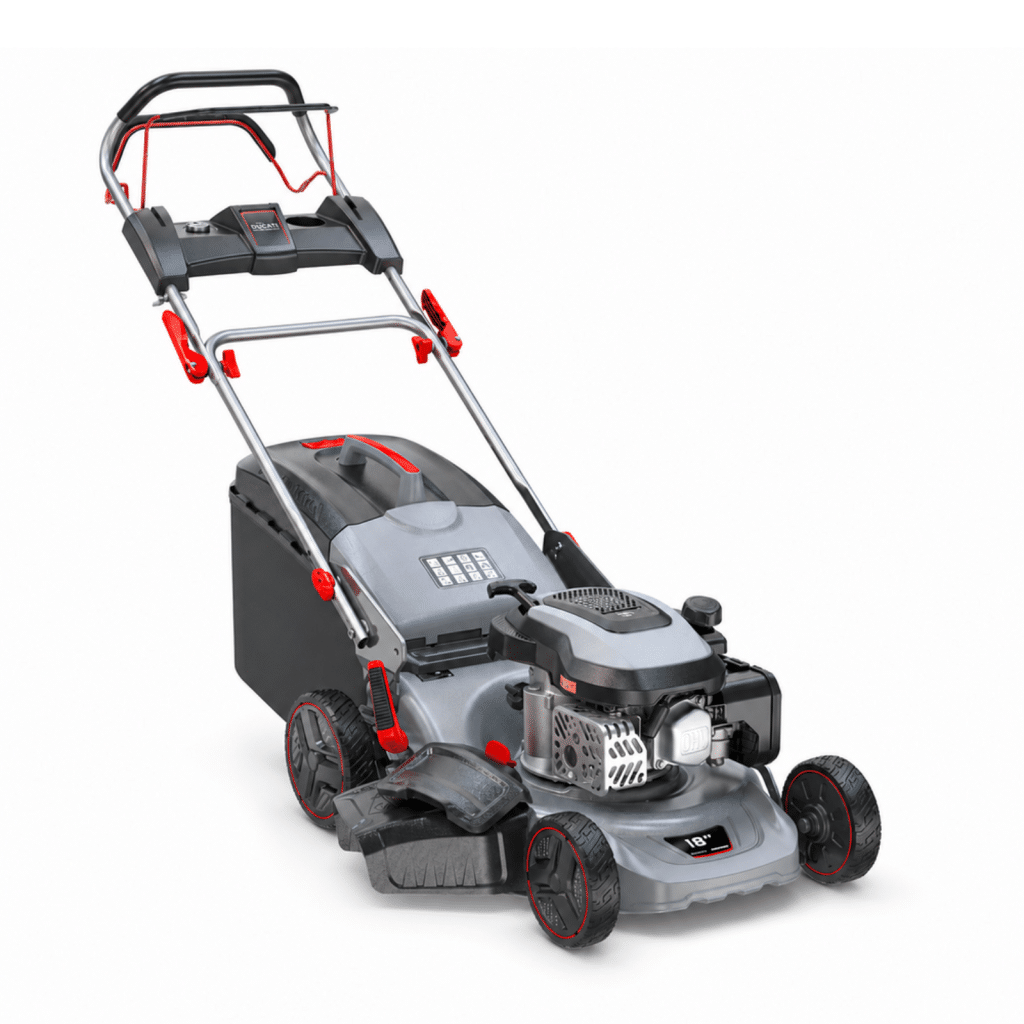
Käufer können die verfügbaren Modelle auf der Produktseite für FULLAS-Rasenmäher.
Welcher Typ schneidet auf verschiedenen Rasenflächen besser ab?
Kleine und flache Rasenflächen
Für einen kleinen Rasen mit ebenem Untergrund reicht in der Regel ein Handrasenmäher aus. Der Benutzer kann das Gerät leicht bewegen, und der günstigere Preis kann wichtiger sein als ein motorisierter Radantrieb.
Für städtische Wohngebiete mit kleinen Gärten kann ein 18-Zoll-Handrasenmäher ein praktisches Einsteigermodell darstellen.
Mittelgroße Rasenflächen
A Rasenmäher mit Eigenantrieb wird mit zunehmender Mähfläche immer attraktiver. Die motorisierte Fortbewegung verringert die Ermüdung und hilft dem Bediener, eine gleichmäßigere Mähgeschwindigkeit beizubehalten.
Modelle mit Schnittbreiten zwischen 20 und 22 Zoll können zudem pro Durchgang eine größere Fläche abdecken, was die Gesamteffizienz verbessert.
Unebenes oder abschüssiges Gelände
Der Eigenantrieb bietet einen deutlichen Vorteil auf unebenem Gelände und bei mäßigen Steigungen. Der Bediener lenkt den Mäher hauptsächlich, anstatt dessen gesamtes Gewicht bergauf zu schieben.
Importeure sollten jedoch weiterhin die Traktion der Räder, die Fahrgeschwindigkeit und die Gewichtsverteilung überprüfen. Ein Antriebssystem allein garantiert noch keine gute Steigfähigkeit.
Gartenpflege für gewerbliche Kunden
Gartenbauunternehmen und Hausmeisterteams legen in der Regel größeren Wert auf Produktivität, Langlebigkeit und Bedienkomfort. Für wiederkehrende oder längere Mäharbeiten ist daher ein selbstfahrendes Modell besser geeignet als ein einfacher Handrasenmäher.
Unterschiede bei Kosten und Wartung
Handrasenmäher weisen einen einfacheren Aufbau auf und sind in der Regel leichter zu warten. Es müssen weder ein Antriebsriemen noch ein Getriebe oder ein Antriebskabel überprüft werden. Dies kann in Märkten von Vorteil sein, in denen die Verfügbarkeit von Ersatzteilen und der technische Support begrenzt sind.
A Rasenmäher mit Eigenantrieb erfordert mehr Komponenten, was den Anschaffungspreis erhöht und zusätzliche Serviceleistungen mit sich bringt. Importeure sollten die Verfügbarkeit folgender Komponenten überprüfen:
- Antriebsriemen
- Getriebe
- Antriebskabel
- Räder und Radgetriebe
- Bedienhebel
- Ersatzklingen
- Luftfilter und Motorteile
Der zusätzliche Wartungsaufwand ist in der Regel akzeptabel, wenn die Zielgruppe Wert auf Komfort und eine höhere Mäheffizienz legt.
Was sollten Importeure vor der Bestellung vergleichen?
Vergleichen Sie die beiden Mähertypen nicht ausschließlich anhand des Hubraums. Bitten Sie den Anbieter um Bestätigung:
Schneidekonfiguration
Prüfen Sie die Schnittbreite, den Höhenverstellbereich und die verfügbaren Funktionen. Ein 4-in-1-System kann das Auffangen, den Heckauswurf, den Seitenauswurf und das Mulchen unterstützen, was den Händlern zusätzliche Verkaufsargumente liefert.
Antriebssystem
Bei selbstfahrenden Modellen sollten Sie prüfen, ob der Rasenmäher über einen Antrieb mit einer einzigen Drehzahl oder mit stufenloser Drehzahlregelung verfügt. Erkundigen Sie sich außerdem, wie die Wartung des Getriebes erfolgt und ob Ersatzteile erhältlich sind.
Startverfahren
Modelle mit Seilzugstarter sind in der Regel einfacher aufgebaut und preisgünstiger. Modelle mit Elektrostarter sind einfacher zu bedienen und lassen sich zu einem höheren Verkaufspreis anbieten.
Deck- und Radaufbau
Ein robustes Stahlfahrgestell eignet sich für die regelmäßige Rasenpflege, allerdings sollten dessen Dicke, Korrosionsschutz und Schweißqualität überprüft werden. Auch der Raddurchmesser und das Profildesign beeinflussen die Fahrbarkeit auf unebenem Untergrund.
Verladung und Verpackung
Modelle mit Eigenantrieb sind möglicherweise schwerer und im Versand teurer. Vergleichen Sie die Kartonabmessungen, das Nettogewicht, das Bruttogewicht und die Stückzahl pro Container, bevor Sie die Gesamtkosten berechnen.
Welches sollten Sie importieren?
Für die meisten Händler besteht die beste Strategie darin, sich nicht nur für eine Sorte zu entscheiden.
Verwenden Sie einen Handrasenmäher als Einstiegsmodell für kleine Privatrasenflächen und preisbewusste Kunden. Er zeichnet sich durch einen einfacheren Aufbau, geringere Anschaffungskosten und eine einfachere Wartung aus.
Erstelle die Rasenmäher mit Eigenantrieb die Hauptproduktlinie für Hausbesitzer mit mittelgroßen Rasenflächen, Landschaftsbauunternehmen und Fachhändler. Sie sorgt für eine stärkere Produktdifferenzierung und ermöglicht höhere Verkaufspreise.
Ein praktisches Sortiment könnte Folgendes umfassen:
- Ein 18-Zoll-Handrasenmäher für Einsteiger
- Ein selbstfahrendes Modell mit einer Größe von 17 oder 18 Zoll für den normalen privaten Gebrauch
- Ein 20-Zoll-Modell mit Eigenantrieb für größere Gärten
- Ein 21- oder 22-Zoll-Modell für Premium- oder Profi-Kunden
Diese Struktur bietet Händlern klare Preisstufen, ohne dass es zu vielen sich überschneidenden Modellen kommt.
Schlussfolgerung
Ein Handrasenmäher ist preiswert, leicht und pflegeleicht, wodurch er sich für kleine, ebene Rasenflächen eignet. Ein Rasenmäher mit Eigenantrieb ist zwar teurer, bietet aber eine leichtere Handhabung, mehr Komfort und eignet sich besser für mittelgroße Rasenflächen, unebenes Gelände und die professionelle Pflege.
Bei den meisten OEM- und Großhandelsprogrammen sollten selbstfahrende Modelle das Kernsortiment bilden, während ein Schiebemodell den Bedarf im Einstiegssegment abdecken kann.
Entdecken Sie die FULLAS-Benzin-Rasenmäher-Sortiment um Schnittbreiten, Antriebsarten, Startsysteme und OEM-Konfigurationsoptionen zu vergleichen.