









ما هي الشهادات المطلوبة لمحطات الطاقة الصناعية في الولايات المتحدة الأمريكية?
ما هي الشهادات المطلوبة لمحطات الطاقة الصناعية في الولايات المتحدة الأمريكية؟
بالنسبة لمحطات الطاقة الصناعية التي تدخل السوق الأمريكية، لا تعتبر الشهادة مجرد علامة تسويقية. فهي تؤثر بشكل مباشر على استيراد المنتجات، والتخليص الجمركي، وتوزيع المنتجات بالتجزئة، وقرارات الشراء بين الشركات، والامتثال لمعايير المنصات، ومراقبة المسؤولية القانونية.
بالنسبة لمحطات الطاقة الصناعية المحمولة، فإن الشهادات الأربعة الرئيسية ووثائق الامتثال التي يجب على المشترين الانتباه إليها هي UL، FCC، CE، و UN38.3. تغطي هذه الشهادات مخاطر مختلفة. تركز UL على سلامة المنتجات، بينما تركز FCC على التوافق الكهرومغناطيسي، وتركز CE على التوافق مع اللوائح الدولية، في حين تركز UN38.3 على مدى إمكانية نقل منتجات بطاريات الليثيوم بأمان.
بالنسبة لمحطات الطاقة الصناعية المستخدمة في مواقع البناء، وأعمال الصيانة، والمشاريع الهندسية الخارجية، وإنتاج الأفلام، والطاقة الاحتياطية في حالات الطوارئ، والعمليات التجارية، تكتسب هذه الوثائق أهمية خاصة لأن المنتج يحتوي على بطارية ليثيوم عالية السعة، ومحول، ومخرج تيار متردد، ودوائر شحن، وأنظمة تحكم وقائية.
شهادة الامتثال لمعايير السلامة الكهربائية وسلامة البطاريات في أمريكا الشمالية للمنتجات الكهربائية الاحترافية.
الامتثال لمعايير التوافق الكهرومغناطيسي للمنتجات الإلكترونية المباعة في الولايات المتحدة.
علامة المطابقة الأوروبية، التي يستخدمها أيضًا العديد من المشترين العالميين كمرجع للسلامة.
اختبارات سلامة نقل بطاريات الليثيوم المطلوبة للشحن الدولي.
لماذا تحتاج محطات الطاقة الصناعية إلى المزيد من الشهادات
محطة الطاقة الصناعية تختلف عن شاحن الطاقة المحمول الصغير. فهي منتج كهربائي عالي الطاقة يجمع بين نظام بطارية، ومحول، ونظام شحن، ومنافذ إخراج، ونظام حماية، وأحيانًا التحكم عبر التطبيق أو وحدات الاتصال. وهذا يعني أنها قد تندرج تحت عدة فئات من متطلبات الامتثال في آن واحد.
الفئة الأولى هي سلامة نقل بطاريات الليثيوم. تحتوي محطات الطاقة الصناعية على حزم بطاريات الليثيوم، ويجب اختبار هذه الحزم للتأكد من قدرتها على تحمل الظروف التي تتعرض لها أثناء النقل، مثل تغير الارتفاع، والاهتزاز، والصدمات، وتقلبات درجات الحرارة، وقصر الدائرة الكهربائية، ومخاطر الشحن الزائد. وهنا تبرز أهمية المعيار UN38.3 .
الفئة الثانية هي السلامة الكهربائية. عادةً ما توفر محطات الطاقة الصناعية تيارًا مترددًا بمستويات مثل 110 فولت أو 220 فولت، مما يجعلها أقرب إلى معدات الطاقة الاحترافية منها إلى الأجهزة الإلكترونية الاستهلاكية العادية. إذا لم يتم اختبار العزل أو التأريض أو نظام إدارة البطارية أو الغلاف أو الحماية من التشغيل غير الطبيعي بشكل صحيح، فقد يتسبب المنتج في مخاطر الصعق الكهربائي أو الحريق أو ارتفاع درجة الحرارة.
الفئة الثالثة هي التوافق الكهرومغناطيسي. قد تتسبب المحولات، ولوحات الشحن، وأنظمة التحكم، والوحدات اللاسلكية في حدوث تداخل كهرومغناطيسي. يجب أن تستوفي المنتجات المباعة في الولايات المتحدة متطلبات لجنة الاتصالات الفيدرالية (FCC) حتى لا تتداخل مع الأجهزة الإلكترونية أو أجهزة الاتصالات الأخرى.
مصفوفة شهادات المفاتيح للسوق الأمريكية
| التصديق | الغرض الرئيسي | لماذا يهم ذلك بالنسبة لمحطات الطاقة الصناعية |
|---|---|---|
| UL | السلامة الكهربائية وسلامة البطاريات | معلومات مهمة بشأن معايير السلامة في أمريكا الشمالية، وقنوات البيع بالتجزئة، وأمازون، والمشترين المحترفين. |
| لجنة الاتصالات الفيدرالية | التوافق الكهرومغناطيسي | مطلوب للأجهزة الإلكترونية التي تُباع في الولايات المتحدة. |
| م | السلامة والامتثال للوائح التنظيمية | يُعد هذا الدليل مخصصًا بشكل أساسي لسوق الاتحاد الأوروبي، ولكنه يُعد أيضًا مرجعًا مفيدًا للمشترين من جميع أنحاء العالم. |
| رقم الأمم المتحدة 38.3 | سلامة نقل بطاريات الليثيوم | مطلوب للشحن الدولي لمنتجات بطاريات الليثيوم. |
| ورقة بيانات السلامة (MSDS / SDS) | معلومات حول سلامة مواد البطارية | يُطلب عادةً في عمليات التخليص الجمركي وشحن البضائع الخطرة. |
| تقرير النقل البحري | الامتثال لقوانين الشحن البحري | غالبًا ما يكون مطلوبًا لمنتجات بطاريات الليثيوم التي يتم شحنها بحريًّا. |
شهادة UL: اعتراف بالسلامة في أمريكا الشمالية
تعد UL واحدة من أكثر أنظمة شهادات السلامة شهرةً في سوق أمريكا الشمالية. وبالنسبة لمحطات الطاقة الصناعية المحمولة، تكتسب المعايير المتعلقة بـ UL أهميةً خاصةً لأن المنتج يحتوي على بطاريات ليثيوم ومخرج تيار متردد. وتشمل المعايير التي يتم التطرق إليها عادةً ما يلي: UL 2056 و UL 2743, ، اعتمادًا على هيكل المنتج واستخدامه.
بالنسبة لمنتجات الطاقة المحمولة الأكبر حجمًا المزودة بمخرج محول تيار متردد،, UL 2743 غالبًا ما يكون هذا المعيار هو الأكثر ملاءمة لأنه مصمم خصيصًا لوحدات الطاقة المحمولة. وقد يشمل تقييم السلامة الكهربائية، وحماية البطارية، وتصميم الغلاف، وحالات الشحن غير الطبيعية، وارتفاع درجة الحرارة، ومخاطر الحريق، والقوة الميكانيكية، والوسم، وتعليمات الاستخدام.
لماذا هذا مهم: بالنسبة للمشترين الأمريكيين، تُعد وثائق UL ذات أهمية خاصة عند البيع عبر أمازون، وقنوات البيع بالتجزئة الكبرى، والموزعين، وشركات التأجير، ومشاريع البناء، وأسواق الطاقة المتخصصة.
- البيع عبر موقع أمازون أو قنوات البيع بالتجزئة الكبرى
- تزويد الموزعين الذين يحتاجون إلى وثائق السلامة الخاصة بأمريكا الشمالية
- الدخول إلى أسواق تأجير المعدات المهنية أو البناء أو الصيانة أو الطاقة في حالات الطوارئ
- الحد من مخاطر المسؤولية القانونية المتعلقة بمنتجات بطاريات الليثيوم عالية الطاقة
- دعم مراجعة الامتثال من جانب المشتري قبل الشراء بالجملة
الامتثال لمعايير لجنة الاتصالات الفيدرالية (FCC): مطلوب للمنتجات الإلكترونية في الولايات المتحدة الأمريكية
يُعد الامتثال لمعايير لجنة الاتصالات الفيدرالية (FCC) أحد المتطلبات المهمة الأخرى لمحطات الطاقة الصناعية التي تُباع في الولايات المتحدة. فحتى لو لم تكن محطة الطاقة تُرسل إشارات لاسلكية عن قصد، فقد تحتوي مع ذلك على دوائر إلكترونية تولد تداخلًا كهرومغناطيسيًا. وقد يتعين أخذ كل من العاكس، ولوحة التحكم، ودائرة الشحن، ووحدة العرض، ونظام الاتصالات في الاعتبار.
بالنسبة لمحطات الطاقة الصناعية المزودة بوظائف التحكم عبر البلوتوث أو الواي فاي أو التطبيقات، قد تصبح متطلبات لجنة الاتصالات الفيدرالية (FCC) أكثر أهميةً لأن المنتج قد يتضمن أجهزة إرسال متعمدة. أما بالنسبة للمنتجات التي لا تحتوي على وظائف لاسلكية، فإن متطلبات الجزء 15 من لائحة لجنة الاتصالات الفيدرالية (FCC) المتعلقة بأجهزة الإرسال غير المتعمدة تظل سارية.
تركز اختبارات لجنة الاتصالات الفيدرالية (FCC) عمومًا على ما إذا كان المنتج يصدر تداخلًا كهرومغناطيسيًا ضمن الحدود المقبولة. وهذا يساعد على ضمان ألا تتسبب محطة الطاقة في إزعاج أجهزة الراديو وأنظمة الاتصالات والأدوات المجاورة ومعدات التحكم، أو الأجهزة الإلكترونية الأخرى.
علامة CE: ليست شرطًا في الولايات المتحدة، لكنها لا تزال ذات قيمة
تُعد علامة CE مطلوبة بشكل أساسي للمنتجات التي تدخل السوق الأوروبية، لكنها تظل مفيدة للمشترين العالميين في قطاع الأعمال بين الشركات (B2B) لأنها تُثبت أن المنتج قد خضع للتقييم وفقًا لأطر السلامة واللوائح التنظيمية المعترف بها. وبالنسبة لمحطات الطاقة الصناعية، قد تشمل علامة CE عدة توجيهات، ولا سيما:
- توجيه EMC: التوافق الكهرومغناطيسي
- توجيه الجهد المنخفض: السلامة الكهربائية للمنتجات ذات المخرج المتردد
- توجيه RoHS: تقييد استخدام المواد الخطرة
على الرغم من أن شهادة CE لا تعتبر بديلاً عن شهادتي UL أو FCC في الولايات المتحدة، إلا أن العديد من المشترين الدوليين لا يزالون يطلبون شهادات CE لأنهم يرغبون في التأكد من أن المنتج قد اجتاز اختبارات السلامة الكهربائية الأساسية وتقييم التوافق الكهرومغناطيسي. وبالنسبة للشركات التي تبيع منتجاتها في أسواق متعددة، يمكن أن تساعد شهادة CE في توسيع نطاق التوزيع خارج الولايات المتحدة.
UN38.3: ضروري لنقل بطاريات الليثيوم
تعد وثيقة UN38.3 واحدة من أهم الوثائق لأي محطة طاقة تعمل ببطاريات الليثيوم. وبدون وثيقة UN38.3، قد يرفض العديد من وكلاء الشحن وشركات النقل البحري وشركات الطيران والجهات الجمركية التعامل مع الشحنة.
صُممت اختبارات UN38.3 لمحاكاة المخاطر المرتبطة بالنقل. وهي تشمل عمومًا اختبارات مثل:
- محاكاة الارتفاع
- التقلبات الحرارية
- الاهتزاز
- صدمة
- دائرة قصيرة خارجية
- صدمة أو سحق
- الزيادة في السعر
- التسريح القسري
تفصيل مهم: لا يتطابق معيار UN38.3 على مستوى الخلية مع معيار UN38.3 على مستوى الحزمة. فقد يقدم مورد خلايا البطاريات تقريرًا وفقًا لمعيار UN38.3 للخلية العارية، لكن محطة الطاقة الكاملة تستخدم حزم بطاريات مجمعة مزودة بنظام إدارة البطارية (BMS) والأسلاك والغلاف وأنظمة الحماية. يجب على المشترين التأكد مما إذا كان مستند UN38.3 يغطي التكوين الفعلي لحزمة البطارية المستخدمة في المنتج النهائي.
ورقات بيانات السلامة (MSDS/SDS) ووثائق النقل البحري
بالإضافة إلى شهادات UL وFCC وCE وUN38.3، ينبغي على مشتري محطات الطاقة الصناعية أن يطلبوا أيضًا المستندات الداعمة للشحن. وأكثرها شيوعًا هي ورقة بيانات السلامة (MSDS/SDS) و تقارير النقل البحري.
توضح ورقة بيانات السلامة (MSDS أو SDS) تركيب مواد البطارية، ومعلومات المخاطر، وطرق المناولة، وإرشادات التخزين، وإجراءات مكافحة الحرائق، ومعلومات الاستجابة لحالات الطوارئ. وغالبًا ما تطلبها شركات الشحن والجهات الجمركية عند شحن منتجات بطاريات الليثيوم دوليًا.
كما يُعد تقرير النقل البحري مهمًا بالنسبة للشحن البحري، لأن محطات الطاقة الصناعية عادةً ما تكون ثقيلة جدًّا وذات سعة كبيرة بحيث لا يُعد شحنها جوًّا خيارًا اقتصاديًّا. ويساعد هذا التقرير في التأكد من تصنيف المنتجات ومتطلبات التغليف، ومتطلبات وضع العلامات، ومتطلبات التوثيق الخاصة بالنقل البحري.
كيف ينبغي للمشترين الأمريكيين التحقق من وثائق الاعتماد
عند شراء محطات الطاقة الصناعية من موردين أجانب، لا ينبغي للمشترين الاكتفاء بالسؤال: “هل لديكم شهادات؟” بل ينبغي عليهم أيضًا التحقق من أن الشهادات كاملة وصالحة ومطابقة لطراز المنتج بالضبط.
- تطابق رقم الطراز: يجب أن تتطابق الشهادة مع طراز المنتج الذي يتم شراؤه. فالشهادة الصادرة لمحطة طاقة صغيرة لا تشمل تلقائيًا طرازًا صناعيًا أكبر حجمًا.
- معلومات عن مختبر الاختبار: يجب أن تتضمن الشهادة الصالحة اسم مختبر الاختبار ورقم الشهادة وتاريخ الإصدار والمعيار المطبق.
- نطاق الشهادة: بالنسبة لشهادة CE، تحقق مما إذا كانت معايير EMC وLVD وRoHS مشمولة، حيثما ينطبق ذلك. بالنسبة لشهادة UL، تحقق مما إذا كان المعيار ينطبق على وحدات الطاقة المحمولة أو منتجات الطاقة التي تعمل ببطاريات الليثيوم.
- اتساق تكوين المنتج: إذا طرأ تغيير على نوع البطارية أو هيكل حزمة البطاريات أو قدرة المحول أو نظام إدارة البطارية (BMS) أو الغلاف، فقد لا يكون التقرير الأصلي صالحًا بالكامل بعد الآن.
- شفافية الموردين: يجب أن يكون المورد الموثوق قادراً على شرح ما تشمله كل شهادة وتقديم نسخ منها عند الطلب للمشترين الجادين أو الموزعين أو عملاء المشاريع.
FULLAS FPG3600: محطة طاقة صناعية جاهزة للمشترين المحترفين
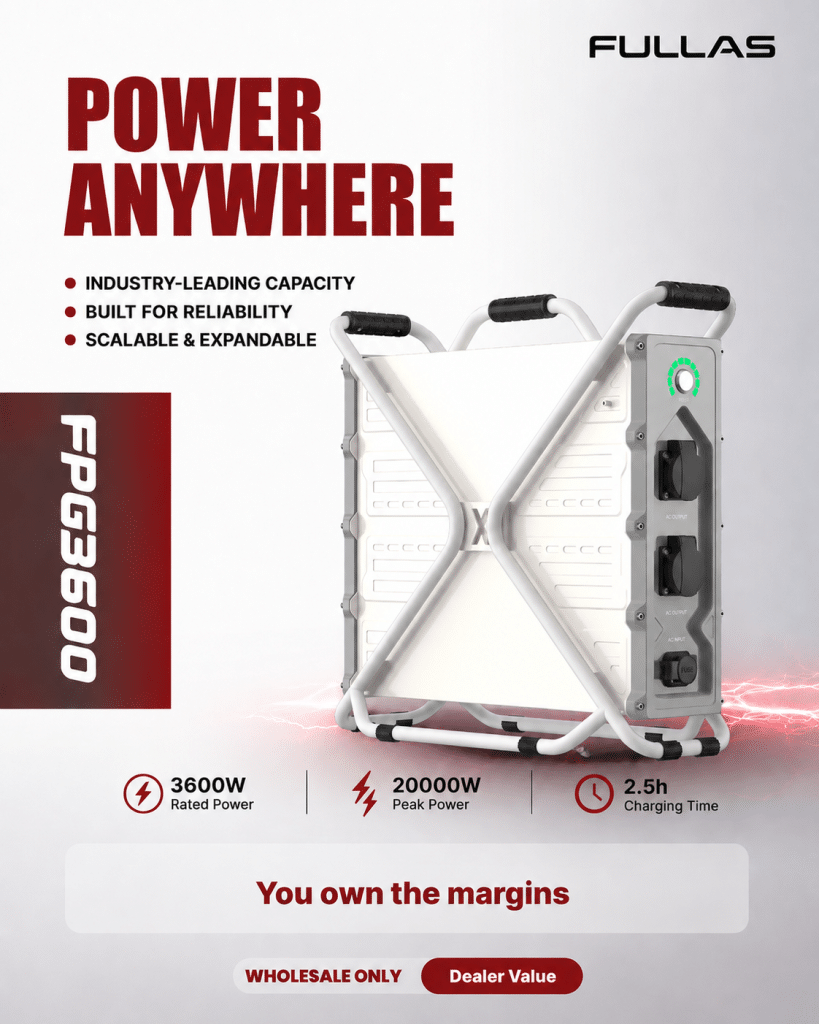
إن محطة الطاقة المحمولة الصناعية المحمولة FULLAS FPG3600 تم تصميمه للاستخدامات الصناعية التي تتطلب طاقة عالية، بما في ذلك مواقع البناء وأعمال الصيانة، وتوفير الطاقة المؤقتة في مواقع العمل، وإنتاج الأفلام، والطاقة في حالات الطوارئ، وتشغيل الأدوات التجارية. وبالمقارنة مع محطات الطاقة الصغيرة المخصصة للاستخدام المنزلي، يركز الطراز FPG3600 بشكل أكبر على إنتاج الطاقة العالية، وتوافق الأدوات، وتوفير طاقة تيار متردد مستقرة، وسيناريوهات الاستخدام الصناعي.
بالنسبة للمشترين في السوق الأمريكية، تُعد الشهادات والوثائق جزءًا أساسيًا من عملية اتخاذ قرار الشراء. وتدرك شركة FULLAS أن المستوردين والموزعين وشركات التأجير والمشترين في المجال الهندسي يحتاجون إلى ما هو أكثر من مجرد صور للمنتجات والمواصفات الأساسية. فهم بحاجة إلى وثائق مطابقة موثوقة لدعم عمليات الشحن والتخليص الجمركي ومراجعة المنصات و الموافقة الداخلية على الشراء.
بالنسبة للمشترين الذين يحتاجون إلى وثائق قبل تقديم الطلب،, FULLAS FPG3600 يمكنها تقديم الشهادات والتقارير ذات الصلة للمراجعة. وهذا يساعد الموزعين ومشتري المشاريع على تقليل حالة عدم اليقين المتعلقة بالامتثال قبل الشحن، ويجعل عملية الشراء أكثر قابلية للتنبؤ.
لماذا تعتبر الشهادات مهمة للمشترين في القطاع الصناعي
بالنسبة لمشتري محطات الطاقة الصناعية، لا تقتصر الشهادات على مجرد اجتياز فحص المستندات فحسب، بل إنها تؤثر على المخاطر التجارية الفعلية. قد لا يتم شحن المنتج الذي يفتقر إلى الوثائق المناسبة وفقًا لمعيار UN38.3 بسلاسة. وقد يواجه المنتج الذي لا يتوافق مع معايير لجنة الاتصالات الفيدرالية (FCC) مشاكل في الوصول إلى الأسواق في الولايات المتحدة. وقد يتم رفض المنتج الذي يفتقر إلى شهادة السلامة المناسبة من قبل الموزعين، أو المنصات، أو مالكي المشاريع، أو عمليات المراجعة المتعلقة بالتأمين.
ولهذا السبب، ينبغي على المشترين المحترفين تقييم محطات الطاقة الصناعية من الناحيتين الفنية والامتثالية. تعد قوة الخرج وسعة البطارية ومدة التشغيل والسعر عوامل مهمة، لكن الشهادات هي التي تحدد ما إذا كان بإمكان المنتج دخول السوق بأمان وبشكل قانوني.
الخاتمة
بالنسبة لمحطات الطاقة الصناعية التي تدخل السوق الأمريكية، فإن أهم أطر الاعتماد تشمل UL، FCC، CE، و UN38.3. تمنح شهادة UL اعترافًا بمعايير السلامة في أمريكا الشمالية، بينما تضمن شهادة FCC الامتثال لمعايير التوافق الكهرومغناطيسي في الولايات المتحدة، وتوفر شهادة CE مرجعًا دوليًا للسلامة والجودة، أما معيار UN38.3 فهو ضروري لنقل بطاريات الليثيوم.
بالنسبة للمشترين في قطاع الأعمال بين الشركات (B2B) والمستوردين والموزعين ومقاولي المشاريع، فإن هذه الشهادات ليست مجرد زينة اختيارية. بل هي وثائق عملية تؤثر على التخليص الجمركي، والموافقة على الشحن، والوصول إلى أسواق التجزئة، والامتثال لمتطلبات المنصات، وثقة المشترين، والسيطرة على المسؤولية القانونية على المدى الطويل.
اكتشف محطة الطاقة الصناعية المحمولة FULLAS FPG3600
إن FULLAS FPG3600 صُممت هذه المنتجات للمستخدمين المحترفين الذين يحتاجون إلى طاقة محمولة موثوقة وعالية الأداء لتلبية متطلبات التطبيقات الصعبة. وبفضل دعم الشهادات المتاح، بما في ذلك شهادات UL وFCC وCE وUN38.3 ووثائق الشحن ذات الصلة، تساعد FULLAS المشترين في السوق الأمريكية على تقليل مخاطر عدم الامتثال والمضي قدمًا بثقة أكبر.
عرض تفاصيل منتج FPG3600