


2,5 GPM ve 4 GPM Basınçlı Yıkama Makineleri: İşletmeniz İçin Hangisi Doğru Seçim?
Choose a 2.5 GPM pressure washer when your workload is limited and a matched setup can complete it efficiently. Consider 4 GPM when recurring jobs involve larger areas or substantial rinsing—but only after checking the water supply and accessories. More flow is useful when the rest of the system can support it.
For businesses with suitable site power, commercial electric pressure washers deserve a place on the shortlist. Include the electrical supply in the comparison, alongside water supply, pressure and attachments.
That decision appears in real contractor discussions. In one Reddit thread, a prospective cleaning-business owner described slow driveway work, stripes and uncertainty about upgrading the washer and surface cleaner together. The practical question is how to improve the complete setup, rather than replace one specification on a label.


What changes when you move to higher flow?
GPM means gallons per minute: the volume of water delivered. PSI measures pressure. Flow helps carry loosened dirt away and rinse an area; pressure must still suit the cleaning task and surface. Neither number alone tells you whether a machine is right for the job.
Bir 2.5 GPM vs 4 GPM pressure washer comparison, these are the useful buying questions:
| Decision | 2.5 GPM option | 4 GPM option |
|---|---|---|
| Workload | Consider for smaller or intermittent jobs | Consider when repeated larger jobs justify higher flow |
| Water supply | Check the actual inlet requirements | Check whether the site can sustain the higher demand |
| Surface cleaner | Select within the attachment’s approved range | Recheck flow, pressure, nozzle and connection requirements |
| Upgrade budget | Avoid unnecessary changes if the current setup performs well | Include accessories and supply equipment, not just the washer |
| Productivity | Record time spent spraying, rinsing and handling equipment | Evaluate the complete job before claiming a saving |
At their stated flow rates, ten minutes of uninterrupted spraying would deliver 25 gallons at 2.5 GPM or 40 gallons at 4 GPM. That is 60% more water during the same spray time—not proof of 60% faster cleaning. This is a flow calculation, not a FULLAS performance test.
Actual job time also includes setup, stain treatment, moving hoses, rinsing and cleanup. Improving one stage may leave another as the main constraint.
Three checks before upgrading
Match the surface cleaner to the washer
A wider surface cleaner is not automatically a better purchase. Check the attachment’s approved flow and pressure range, nozzle configuration, connections and water-temperature limits. Diameter is only part of the decision.
For example, SIMPSON’s compatibility specification for its 80625 surface cleaner gives a recommended minimum of 2,000 PSI and 2.5 GPM, up to a maximum of 4,000 PSI and 4.0 GPM. Those limits apply to that attachment, not every cleaner of a similar diameter. This is a specification example, not a recommended bundle with a FULLAS washer.
The FULLAS electric configurations listed below are rated below that example’s minimum pressure, so this attachment should not be assumed suitable for them. Request an attachment approved for the selected electric washer.
A washer with a higher maximum pressure is not automatically compatible with that attachment. Confirm that the intended operating arrangement stays within both manufacturers’ limits. Do not assume matching flow alone establishes compatibility, or treat a general inches-per-GPM rule as a substitute for the attachment manual.
Verify the inlet water supply
Before choosing higher flow, check the water delivered through the actual supply hose and fittings. A faucet’s static pressure reading does not establish the volume available at the pump. Include restrictions from the hose, fittings and filters in the assessment.
Cat Pumps’ inlet-design guidance explains that supply arrangements depend on the pump design and that inadequate inlet conditions can cause cavitation. A tank does not automatically solve every supply problem, and every pump should not be assumed capable of drawing from an unpressurized tank.
Ask for the specific washer’s inlet-flow, inlet-pressure and feed requirements. If a buffer tank is needed, size and connect it according to the equipment instructions. This is a system decision, not a universal requirement for all 4 GPM washers.
Check the value of the complete upgrade
Record several representative jobs with your current equipment. Separate active washing and rinsing time from setup, travel, stain treatment and cleanup. Note whether slow work comes from the washer, an unsuitable attachment, limited supply water or the cleaning method.
Then price the complete change: washer, compatible accessories, water-supply equipment, electrical connection requirements, transport arrangements and maintenance. An upgrade is easier to justify when it addresses a measured constraint in work you already perform regularly.
Compare supplier quotations on the same basis. Ask what is included, which accessories are optional, and where you can obtain service parts. A low machine-only price is less useful if the equipment still needs additional components before it can perform the intended job.
Do not use a catalog flow increase as a promised return on investment. A useful supplier demonstration should record the surface, soil, nozzle, attachment, water supply and completed task. Without those conditions, a quoted cleaning-time saving is difficult to apply to your business.
FULLAS commercial electric options for your shortlist
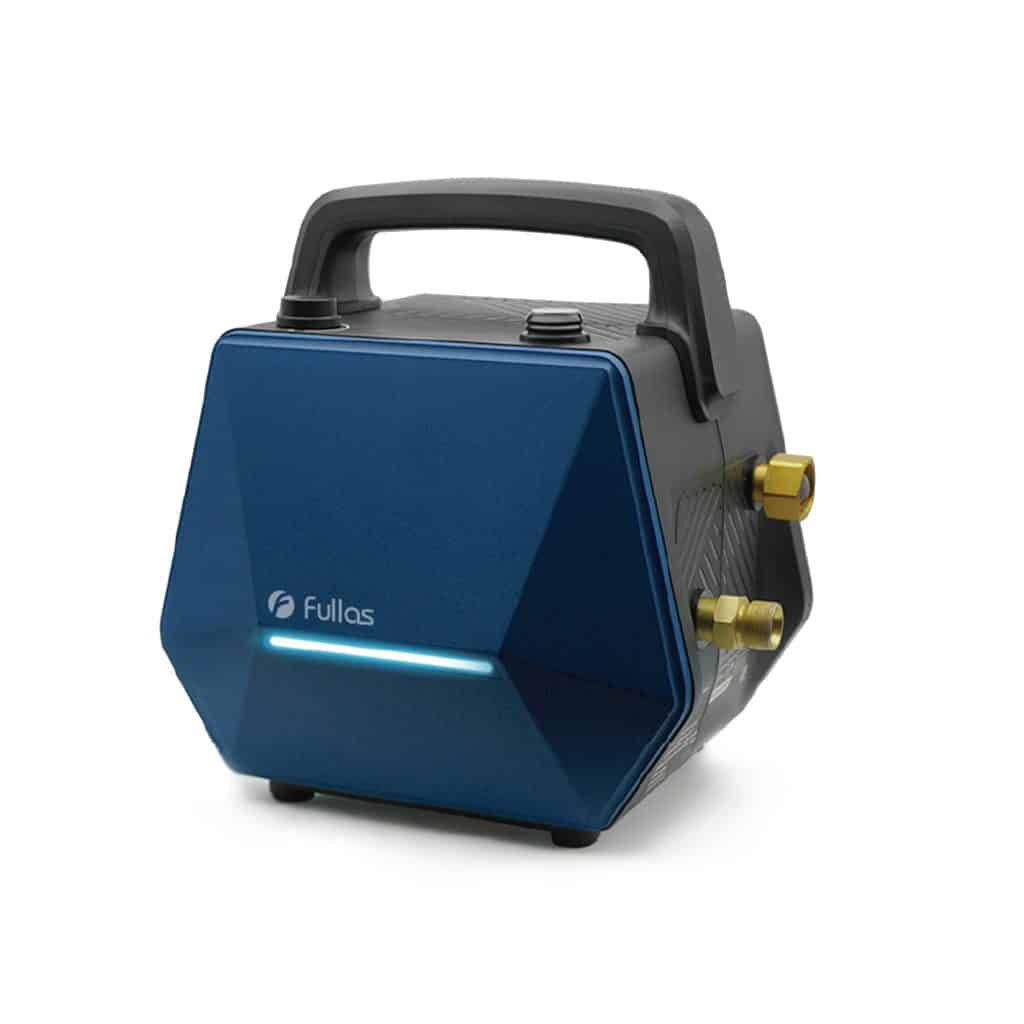
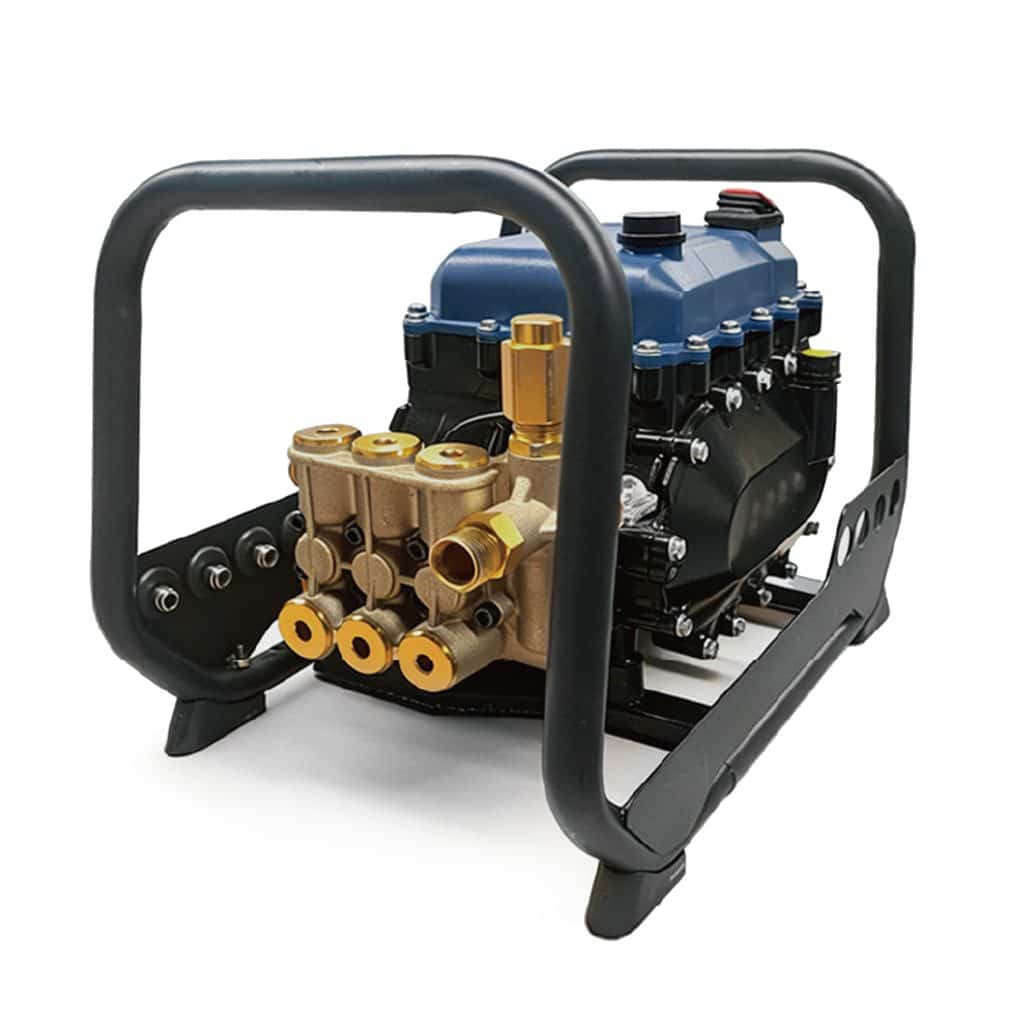
Start with FULLAS commercial electric pressure washers when the worksite has suitable power. The manufacturer’s commercial range uses permanent magnet motors and crankshaft pumps, with compact carry-handle and protective-frame designs.
The FULLAS catalog lists the following US-labeled configurations. Compare the actual flow and maximum pressure of each version, rather than treating every electric washer as the same class.
| Catalog model — US version | Listed flow | Max pressure | Gerilim |
|---|---|---|---|
| Mpro 25 | 2,5 GPM | 1,500 PSI | 120 V |
| Mpro 30 | 3,0 GPM | 1,500 PSI | 120 V |
| Mpro 45 | 4,5 GPM | 1,600 PSI | 240 V |
The higher-flow electric option is listed at 4.5 GPM, not 4.0 GPM. The article’s comparison is a general buying framework; select accessories against the actual model’s specifications. These maximum-pressure figures also differ from high-pressure gasoline configurations, so flow alone does not establish equivalent performance.
For transport and service calls, the compact Mpro 25 is listed at 10 kg, while the framed Mpro 45 is listed at 17 kg. Consider how staff will move, store and connect the equipment, as well as what they plan to clean.
Match the electrical supply to the selected version
The catalog lists the Mpro 25 and Mpro 30 US versions at 120V and the Mpro 45 at 240V. Confirm the required input current, frequency and circuit arrangement before ordering; the voltage label alone does not specify a complete electrical connection. Follow the selected model’s instructions for cables and connections.
Metric configurations are separate versions. Ask FULLAS for the current model-specific sheet for the destination market, including operating pressure and flow, electrical requirements and approved attachments. The catalog describes product configurations; it does not establish a same-job cleaning-speed comparison.
For rental fleets and dealers, request maintenance instructions, service-parts information and the supplied accessory list. Document approved attachments and water-supply instructions with each machine so customers receive a usable package.
If your concern is pressure fluctuation rather than inadequate flow for the workload, see FULLAS’s pressure-control and unloader guide. Diagnose the cause before replacing the machine, and follow the applicable equipment manual.
SSS
Is 2.5 GPM enough to start a cleaning business?
It can be suitable for a defined workload with the right pressure, accessories and operating limits. The deciding factor is whether the setup completes your intended work at a practical cost and pace. There is no single flow rating that guarantees a profitable business.
Does a 4 GPM washer always need a buffer tank?
No universal tank rule applies. Verify the actual supply and the pump’s inlet requirements. A buffer can help manage changing supply conditions, but the pump must be approved for the chosen feed arrangement.
Must I replace every accessory when upgrading?
Not necessarily. Keep components that meet the new system’s documented flow, pressure, connection and temperature requirements. Recheck each item rather than assume the existing kit is compatible or needs complete replacement.
Does higher GPM mean higher PSI?
No. Flow and pressure describe different aspects of the washer’s output. Compare both under stated operating conditions and choose the combination that fits the task.
Request a commercial electric configuration
Send FULLAS your typical cleaning tasks, available electrical supply, water-supply conditions, destination country, attachment requirements and expected order quantity. For dealer or wholesale orders, include branding and packaging needs.
Explore FULLAS commercial electric pressure washers and request a quotation. Ask for a market-specific configuration and the supporting specifications needed to match it to your work.
